
What to Do When You Can't Find a Job for Months (2026)

.webp)
You've been at this for weeks. Maybe months. You've rewritten your resume, scrolled through hundreds of listings, and sent out more applications than you can count. And still, the silence is deafening.
If that's where you are right now, you're probably cycling through the same three questions: Is the market broken, or is it me? Am I applying wrong, or just unlucky? Do I need more skills, a better resume, more applications, better networking, or all of the above?
This guide exists to answer those questions. Not with vague motivational advice, but with a system built on a simple truth about how hiring actually works.
Hiring is a risk-reduction machine. Employers don't hire the "best person in the world." They hire the person who sends the strongest credible signal of "this person will succeed here" with the lowest perceived risk. When you can't find a job for months, one or more of these things is usually happening:
Your signal is weak or unclear (your resume, LinkedIn, proof-of-work, or story isn't landing)
Your signal isn't reaching decision-makers (you're stuck behind filters and overloaded queues)
Your conversion is low (you get interviews, but offers don't follow)
The market got tighter (more competition, slower hiring, longer timelines)
That last point matters a lot right now. In the UK, ONS data shows vacancies have fallen year-on-year, with roughly 2.5 unemployed people per vacancy in late 2025. In the US, BLS data shows long-term unemployment (27+ weeks) hit 1.8 million in January 2026, about 25% of all unemployed workers. And industry research confirms that hiring demand cooled through 2025 with job searches stretching longer.
None of this means you're doomed. It means your strategy has to match the reality you're actually in.
This is the playbook for doing exactly that.

How to Diagnose Your Job Search in 10 Minutes
Before you "apply harder," figure out what's actually broken. Most people skip this step and waste months working on the wrong thing.
Think of your job search as a funnel with four stages:
Targeting - which roles you're choosing
Packaging - your resume, LinkedIn, portfolio, and cover letter
Distribution - how you get seen (applications, referrals, recruiters, direct outreach)
Conversion - turning interviews into offers
If you don't know which stage is failing, you'll keep spinning your wheels without making progress. A job search strategy guide can help you map out where you're losing momentum.

How to Find Your Job Search Bottleneck
Pick whichever scenario sounds most like you:
Scenario A: "I'm getting almost no interviews."
Your problem is almost always a combination of Targeting, Packaging, and Distribution. Your signal either isn't clear enough or it isn't reaching the right people.
Scenario B: "I get interviews, but I don't reach finals or get offers."
Your problem is Conversion. Your resume is working, but something in your interview performance, proof, or fit framing is falling short.
Scenario C: "I reach final rounds but never get the offer."
Your problem is often risk concerns, weak differentiation, references, or negotiation timing. Sometimes it's also bad luck (the role got filled internally or the position closed).
The key insight: spend 70% of your energy where your bottleneck is. This guide covers all three scenarios, but you should weight your effort toward your specific failure point.
How to Restart Your Job Search in 48 Hours
If you've been searching for months without a system, you need a reset that produces clarity fast. Not next week. Now.
Here are seven things to do in the next 48 hours:

1. Pick ONE primary target role for the next 30 days.
Not "anything remote in tech." Not "marketing or project management or maybe operations." One role with a clear hiring market.
Good examples:
"Customer Success Manager (B2B SaaS, mid-market)"
"Data Analyst (marketing analytics, SQL + dashboards)"
"Operations Associate (startups, process + Excel)"
Why this matters: hiring filters are built around role definitions. If your positioning is fuzzy, you look risky to employers. Specificity is what makes you stand out in a crowded pool.
2. Create a one-sentence positioning statement.
Use this template:
"I help [type of team] achieve [outcome] by doing [3 core strengths], backed by [proof]."
Example: "I help revenue teams improve conversion by building clean CRM pipelines, automating reporting, and running experiment-driven outreach, backed by 3 years in B2B SaaS and a 22% lift in pipeline-to-close."
This sentence becomes the spine of your resume, LinkedIn headline, and every outreach message you send.
3. Run an "evidence audit" of your resume.
For every bullet on your resume, ask yourself three questions:
→ What changed because of me?
→ How do we know?
→ Where is the number, artifact, or before/after comparison?
If most of your resume is listing responsibilities rather than outcomes, you're sending employers a weak signal. Responsibilities tell them what you were supposed to do. Evidence tells them what you actually delivered. Our guide to professional achievements examples shows exactly how to turn duties into impact statements.
4. Rewrite your top 10 bullets into "impact bullets."
Use this formula: Action + Scope + Tool/Method + Result (with a metric)
Example: "Built weekly churn dashboard in Looker using product event data, surfacing onboarding drop-off points and reducing 30-day churn from 8.4% to 6.9%."
No metric? Use scale instead:
"for a 12-person team"
"across 3 regions"
"in a 6-week sprint"
"for 80+ accounts"
Our collection of resume bullet point examples covers dozens of roles and industries if you need copy-ready inspiration.
5. Create a "proof pack" (even if you're not a designer).
Put together one folder with:
A 1-page case study (PDF or Notion)
1 to 3 work samples (sanitized for confidentiality)
A simple portfolio page or Google Drive folder
Your proof pack is how you beat the "black hole" feeling of sending applications into the void. It's real, tangible signal that separates you from candidates who only submit a resume. Our guide on how to create a professional portfolio walks through this step by step.
6. Build a tracker that measures outcomes, not effort.
Track these numbers weekly:
Most job seekers track "applications sent" and nothing else. That's like a sales team tracking emails sent but not deals closed. We built AIApply's Job Search Tracker as a free tool for exactly this. It gives you a simple dashboard without the spreadsheet headache. You can also read our full breakdown on job search tracking to understand what metrics actually predict a hire.
7. Set your first feedback loop target.
You need data, not vibes. A solid first loop is 20 high-fit applications + 20 direct outreach messages in 7 days, then evaluate your response rates and iterate based on what you learn.
Why It's Taking Months to Find a Job in 2026
Before you internalize the idea that something is wrong with you, take a look at what's happening in the job market. Context matters because it prevents misdiagnosis.
How Competitive the Job Market Is in 2026
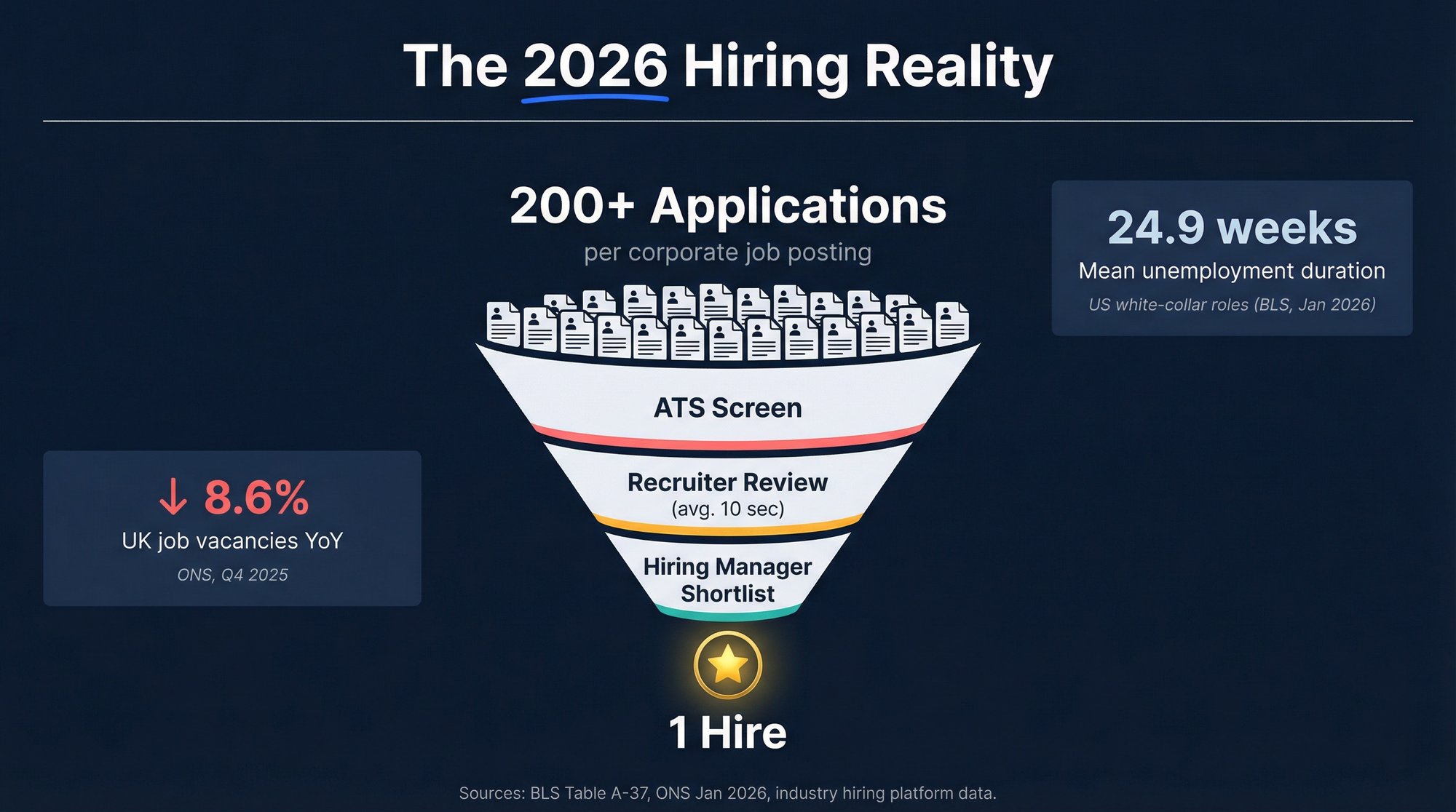
In the UK, the unemployment rate rose to 5.1% in September to November 2025, and vacancies were down 8.6% year-on-year in the October to December 2025 quarter, according to ONS data published in January 2026.
In the US, the picture is similar. BLS Table A-37 data shows that management and professional job seekers had a mean unemployment duration of 24.9 weeks and a median of 12.6 weeks in January 2026. That means "months" of searching is not unusual for white-collar roles. It's actually pretty typical.
Industry research from hiring platforms confirms that hiring demand cooled through 2025, with fewer openings per unemployed person and lengthening timelines across most sectors.
Why Recruiters Ignore Most Applications
You can be a genuinely strong candidate and still get ignored. Why? Because the system is congested.
Industry data shows that the average corporate job posting now receives over 200 applications, nearly triple what hiring teams saw at the end of 2021.
Think about what that means for your resume. Even if you're qualified, you're competing against 200+ other people for each role. The hiring manager might spend 10 seconds on your application before moving to the next one. Using ATS-friendly resume templates is one of the fastest ways to ensure your resume survives the first filter.
What You Can Actually Control in Your Job Search
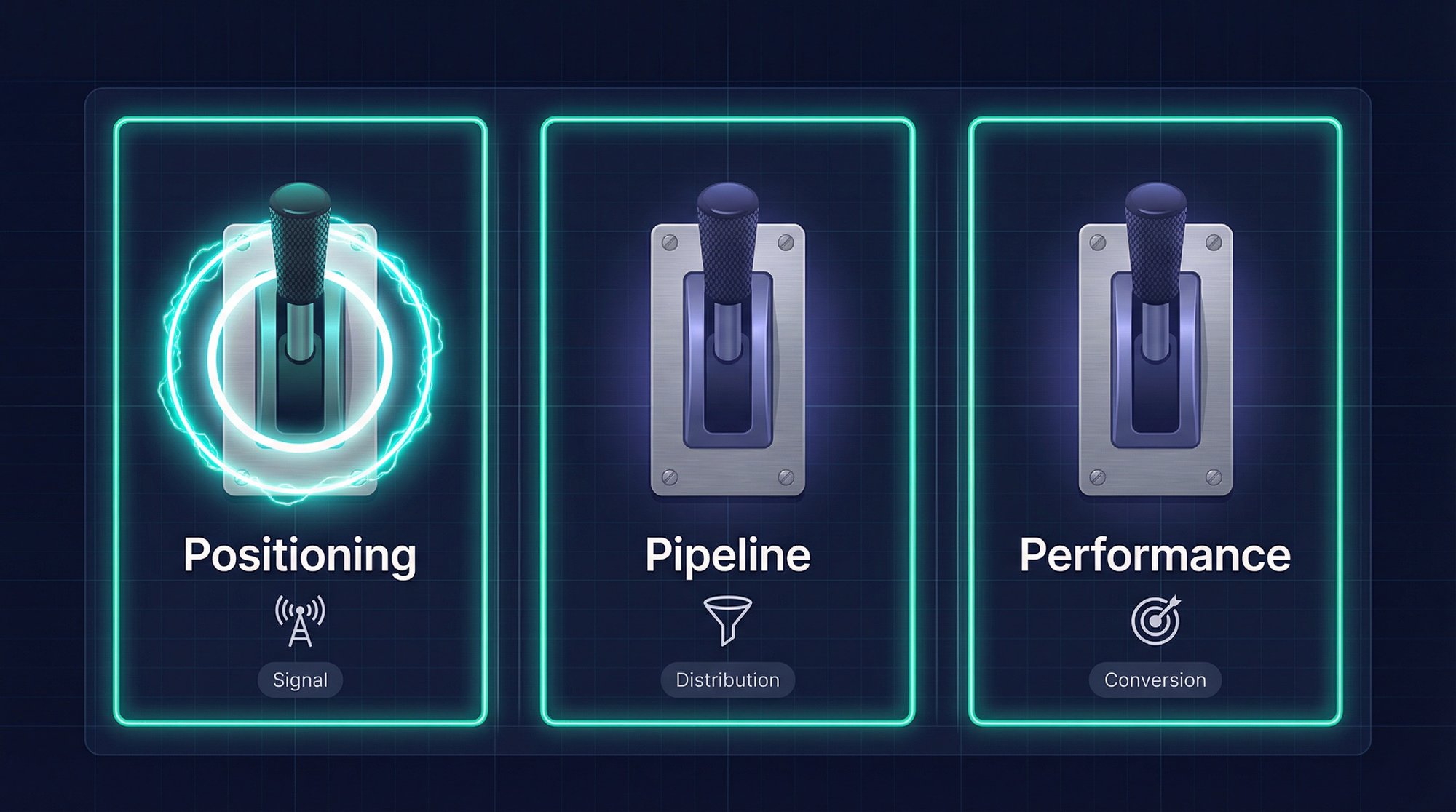
So if you've been stuck for months, don't automatically assume you're broken. But don't assume the market is the only problem either. You still control two things: your signal (how clearly you communicate your value) and your distribution (how effectively you get that signal in front of decision-makers).
That's what the rest of this guide is built around.
The 3-Part Job Search Strategy That Actually Gets You Hired
Everything that works in a job search fits into three levers. Fix the right one, and things start moving.
How to Position Yourself as the Obvious Hire
Positioning isn't "personal branding." It's making it easy for someone to say yes to you.
Stop being "open to anything." Being flexible feels mature, but in hiring, it reads as risky. Employers want to see either "this person has done this before" or "this person has clearly done the adjacent thing and can show proof." If your resume tries to speak to six different roles, it speaks clearly to none of them.
Create two versions of your resume, maximum. Version A for your primary target role, Version B for a backup role that's adjacent and realistic. Anything beyond two usually turns into chaos.
Make the top third of your resume do the heavy lifting. The first section a recruiter sees should answer three questions: What role are you targeting? What's your strongest evidence? What skills map directly to this job?
A strong pattern looks like:
→ Headline: Target role + niche
→ 3-line summary: outcomes + domain + strengths
→ Skills block: only the skills relevant to your target roles
→ Experience: impact bullets, not duties
If you want a quick ATS gap check, our AI Resume Scanner and AI Resume Checker are built specifically for keyword alignment and ATS formatting feedback.
Use the "requirement mapping" method. This is genuinely one of the most effective things you can do. Take a job description and extract the top 8 to 12 requirements. Then map each one to proof from your experience.
Example:
If you can't map 60% or more of the requirements to proof, you're applying too far outside your fit zone. That's not a moral failing. It's math. You'll get better results spending that time on roles where you're a stronger match.
Our Job Description Keyword Finder can extract the key skills and phrases from any job posting quickly, so you can build that requirement map faster.
Make your LinkedIn a mirror of your target resume. LinkedIn is often the "second screen" after a recruiter sees your resume. Make sure your headline matches your target role (not your old title if you're pivoting), your About section matches your positioning statement, your top roles have quantified bullets, and your Featured section showcases your proof pack. Our guide on how to attract job recruiters covers LinkedIn optimization in detail.
We publish a library of 200+ LinkedIn headline examples if you need copy-ready formats to get started.
How to Build a Job Application Pipeline That Gets Responses
If your only channel is online applications, you're betting your entire future on an overloaded queue. In 2026, the winning play is running a two-lane pipeline.
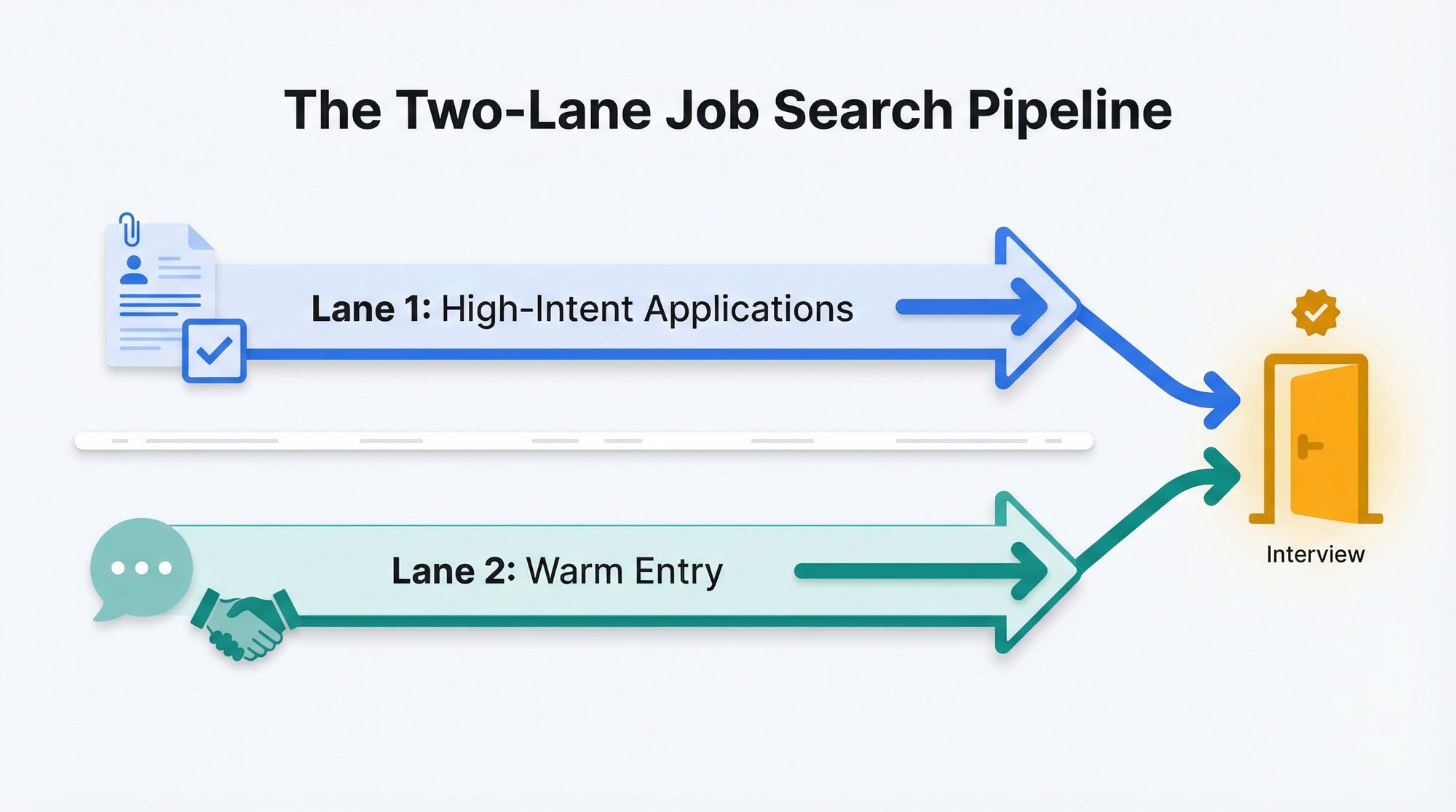
Lane 1: High-intent applications. These are roles where you match strongly, can tailor quickly, apply early, and attach proof (a portfolio, case study, GitHub link, or similar). The rule: if you can't tailor an application in 20 minutes, your system is broken.
This is where tools genuinely help, but only if they improve signal, not spam. AIApply exists specifically to reduce the time cost of tailoring. Our AI Resume Builder and AI Cover Letter Generator create job-specific documents so you can apply with quality at higher volume. And our Auto Apply feature handles the submission process so you can focus your energy on the roles that matter most.
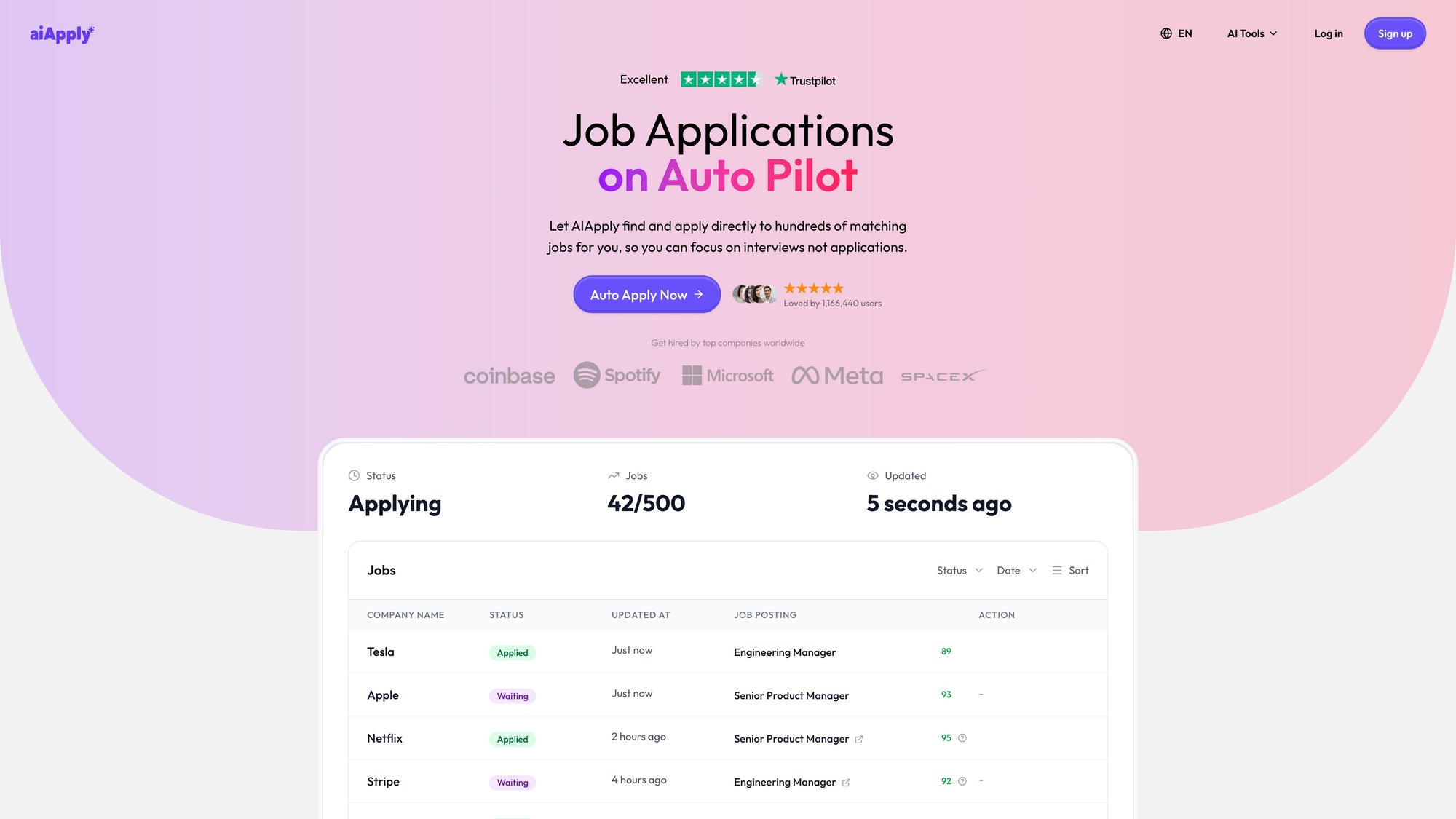
But scale should never mean "apply to everything." Scale should mean "apply to more of the right things." Read our breakdown of modern job search techniques for a practical framework on balancing volume and quality.
Lane 2: Warm entry. This is where most job seekers under-invest, and it's often the difference between getting a job and staying stuck.
Warm entry works because it bypasses some filtering, provides social proof (which reduces employer risk), and lets you clarify fit before you even apply. You don't need a best friend at the company. You just need a warm context.
Here are three outreach scripts that actually work:
Script 1: Context + Credibility + Small Ask (best for employees at target companies)
"Hi [Name], I'm exploring [target role] opportunities and noticed you're at [Company]. I've done [relevant proof: 1 line] and I'm looking at [role/team] there. If you're open to it, could I ask you 2 quick questions about what great candidates do well in that team? No worries if timing's bad."
This works because the ask is small, you show relevance, and you respect their time. Our guide on how to send a message to a hiring manager includes templates and subject lines that get replies.
Script 2: Proof Pack First (best for hiring managers)
"Hi [Name], I'm applying for [role] and wanted to share a 1-page case study relevant to the team's work: [short description]. If it's useful, I'd love to be considered for the role. Either way, thanks for building [product/team outcome]."
This works because you lead with proof and reduce their evaluation work.
Script 3: The Referral Request (best when you've already applied)
"Hi [Name], I applied to [role] yesterday and I'm a strong match on [2 bullets]. If you'd be comfortable referring, I can send a 3-bullet summary and my resume. If not, totally fine."
This works because it's specific, makes it easy for them, and removes the awkwardness.
How Many Applications Should You Send?
Most people swing between two extremes: "only apply to dream roles" (too low volume) or "spray 500 applications" (low quality, burnout, and sometimes reputation damage).
The correct number depends on your conversion rates. Instead of picking a number, use the conversion math method.
Track your last 30 days and compute:
Application to interview rate
Interview to next round rate
Final round to offer rate
Then fix the stage with the weakest conversion. If you're applying to 50 jobs and getting zero interviews, the problem isn't volume. It's your positioning or targeting. If you're getting interviews but never advancing, the problem is your interview performance.
We put together a guide on how many applications you need to send to get a job that walks through this exact logic with specific fixes for each stage.
How to Turn Interviews Into Job Offers
If you're getting interviews but not offers, your resume is doing its job. The problem is somewhere in how you perform once you're in the room.
From first principles, interviews test four things: evidence (can you prove you can do it?), structure (can you communicate clearly under pressure?), risk (are there red flags?), and fit (do you understand the job reality?).
Why structure matters more than you think. A 2025 systematic review on employment interview validity highlights that structured interviews improve predictive validity compared to unstructured approaches, and that bias and format issues can compromise hiring decisions. The practical takeaway: you should answer in a structured way even if the interviewer is casual.
Build a story bank. This is non-negotiable. Create 8 to 10 stories from your career that cover:
① Conflict and resolution
② Leadership (even without the formal title)
③ Failure and recovery
④ Navigating ambiguity
⑤ Moving fast under pressure
⑥ Stakeholder management
⑦ Learning a new skill quickly
⑧ Delivering results with serious constraints
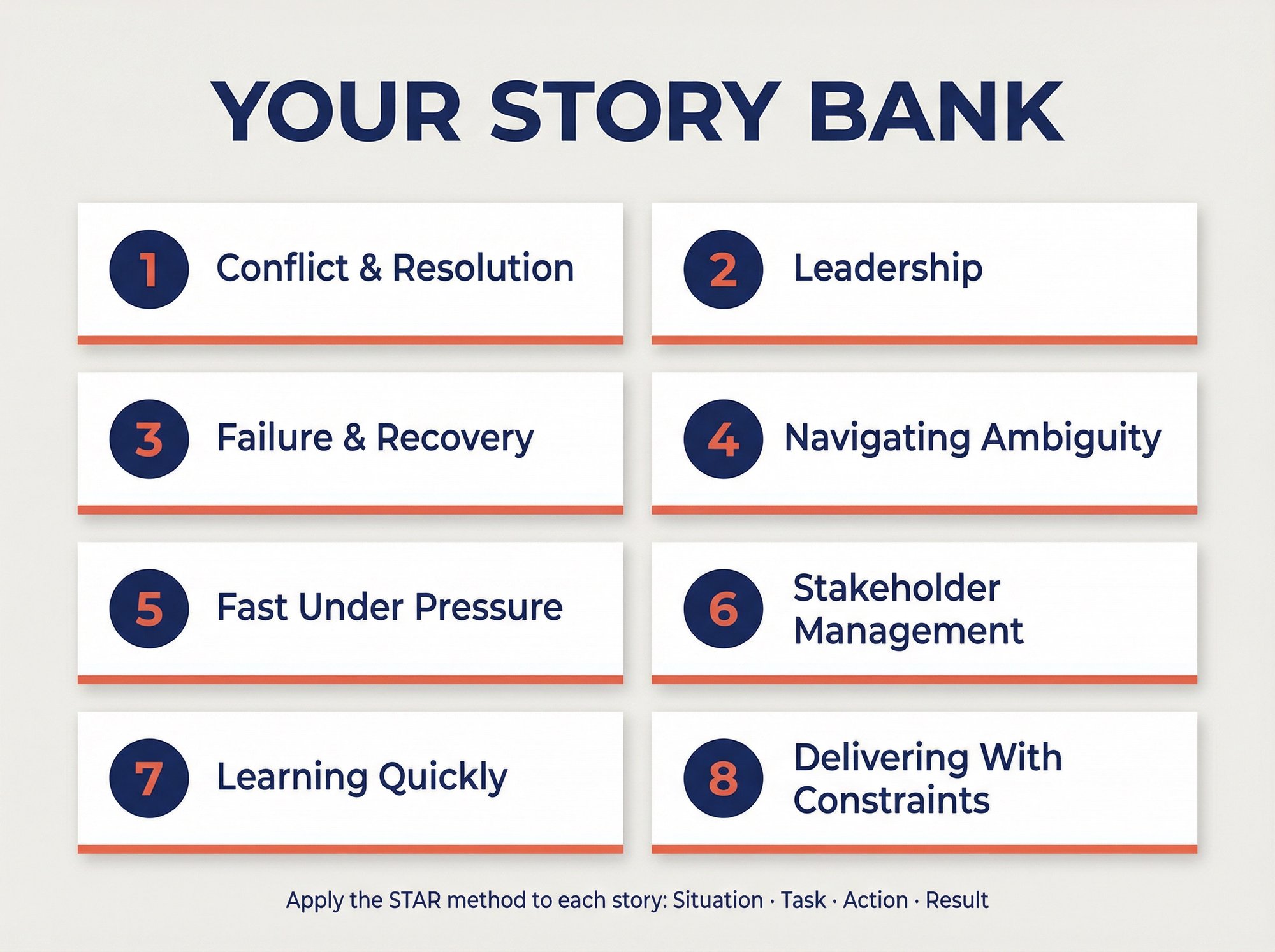
Use the STAR method, but make it sharp:
Situation: 1 sentence
Task: 1 sentence
Action: 3 to 5 sentences, with decisions and trade-offs highlighted
Result: numbers, impact, what changed
Our guide on how to prepare for behavioral interviews includes a story-bank template and practice plan if you want a ready-made structure. You can also browse behavioral interview questions and answers to rehearse common scenarios.
Practice the way the brain actually learns. You don't get better at interviews by reading tips. You get better by retrieving stories under mild stress, getting feedback, and repeating. That's exactly what our Mock Interview tool is designed for: structured practice with real-time AI feedback so you can refine your answers before the real thing.
A note on AI help during interviews. Industry research notes that attitudes toward AI use in live interviews are mixed. A minority of candidates view it as crossing a line, and many say they haven't seen clear employer policies. Our practical recommendation: use AI for preparation, not deception. If an employer says "no AI," treat it like any other instruction test and follow it. Our Interview Buddy tool is built specifically for real-time coaching during live calls when appropriate.
Your 30-Day Plan to Find a Job
Here's a week-by-week plan that's realistic enough to actually follow. No superhuman motivation required.

Week 1: Fix Your Resume, LinkedIn, and Proof Pack
Focus this week entirely on your materials. Everything else waits.
Choose your target role + backup role
Write your positioning statement
Create Resume A (primary) + Resume B (backup)
Update your LinkedIn headline and About section
Build your proof pack (1-page case study minimum)
Our AI Resume Builder can generate role-specific versions in minutes, and the ATS Scanner will flag keyword gaps before you submit anything. If you're targeting a specific role, check out our resume examples for Customer Success Managers, Data Analysts, or Product Managers to see what a strong resume looks like for your target title.
Week 2: Get Your Resume in Front of Real People
Now that your materials are ready, it's time to get them in front of humans.
Make a list of 40 target companies (20 realistic, 20 reach)
Identify 2 humans per company (a team member and a manager)
Send 25 "small ask" outreach messages using the scripts above
Apply to 10 to 15 high-fit roles with your proof pack attached where possible
Use our free Job Search Tracker to see what's actually working instead of guessing. Pair it with our Job Board to find new openings across 1 million+ active roles.
Week 3: Test What Works and Adjust Your Approach
Pick two experiments only and keep everything else constant for a week so you can see cause and effect.
Example experiments to try:
→ Apply within 24 hours of posting (test timing). See our guide on the best day to apply for jobs.
→ Add a 2-line "impact summary" at the top of your resume (test signal)
→ Include your proof pack link in every outreach message (test proof)
→ Shift 30% of your effort to warm outreach instead of cold applications (test distribution)
Week 4: Practice Interviews and Convert to Offers
By now, you have data. Use it. This week is about closing what's open and building interview confidence.
① Do 3 mock interviews per week
② Run 1 story bank practice session every 2 days
③ Follow up on stalled applications
④ Keep your pipeline steady
By the end of this month, you'll have real data on what works for you specifically. Not opinions, not gut feelings, but actual conversion rates you can optimize. Use our interview practice tool to build the habit of practicing under realistic conditions.
When to Pivot Your Job Search Strategy
If you've followed this system for 30 days and results are still near zero, don't "try harder." Pivot strategically.

Pivot Option 1: Adjust your role level, not your career.
If you're aiming one level too high, you can be completely invisible to hiring managers. Try the same role at a smaller company, the same role on a contract or temp-to-perm basis, or the same role in an adjacent industry where your skills transfer. Understanding your transferable skills is the first step in making this pivot credible.
Pivot Option 2: Create a "wedge role."
A wedge role is an entry point that gets you inside the environment you want, even if it's not your ultimate target title. Think of it as a strategic stepping stone.
Examples:
Want to be a product manager? Start as product ops or customer success in that domain. Browse our cover letter examples for Product Managers to see how to position your adjacent experience compellingly.
Want to be a data scientist? Start as an analyst with modeling side projects that demonstrate your capabilities.
Our guide on how to pivot careers explains this proof-first wedge approach in detail, and our sample resume for career change shows you how to format your experience for a new direction.
Pivot Option 3: Add proof, not random certificates.
If you lack a specific skill, don't hide from it. Build a small project that demonstrates it. The rule to remember: if a course doesn't produce an artifact you can show, it doesn't reduce employer risk enough. A certificate on your resume says you studied something. A project in your proof pack says you can do it. Our skills for resume list identifies which skills are genuinely in demand for each type of role.
Managing Money and Mental Health During a Long Job Search
This section matters because burnout kills consistency, and consistency is what actually wins in a job search. If you're struggling financially or emotionally, that's not a side issue. It's a core part of your strategy.
Financial Support and Benefits While You're Unemployed
If you're in the UK and out of work, you may be eligible for support. Here's a quick reference:
Citizens Advice notes that many legacy benefits are ending in April 2026, and people receiving migration notices need to claim by the deadline to avoid gaps in support.
We're not benefits advisors, and rules change frequently. Use official sources like GOV.UK and Citizens Advice for current eligibility in your specific situation.
How to Cope With the Mental Health Impact of a Long Job Search
Research published in PubMed confirms what most job seekers already feel: unemployment and prolonged job searching are strongly linked to worse mental health outcomes, and re-employment tends to improve wellbeing. If you feel anxious, ashamed, or stuck, that's not weakness. It's a predictable human response to uncertainty and loss of control.
A sustainable daily routine looks like this:
→ 3 to 4 hours of deep work (applications, outreach, interview practice)
→ 1 hour for exercise or a walk (non-negotiable for maintaining mental clarity)
→ 1 social touchpoint per day (a friend, former coworker, or community member)
→ 1 full day per week completely off from job searching

If you're in the UK and stress is affecting your sleep, concentration, or daily functioning, the NHS guidance on stress and mental health support is a good starting point.
If you're ever in immediate danger or considering self-harm, contact local emergency services or a crisis hotline in your country right away.
How to Spot and Avoid Job Search Scams
When people get desperate, scammers get aggressive. And the numbers are alarming.
The Federal Trade Commission reported that job scam losses reached $501 million in 2024, up from $90 million in 2020. Reports tripled over that same period. Remote job scams are especially prevalent because there's less face-to-face verification.

Your minimum scam-proofing checklist:
Verify the company domain and check employee LinkedIn presence before engaging
Never pay to get paid (legitimate employers don't charge you for equipment, training, or "processing fees")
Watch out for "check overpayment" and "buy equipment with our vendor" schemes
Be suspicious of interviews conducted entirely via text or chat
We published a dedicated scam-proof remote jobs guide that walks through red flags and verification steps in more detail.
How AIApply Helps When You Can't Find a Job
If you've been stuck for months, the main bottleneck is usually a combination of two things: time and feedback. Tailoring takes too long, so quality drops. You can't apply to enough roles to generate learning. And by the time interview invitations come (if they come), you don't have the energy left for serious prep.
That's exactly what we built AIApply to solve. Not by replacing your judgment, but by removing the friction that keeps you from doing what works.
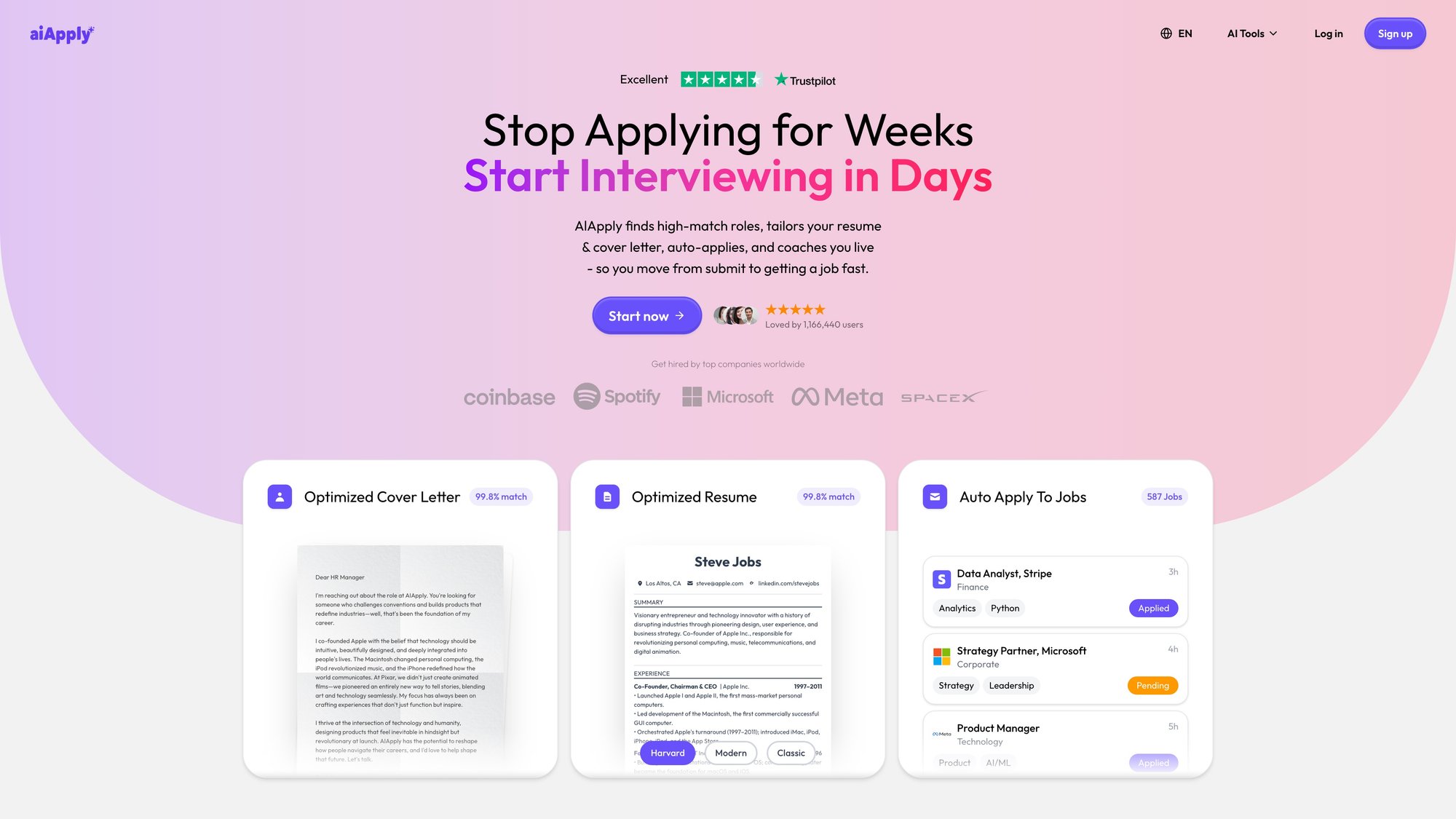
Here's how each module fits into the system we've been describing:
On pricing: we offer a free tier that includes unlimited cover letters, resume scanning, and full job board access. Our Pro plan runs about $29 per month on monthly billing (or around $12 per month with yearly pricing) and includes unlimited resumes, Interview Buddy, Auto Apply credits, and more. Credits for Auto Apply never expire, so you can use them at your own pace. Check our pricing page for the latest details.
The goal isn't to automate your entire job search. It's to take the repetitive, time-consuming parts off your plate so you can focus your energy on the things that only a human can do: building relationships, telling your story, and making real connections.
Frequently Asked Questions
How long is too long to be unemployed?
There's no magic cutoff where your chances disappear. BLS data shows meaningful numbers of long-term unemployed Americans across all experience levels, and white-collar unemployment durations regularly stretch into months. The more useful question to ask yourself: am I iterating based on real feedback, or am I repeating the same approach week after week? If your strategy hasn't changed in 30 days, your results probably won't either.
Should I apply to jobs I'm not fully qualified for?
Yes, if you can map most of the requirements to real proof and the gaps are plausible enough that a hiring manager would take the conversation. No, if you can't map the majority. At that point, you're buying lottery tickets and burning time that would be better spent on roles where you're a genuine contender. The 60% threshold from the requirement mapping method above is a solid benchmark. Our resume optimization techniques guide explains how to tailor your application quickly for roles where you're a strong but not perfect match.
Is networking mandatory when you can't find a job?
In overloaded markets where recruiters are drowning in 200+ applications per role, networking is often the difference between being in a queue and being in a conversation. You don't need to be extroverted or schmoozy. You need a system. The outreach scripts earlier in this guide are a good place to start.
Should I use AI tools in my job search?
Use AI to increase clarity and relevance, then edit like a human. At AIApply, we build tools that help you tailor faster and apply smarter, but the final product should always sound like you. Industry data shows that both candidates and employers are still figuring out the norms around AI in hiring, so use good judgment. Use AI for preparation and efficiency. Avoid anything deceptive. Read our overview of the best AI job search tools available in 2026.
Why am I not getting any interviews at all?
This almost always points to a Targeting, Packaging, or Distribution problem. Either you're applying to roles where your fit is below 60%, your resume isn't clearly showing impact for the target role, or you're relying entirely on online applications without any warm outreach. Go back to the 10-Minute Diagnosis section at the top of this guide and identify your specific bottleneck.
Can I really find a job in 30 days if I follow this plan?
It depends on your market, role, and how severe the bottleneck is. Some people see interviews within the first two weeks of using this system. Others need the full 30 days plus pivoting. What we can tell you is that a systematic approach consistently outperforms "apply and hope" by a wide margin. The 30-day plan gives you structure, data, and feedback loops so you're improving every week instead of guessing.
What's the biggest mistake people make when job searching for months?
Doing the same thing louder. If you've been sending the same resume to the same types of roles through the same channels for three months, sending more of them won't change your results. The system we describe above forces you to diagnose what's broken, fix the specific stage that's failing, and measure whether your changes are working. That's how you break the cycle.
How do I stay motivated during a months-long job search?
Structure beats motivation every time. Set specific daily targets (not "job search all day"), take one full day off per week, and build social touchpoints into your routine. Track outcomes, not effort. And if you're struggling with anxiety or depression, treat that as a real issue worth addressing, not a sign of weakness. The mental health section above has specific resources.
Is it worth hiring a career coach?
A good career coach can help with positioning and interview performance. But before you spend money, try the diagnostic funnel and requirement mapping method in this guide. If you can identify your bottleneck yourself, you may be able to fix it with the right tools and practice. If you're still stuck after 30 days of systematic effort, a coach who specializes in your industry might be worth the investment. Our guide on how to get hired fast covers the proven tactics that produce results without expensive coaching.
You've been at this for weeks. Maybe months. You've rewritten your resume, scrolled through hundreds of listings, and sent out more applications than you can count. And still, the silence is deafening.
If that's where you are right now, you're probably cycling through the same three questions: Is the market broken, or is it me? Am I applying wrong, or just unlucky? Do I need more skills, a better resume, more applications, better networking, or all of the above?
This guide exists to answer those questions. Not with vague motivational advice, but with a system built on a simple truth about how hiring actually works.
Hiring is a risk-reduction machine. Employers don't hire the "best person in the world." They hire the person who sends the strongest credible signal of "this person will succeed here" with the lowest perceived risk. When you can't find a job for months, one or more of these things is usually happening:
Your signal is weak or unclear (your resume, LinkedIn, proof-of-work, or story isn't landing)
Your signal isn't reaching decision-makers (you're stuck behind filters and overloaded queues)
Your conversion is low (you get interviews, but offers don't follow)
The market got tighter (more competition, slower hiring, longer timelines)
That last point matters a lot right now. In the UK, ONS data shows vacancies have fallen year-on-year, with roughly 2.5 unemployed people per vacancy in late 2025. In the US, BLS data shows long-term unemployment (27+ weeks) hit 1.8 million in January 2026, about 25% of all unemployed workers. And industry research confirms that hiring demand cooled through 2025 with job searches stretching longer.
None of this means you're doomed. It means your strategy has to match the reality you're actually in.
This is the playbook for doing exactly that.
How to Diagnose Your Job Search in 10 Minutes
Before you "apply harder," figure out what's actually broken. Most people skip this step and waste months working on the wrong thing.
Think of your job search as a funnel with four stages:
Targeting - which roles you're choosing
Packaging - your resume, LinkedIn, portfolio, and cover letter
Distribution - how you get seen (applications, referrals, recruiters, direct outreach)
Conversion - turning interviews into offers
If you don't know which stage is failing, you'll keep spinning your wheels without making progress. A job search strategy guide can help you map out where you're losing momentum.
How to Find Your Job Search Bottleneck
Pick whichever scenario sounds most like you:
Scenario A: "I'm getting almost no interviews."
Your problem is almost always a combination of Targeting, Packaging, and Distribution. Your signal either isn't clear enough or it isn't reaching the right people.
Scenario B: "I get interviews, but I don't reach finals or get offers."
Your problem is Conversion. Your resume is working, but something in your interview performance, proof, or fit framing is falling short.
Scenario C: "I reach final rounds but never get the offer."
Your problem is often risk concerns, weak differentiation, references, or negotiation timing. Sometimes it's also bad luck (the role got filled internally or the position closed).
The key insight: spend 70% of your energy where your bottleneck is. This guide covers all three scenarios, but you should weight your effort toward your specific failure point.
How to Restart Your Job Search in 48 Hours
If you've been searching for months without a system, you need a reset that produces clarity fast. Not next week. Now.
Here are seven things to do in the next 48 hours:
1. Pick ONE primary target role for the next 30 days.
Not "anything remote in tech." Not "marketing or project management or maybe operations." One role with a clear hiring market.
Good examples:
"Customer Success Manager (B2B SaaS, mid-market)"
"Data Analyst (marketing analytics, SQL + dashboards)"
"Operations Associate (startups, process + Excel)"
Why this matters: hiring filters are built around role definitions. If your positioning is fuzzy, you look risky to employers. Specificity is what makes you stand out in a crowded pool.
2. Create a one-sentence positioning statement.
Use this template:
"I help [type of team] achieve [outcome] by doing [3 core strengths], backed by [proof]."
Example: "I help revenue teams improve conversion by building clean CRM pipelines, automating reporting, and running experiment-driven outreach, backed by 3 years in B2B SaaS and a 22% lift in pipeline-to-close."
This sentence becomes the spine of your resume, LinkedIn headline, and every outreach message you send.
3. Run an "evidence audit" of your resume.
For every bullet on your resume, ask yourself three questions:
→ What changed because of me?
→ How do we know?
→ Where is the number, artifact, or before/after comparison?
If most of your resume is listing responsibilities rather than outcomes, you're sending employers a weak signal. Responsibilities tell them what you were supposed to do. Evidence tells them what you actually delivered. Our guide to professional achievements examples shows exactly how to turn duties into impact statements.
4. Rewrite your top 10 bullets into "impact bullets."
Use this formula: Action + Scope + Tool/Method + Result (with a metric)
Example: "Built weekly churn dashboard in Looker using product event data, surfacing onboarding drop-off points and reducing 30-day churn from 8.4% to 6.9%."
No metric? Use scale instead:
"for a 12-person team"
"across 3 regions"
"in a 6-week sprint"
"for 80+ accounts"
Our collection of resume bullet point examples covers dozens of roles and industries if you need copy-ready inspiration.
5. Create a "proof pack" (even if you're not a designer).
Put together one folder with:
A 1-page case study (PDF or Notion)
1 to 3 work samples (sanitized for confidentiality)
A simple portfolio page or Google Drive folder
Your proof pack is how you beat the "black hole" feeling of sending applications into the void. It's real, tangible signal that separates you from candidates who only submit a resume. Our guide on how to create a professional portfolio walks through this step by step.
6. Build a tracker that measures outcomes, not effort.
Track these numbers weekly:
Most job seekers track "applications sent" and nothing else. That's like a sales team tracking emails sent but not deals closed. We built AIApply's Job Search Tracker as a free tool for exactly this. It gives you a simple dashboard without the spreadsheet headache. You can also read our full breakdown on job search tracking to understand what metrics actually predict a hire.
7. Set your first feedback loop target.
You need data, not vibes. A solid first loop is 20 high-fit applications + 20 direct outreach messages in 7 days, then evaluate your response rates and iterate based on what you learn.
Why It's Taking Months to Find a Job in 2026
Before you internalize the idea that something is wrong with you, take a look at what's happening in the job market. Context matters because it prevents misdiagnosis.
How Competitive the Job Market Is in 2026
In the UK, the unemployment rate rose to 5.1% in September to November 2025, and vacancies were down 8.6% year-on-year in the October to December 2025 quarter, according to ONS data published in January 2026.
In the US, the picture is similar. BLS Table A-37 data shows that management and professional job seekers had a mean unemployment duration of 24.9 weeks and a median of 12.6 weeks in January 2026. That means "months" of searching is not unusual for white-collar roles. It's actually pretty typical.
Industry research from hiring platforms confirms that hiring demand cooled through 2025, with fewer openings per unemployed person and lengthening timelines across most sectors.
Why Recruiters Ignore Most Applications
You can be a genuinely strong candidate and still get ignored. Why? Because the system is congested.
Industry data shows that the average corporate job posting now receives over 200 applications, nearly triple what hiring teams saw at the end of 2021.
Think about what that means for your resume. Even if you're qualified, you're competing against 200+ other people for each role. The hiring manager might spend 10 seconds on your application before moving to the next one. Using ATS-friendly resume templates is one of the fastest ways to ensure your resume survives the first filter.
What You Can Actually Control in Your Job Search
So if you've been stuck for months, don't automatically assume you're broken. But don't assume the market is the only problem either. You still control two things: your signal (how clearly you communicate your value) and your distribution (how effectively you get that signal in front of decision-makers).
That's what the rest of this guide is built around.
The 3-Part Job Search Strategy That Actually Gets You Hired
Everything that works in a job search fits into three levers. Fix the right one, and things start moving.
How to Position Yourself as the Obvious Hire
Positioning isn't "personal branding." It's making it easy for someone to say yes to you.
Stop being "open to anything." Being flexible feels mature, but in hiring, it reads as risky. Employers want to see either "this person has done this before" or "this person has clearly done the adjacent thing and can show proof." If your resume tries to speak to six different roles, it speaks clearly to none of them.
Create two versions of your resume, maximum. Version A for your primary target role, Version B for a backup role that's adjacent and realistic. Anything beyond two usually turns into chaos.
Make the top third of your resume do the heavy lifting. The first section a recruiter sees should answer three questions: What role are you targeting? What's your strongest evidence? What skills map directly to this job?
A strong pattern looks like:
→ Headline: Target role + niche
→ 3-line summary: outcomes + domain + strengths
→ Skills block: only the skills relevant to your target roles
→ Experience: impact bullets, not duties
If you want a quick ATS gap check, our AI Resume Scanner and AI Resume Checker are built specifically for keyword alignment and ATS formatting feedback.
Use the "requirement mapping" method. This is genuinely one of the most effective things you can do. Take a job description and extract the top 8 to 12 requirements. Then map each one to proof from your experience.
Example:
If you can't map 60% or more of the requirements to proof, you're applying too far outside your fit zone. That's not a moral failing. It's math. You'll get better results spending that time on roles where you're a stronger match.
Our Job Description Keyword Finder can extract the key skills and phrases from any job posting quickly, so you can build that requirement map faster.
Make your LinkedIn a mirror of your target resume. LinkedIn is often the "second screen" after a recruiter sees your resume. Make sure your headline matches your target role (not your old title if you're pivoting), your About section matches your positioning statement, your top roles have quantified bullets, and your Featured section showcases your proof pack. Our guide on how to attract job recruiters covers LinkedIn optimization in detail.
We publish a library of 200+ LinkedIn headline examples if you need copy-ready formats to get started.
How to Build a Job Application Pipeline That Gets Responses
If your only channel is online applications, you're betting your entire future on an overloaded queue. In 2026, the winning play is running a two-lane pipeline.
Lane 1: High-intent applications. These are roles where you match strongly, can tailor quickly, apply early, and attach proof (a portfolio, case study, GitHub link, or similar). The rule: if you can't tailor an application in 20 minutes, your system is broken.
This is where tools genuinely help, but only if they improve signal, not spam. AIApply exists specifically to reduce the time cost of tailoring. Our AI Resume Builder and AI Cover Letter Generator create job-specific documents so you can apply with quality at higher volume. And our Auto Apply feature handles the submission process so you can focus your energy on the roles that matter most.
But scale should never mean "apply to everything." Scale should mean "apply to more of the right things." Read our breakdown of modern job search techniques for a practical framework on balancing volume and quality.
Lane 2: Warm entry. This is where most job seekers under-invest, and it's often the difference between getting a job and staying stuck.
Warm entry works because it bypasses some filtering, provides social proof (which reduces employer risk), and lets you clarify fit before you even apply. You don't need a best friend at the company. You just need a warm context.
Here are three outreach scripts that actually work:
Script 1: Context + Credibility + Small Ask (best for employees at target companies)
"Hi [Name], I'm exploring [target role] opportunities and noticed you're at [Company]. I've done [relevant proof: 1 line] and I'm looking at [role/team] there. If you're open to it, could I ask you 2 quick questions about what great candidates do well in that team? No worries if timing's bad."
This works because the ask is small, you show relevance, and you respect their time. Our guide on how to send a message to a hiring manager includes templates and subject lines that get replies.
Script 2: Proof Pack First (best for hiring managers)
"Hi [Name], I'm applying for [role] and wanted to share a 1-page case study relevant to the team's work: [short description]. If it's useful, I'd love to be considered for the role. Either way, thanks for building [product/team outcome]."
This works because you lead with proof and reduce their evaluation work.
Script 3: The Referral Request (best when you've already applied)
"Hi [Name], I applied to [role] yesterday and I'm a strong match on [2 bullets]. If you'd be comfortable referring, I can send a 3-bullet summary and my resume. If not, totally fine."
This works because it's specific, makes it easy for them, and removes the awkwardness.
How Many Applications Should You Send?
Most people swing between two extremes: "only apply to dream roles" (too low volume) or "spray 500 applications" (low quality, burnout, and sometimes reputation damage).
The correct number depends on your conversion rates. Instead of picking a number, use the conversion math method.
Track your last 30 days and compute:
Application to interview rate
Interview to next round rate
Final round to offer rate
Then fix the stage with the weakest conversion. If you're applying to 50 jobs and getting zero interviews, the problem isn't volume. It's your positioning or targeting. If you're getting interviews but never advancing, the problem is your interview performance.
We put together a guide on how many applications you need to send to get a job that walks through this exact logic with specific fixes for each stage.
How to Turn Interviews Into Job Offers
If you're getting interviews but not offers, your resume is doing its job. The problem is somewhere in how you perform once you're in the room.
From first principles, interviews test four things: evidence (can you prove you can do it?), structure (can you communicate clearly under pressure?), risk (are there red flags?), and fit (do you understand the job reality?).
Why structure matters more than you think. A 2025 systematic review on employment interview validity highlights that structured interviews improve predictive validity compared to unstructured approaches, and that bias and format issues can compromise hiring decisions. The practical takeaway: you should answer in a structured way even if the interviewer is casual.
Build a story bank. This is non-negotiable. Create 8 to 10 stories from your career that cover:
① Conflict and resolution
② Leadership (even without the formal title)
③ Failure and recovery
④ Navigating ambiguity
⑤ Moving fast under pressure
⑥ Stakeholder management
⑦ Learning a new skill quickly
⑧ Delivering results with serious constraints
Use the STAR method, but make it sharp:
Situation: 1 sentence
Task: 1 sentence
Action: 3 to 5 sentences, with decisions and trade-offs highlighted
Result: numbers, impact, what changed
Our guide on how to prepare for behavioral interviews includes a story-bank template and practice plan if you want a ready-made structure. You can also browse behavioral interview questions and answers to rehearse common scenarios.
Practice the way the brain actually learns. You don't get better at interviews by reading tips. You get better by retrieving stories under mild stress, getting feedback, and repeating. That's exactly what our Mock Interview tool is designed for: structured practice with real-time AI feedback so you can refine your answers before the real thing.
A note on AI help during interviews. Industry research notes that attitudes toward AI use in live interviews are mixed. A minority of candidates view it as crossing a line, and many say they haven't seen clear employer policies. Our practical recommendation: use AI for preparation, not deception. If an employer says "no AI," treat it like any other instruction test and follow it. Our Interview Buddy tool is built specifically for real-time coaching during live calls when appropriate.
Your 30-Day Plan to Find a Job
Here's a week-by-week plan that's realistic enough to actually follow. No superhuman motivation required.
Week 1: Fix Your Resume, LinkedIn, and Proof Pack
Focus this week entirely on your materials. Everything else waits.
Choose your target role + backup role
Write your positioning statement
Create Resume A (primary) + Resume B (backup)
Update your LinkedIn headline and About section
Build your proof pack (1-page case study minimum)
Our AI Resume Builder can generate role-specific versions in minutes, and the ATS Scanner will flag keyword gaps before you submit anything. If you're targeting a specific role, check out our resume examples for Customer Success Managers, Data Analysts, or Product Managers to see what a strong resume looks like for your target title.
Week 2: Get Your Resume in Front of Real People
Now that your materials are ready, it's time to get them in front of humans.
Make a list of 40 target companies (20 realistic, 20 reach)
Identify 2 humans per company (a team member and a manager)
Send 25 "small ask" outreach messages using the scripts above
Apply to 10 to 15 high-fit roles with your proof pack attached where possible
Use our free Job Search Tracker to see what's actually working instead of guessing. Pair it with our Job Board to find new openings across 1 million+ active roles.
Week 3: Test What Works and Adjust Your Approach
Pick two experiments only and keep everything else constant for a week so you can see cause and effect.
Example experiments to try:
→ Apply within 24 hours of posting (test timing). See our guide on the best day to apply for jobs.
→ Add a 2-line "impact summary" at the top of your resume (test signal)
→ Include your proof pack link in every outreach message (test proof)
→ Shift 30% of your effort to warm outreach instead of cold applications (test distribution)
Week 4: Practice Interviews and Convert to Offers
By now, you have data. Use it. This week is about closing what's open and building interview confidence.
① Do 3 mock interviews per week
② Run 1 story bank practice session every 2 days
③ Follow up on stalled applications
④ Keep your pipeline steady
By the end of this month, you'll have real data on what works for you specifically. Not opinions, not gut feelings, but actual conversion rates you can optimize. Use our interview practice tool to build the habit of practicing under realistic conditions.
When to Pivot Your Job Search Strategy
If you've followed this system for 30 days and results are still near zero, don't "try harder." Pivot strategically.
Pivot Option 1: Adjust your role level, not your career.
If you're aiming one level too high, you can be completely invisible to hiring managers. Try the same role at a smaller company, the same role on a contract or temp-to-perm basis, or the same role in an adjacent industry where your skills transfer. Understanding your transferable skills is the first step in making this pivot credible.
Pivot Option 2: Create a "wedge role."
A wedge role is an entry point that gets you inside the environment you want, even if it's not your ultimate target title. Think of it as a strategic stepping stone.
Examples:
Want to be a product manager? Start as product ops or customer success in that domain. Browse our cover letter examples for Product Managers to see how to position your adjacent experience compellingly.
Want to be a data scientist? Start as an analyst with modeling side projects that demonstrate your capabilities.
Our guide on how to pivot careers explains this proof-first wedge approach in detail, and our sample resume for career change shows you how to format your experience for a new direction.
Pivot Option 3: Add proof, not random certificates.
If you lack a specific skill, don't hide from it. Build a small project that demonstrates it. The rule to remember: if a course doesn't produce an artifact you can show, it doesn't reduce employer risk enough. A certificate on your resume says you studied something. A project in your proof pack says you can do it. Our skills for resume list identifies which skills are genuinely in demand for each type of role.
Managing Money and Mental Health During a Long Job Search
This section matters because burnout kills consistency, and consistency is what actually wins in a job search. If you're struggling financially or emotionally, that's not a side issue. It's a core part of your strategy.
Financial Support and Benefits While You're Unemployed
If you're in the UK and out of work, you may be eligible for support. Here's a quick reference:
Citizens Advice notes that many legacy benefits are ending in April 2026, and people receiving migration notices need to claim by the deadline to avoid gaps in support.
We're not benefits advisors, and rules change frequently. Use official sources like GOV.UK and Citizens Advice for current eligibility in your specific situation.
How to Cope With the Mental Health Impact of a Long Job Search
Research published in PubMed confirms what most job seekers already feel: unemployment and prolonged job searching are strongly linked to worse mental health outcomes, and re-employment tends to improve wellbeing. If you feel anxious, ashamed, or stuck, that's not weakness. It's a predictable human response to uncertainty and loss of control.
A sustainable daily routine looks like this:
→ 3 to 4 hours of deep work (applications, outreach, interview practice)
→ 1 hour for exercise or a walk (non-negotiable for maintaining mental clarity)
→ 1 social touchpoint per day (a friend, former coworker, or community member)
→ 1 full day per week completely off from job searching
If you're in the UK and stress is affecting your sleep, concentration, or daily functioning, the NHS guidance on stress and mental health support is a good starting point.
If you're ever in immediate danger or considering self-harm, contact local emergency services or a crisis hotline in your country right away.
How to Spot and Avoid Job Search Scams
When people get desperate, scammers get aggressive. And the numbers are alarming.
The Federal Trade Commission reported that job scam losses reached $501 million in 2024, up from $90 million in 2020. Reports tripled over that same period. Remote job scams are especially prevalent because there's less face-to-face verification.
Your minimum scam-proofing checklist:
Verify the company domain and check employee LinkedIn presence before engaging
Never pay to get paid (legitimate employers don't charge you for equipment, training, or "processing fees")
Watch out for "check overpayment" and "buy equipment with our vendor" schemes
Be suspicious of interviews conducted entirely via text or chat
We published a dedicated scam-proof remote jobs guide that walks through red flags and verification steps in more detail.
How AIApply Helps When You Can't Find a Job
If you've been stuck for months, the main bottleneck is usually a combination of two things: time and feedback. Tailoring takes too long, so quality drops. You can't apply to enough roles to generate learning. And by the time interview invitations come (if they come), you don't have the energy left for serious prep.
That's exactly what we built AIApply to solve. Not by replacing your judgment, but by removing the friction that keeps you from doing what works.
Here's how each module fits into the system we've been describing:
On pricing: we offer a free tier that includes unlimited cover letters, resume scanning, and full job board access. Our Pro plan runs about $29 per month on monthly billing (or around $12 per month with yearly pricing) and includes unlimited resumes, Interview Buddy, Auto Apply credits, and more. Credits for Auto Apply never expire, so you can use them at your own pace. Check our pricing page for the latest details.
The goal isn't to automate your entire job search. It's to take the repetitive, time-consuming parts off your plate so you can focus your energy on the things that only a human can do: building relationships, telling your story, and making real connections.
Frequently Asked Questions
How long is too long to be unemployed?
There's no magic cutoff where your chances disappear. BLS data shows meaningful numbers of long-term unemployed Americans across all experience levels, and white-collar unemployment durations regularly stretch into months. The more useful question to ask yourself: am I iterating based on real feedback, or am I repeating the same approach week after week? If your strategy hasn't changed in 30 days, your results probably won't either.
Should I apply to jobs I'm not fully qualified for?
Yes, if you can map most of the requirements to real proof and the gaps are plausible enough that a hiring manager would take the conversation. No, if you can't map the majority. At that point, you're buying lottery tickets and burning time that would be better spent on roles where you're a genuine contender. The 60% threshold from the requirement mapping method above is a solid benchmark. Our resume optimization techniques guide explains how to tailor your application quickly for roles where you're a strong but not perfect match.
Is networking mandatory when you can't find a job?
In overloaded markets where recruiters are drowning in 200+ applications per role, networking is often the difference between being in a queue and being in a conversation. You don't need to be extroverted or schmoozy. You need a system. The outreach scripts earlier in this guide are a good place to start.
Should I use AI tools in my job search?
Use AI to increase clarity and relevance, then edit like a human. At AIApply, we build tools that help you tailor faster and apply smarter, but the final product should always sound like you. Industry data shows that both candidates and employers are still figuring out the norms around AI in hiring, so use good judgment. Use AI for preparation and efficiency. Avoid anything deceptive. Read our overview of the best AI job search tools available in 2026.
Why am I not getting any interviews at all?
This almost always points to a Targeting, Packaging, or Distribution problem. Either you're applying to roles where your fit is below 60%, your resume isn't clearly showing impact for the target role, or you're relying entirely on online applications without any warm outreach. Go back to the 10-Minute Diagnosis section at the top of this guide and identify your specific bottleneck.
Can I really find a job in 30 days if I follow this plan?
It depends on your market, role, and how severe the bottleneck is. Some people see interviews within the first two weeks of using this system. Others need the full 30 days plus pivoting. What we can tell you is that a systematic approach consistently outperforms "apply and hope" by a wide margin. The 30-day plan gives you structure, data, and feedback loops so you're improving every week instead of guessing.
What's the biggest mistake people make when job searching for months?
Doing the same thing louder. If you've been sending the same resume to the same types of roles through the same channels for three months, sending more of them won't change your results. The system we describe above forces you to diagnose what's broken, fix the specific stage that's failing, and measure whether your changes are working. That's how you break the cycle.
How do I stay motivated during a months-long job search?
Structure beats motivation every time. Set specific daily targets (not "job search all day"), take one full day off per week, and build social touchpoints into your routine. Track outcomes, not effort. And if you're struggling with anxiety or depression, treat that as a real issue worth addressing, not a sign of weakness. The mental health section above has specific resources.
Is it worth hiring a career coach?
A good career coach can help with positioning and interview performance. But before you spend money, try the diagnostic funnel and requirement mapping method in this guide. If you can identify your bottleneck yourself, you may be able to fix it with the right tools and practice. If you're still stuck after 30 days of systematic effort, a coach who specializes in your industry might be worth the investment. Our guide on how to get hired fast covers the proven tactics that produce results without expensive coaching.
.webp)
%20(1).webp)
.webp)
Don't miss out on
your next opportunity.
Create and send applications in seconds, not hours.


