
What Does Under Consideration Mean On Job Application?

You just checked your application portal for the hundredth time this week. The status finally changed from "Application Received" to something new: "Under Consideration."
Is this good news? Bad news? Should you follow up? Keep waiting? The status is so vague it's almost worse than no update at all.
If you're stuck in this limbo right now, you're not alone. Thousands of job seekers see "Under Consideration" every day and have no idea what it actually means or what to do next.
This guide breaks down exactly what "Under Consideration" means across different companies and application systems, how long you'll likely wait, and the specific actions you should take right now to maximize your chances. Whether you're dealing with application tracking confusion or wondering how to get hired faster, this comprehensive resource will help you navigate the uncertainty.
What Does Under Consideration Mean On Application Status?
"Under Consideration" means the employer hasn't rejected you, and someone might be reviewing you, has flagged you for review, or has moved you into a pool of candidates they're considering.
That's it. It's a "not-no" status, not a "yes."
The tricky part? "Under Consideration" is often a workflow label inside the employer's Applicant Tracking System (ATS), and ATS labels aren't universal across employers.
Some companies use it as a holding stage. Others use it to mean active review. A few apply it automatically the moment you submit.
This is why understanding the context behind your specific status matters more than the label itself. If you want to ensure your application makes it past the ATS screening stage, consider using AIApply's Resume Scanner to identify gaps and optimize your resume for better visibility.
How Do Different Companies Use Under Consideration Status?
Instead of guessing, look at how employers themselves explain the label. Here are credible, real-world definitions that show why "Under Consideration" can feel both hopeful and frustrating.
Under Consideration in Workday: How the Bookmark Stage Works
An Emerson HR Workday recruiting guide explains "Under Consideration" as:
→ The candidate is of interest and could potentially move forward
→ It's "a great way to bookmark candidates"
→ Workday does not send an email to the candidate at this stage
What this means for you: You could sit in "Under Consideration" with zero outbound contact even if you're genuinely being reviewed.
What Does Under Consideration Mean When Recruiter Reviews?
Northrop Grumman's application process page states:
→ "Under consideration" means your application is under detailed review by the recruiter
What this means for you: At some employers, it's basically "Under Review," just phrased differently.
Does Under Consideration Mean Hiring Team Has Your Application?
Some organizations use "Under Consideration" to indicate that your application has moved beyond the initial recruiter screen and has been forwarded to the hiring team for review.
What this means for you: At some organizations, it's a step forward. Your application moved beyond "recruiter screen" into a hiring-team decision point.
What Does Under Consideration Mean in Active Review Stage?
Many Workday-based systems use "Under Consideration" to indicate that Talent Acquisition is actively reviewing your application.
Important note: Different employers using the same ATS (like Workday) may define status labels differently, so treat these as general guidelines rather than universal rules.
What Are the 3 Types of Under Consideration Status?
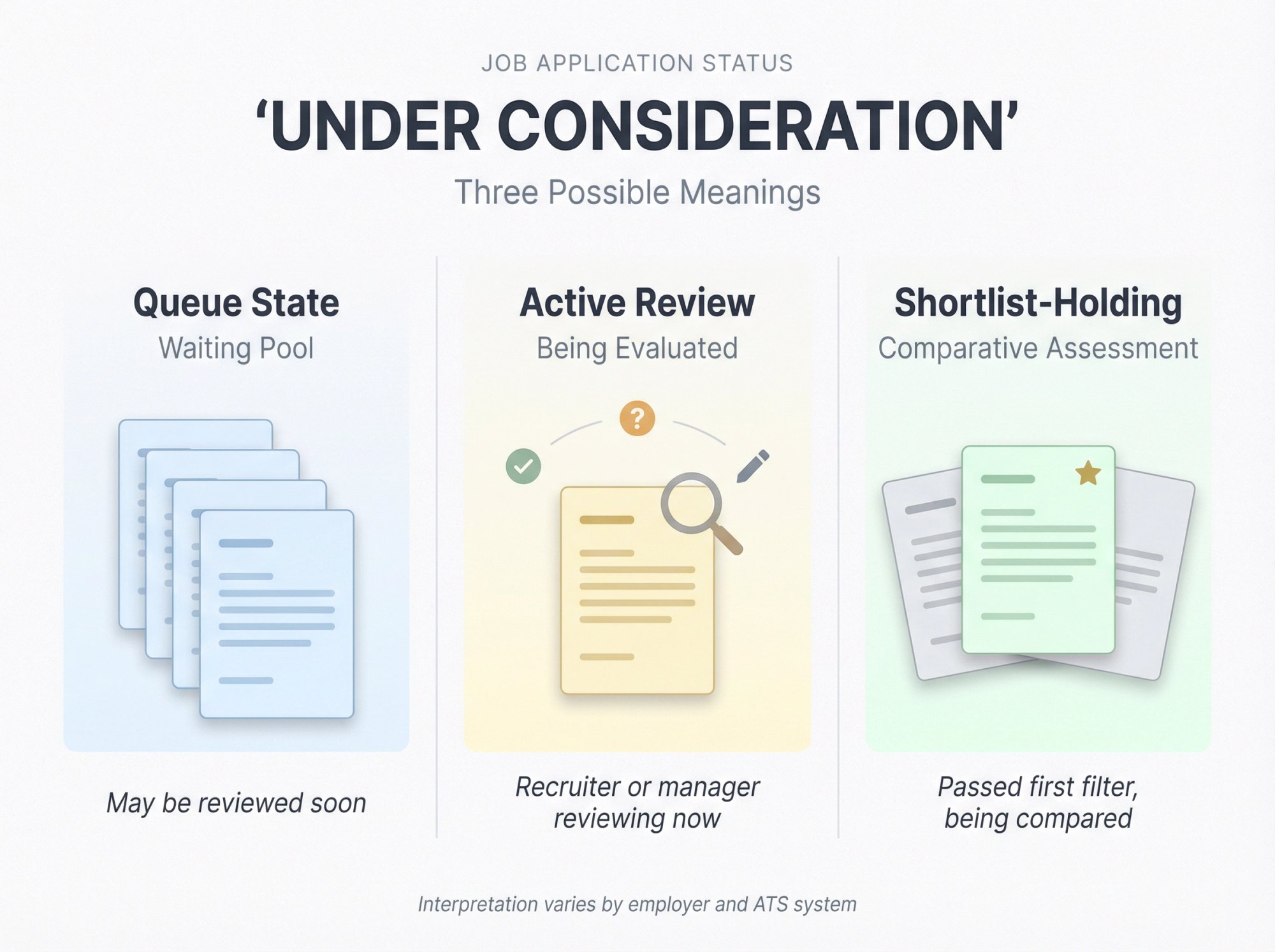
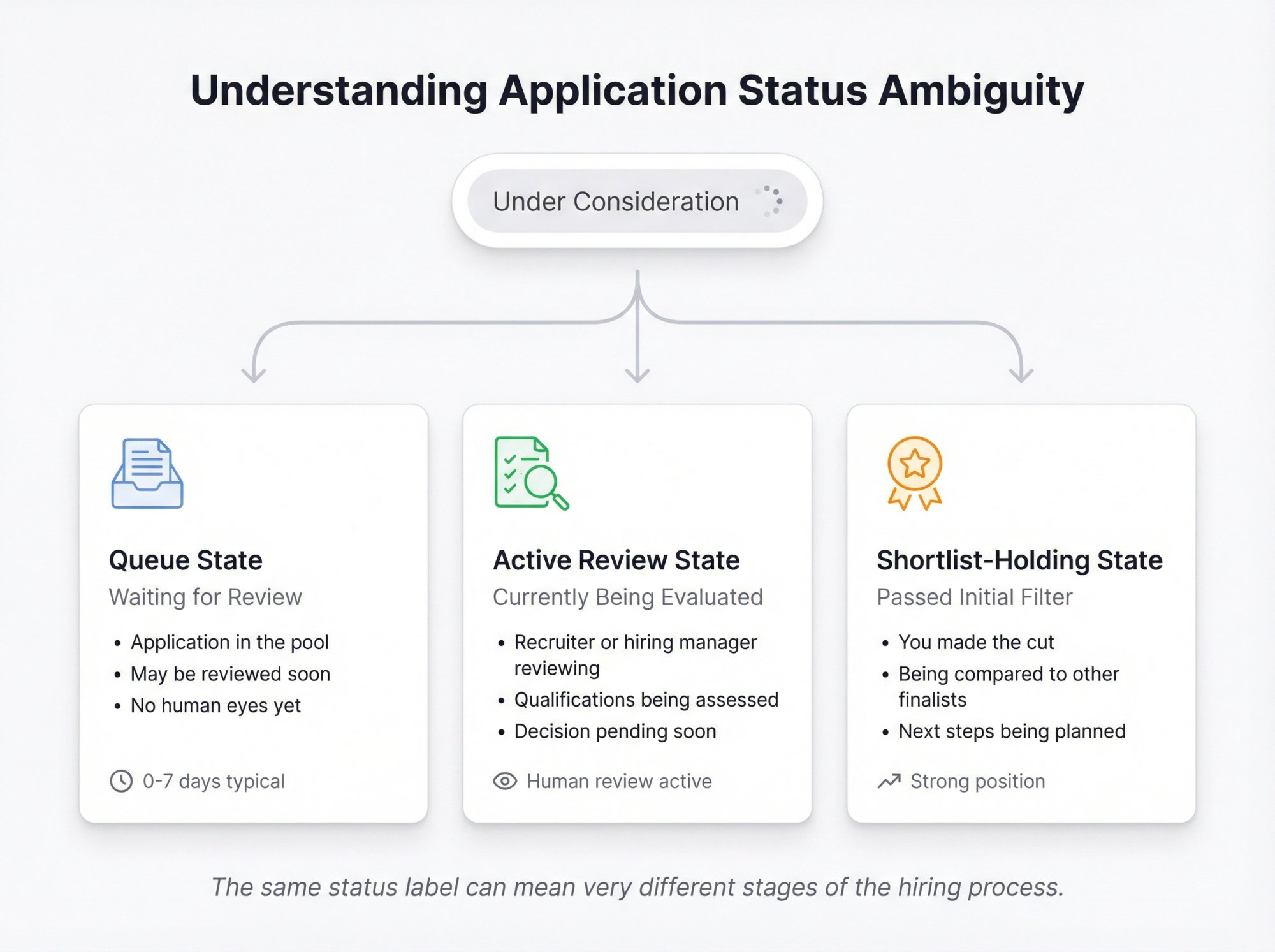
Across multiple employers and systems, "Under Consideration" reliably means one of these three states:
① Queue state: Your application is in the pool that may be reviewed soon
② Active review state: Recruiter or hiring manager is reviewing
③ Shortlist-holding state: You've passed a first filter and are being compared against other "maybes"
Your job is to figure out which of the three you're in without spiraling. Understanding ATS-friendly resume formatting can help you optimize your application strategy.
Under Consideration vs Under Review vs In Progress: What's the Difference?
Because companies label things differently, here's a translation cheat sheet based on how real employers describe statuses.
Use this as a guide, not gospel. The same label can mean different things in different ATS setups.
How Long Does Under Consideration Status Last?
This depends on industry, seniority, internal approvals, and whether the job is truly open. But here's what the hiring process typically looks like based on industry research and employer timelines:
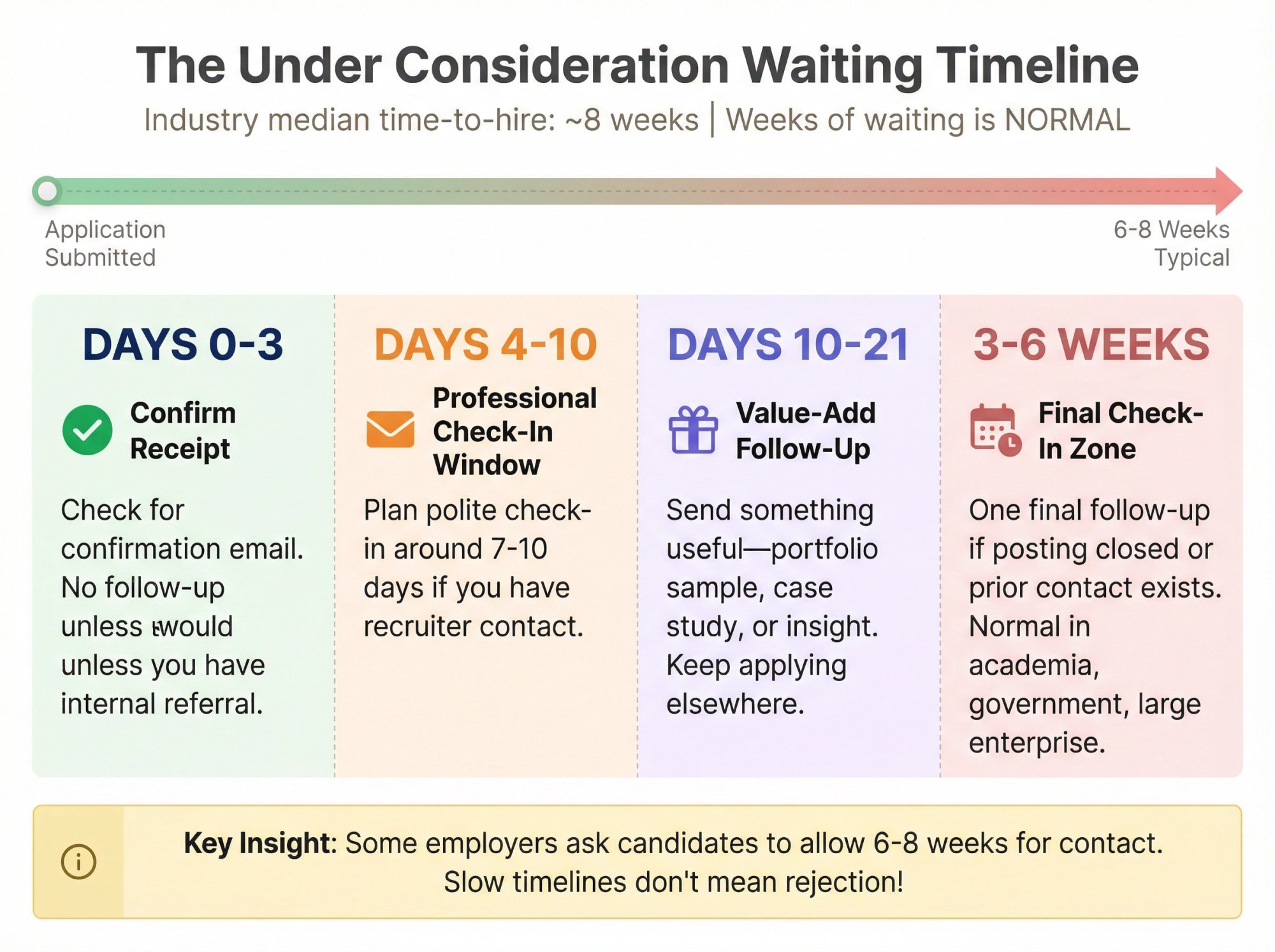
• Some employers explicitly ask candidates to allow 6-8 weeks for contact or a status change
• Some hiring departments may take 4-8 weeks just to identify interviewees after materials are routed
• Industry data shows a median "time to hire across industries" of approximately 8 weeks, though this varies significantly by sector and role level
So, "Under Consideration" lasting weeks is common even when nothing is "wrong."
When to Follow Up After Under Consideration Status?
Use this timeline if you don't have explicit instructions from the employer:
Days 0-3 after applying
Confirm the application is complete and you received a confirmation email (if the company sends one). Don't follow up yet unless you have a referral who can internally nudge.
Days 4-10 after applying
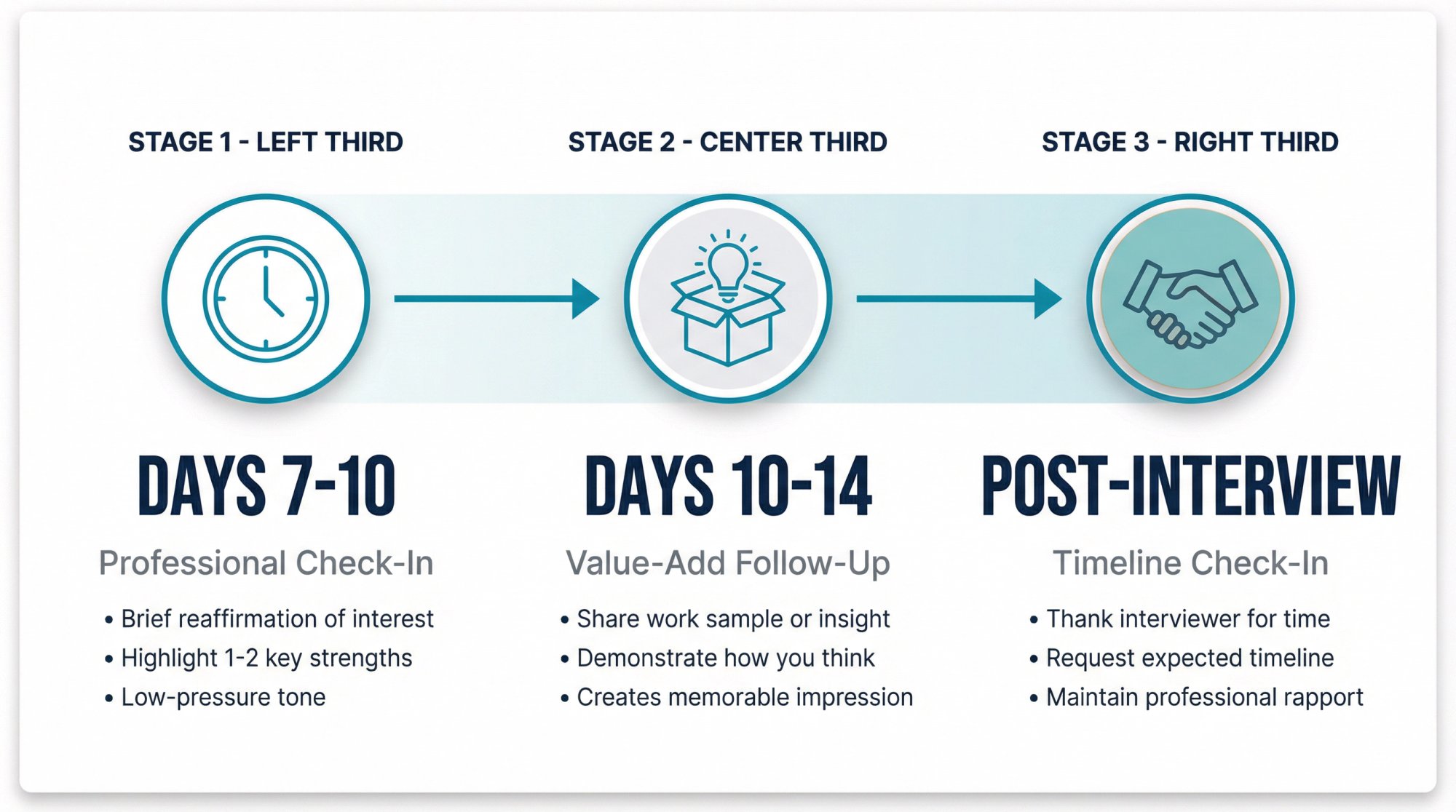
If your status is "Under Consideration," assume you're in the review pool. If you have a recruiter email, plan a polite check-in at around 7-10 days. Professional follow-up strategies recommend this as the "professional check-in" window.
Days 10-21
If no response, consider a value-add follow-up (send something useful, not just "checking in"). Effective follow-up techniques suggest 10-14 days as a good window for value-add follow-ups. Keep applying elsewhere. Don't let one application freeze your job search.
3-6 weeks
It's reasonable to do one final check-in if you've had prior contact or if the posting just closed. Expect slower timelines in academia, government, and large enterprise hiring (committees, approvals, scheduling).
What to Do When Job Status Says Under Consideration?
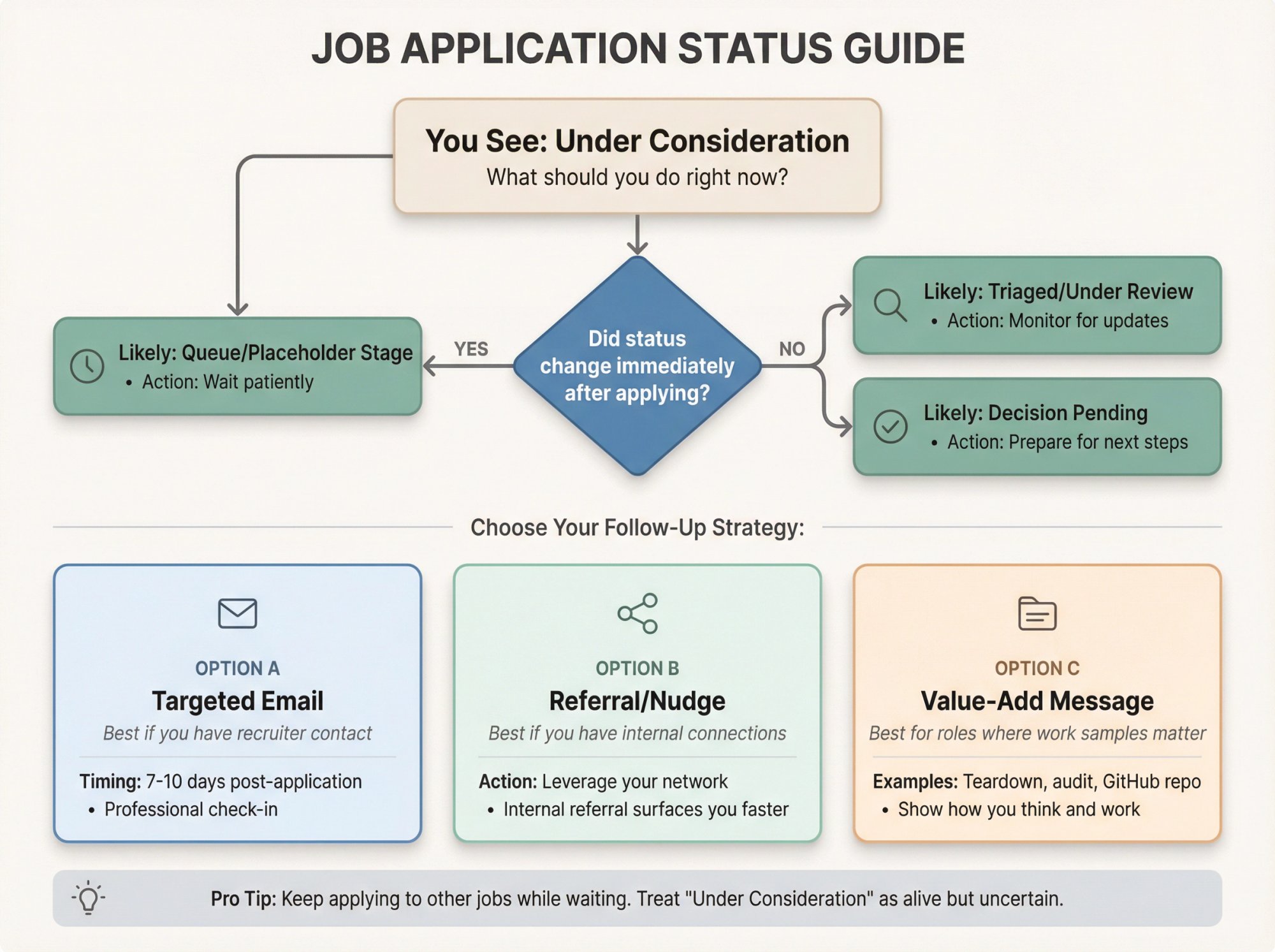
If you're staring at "Under Consideration" right now, do this in order:
How to Find What Under Consideration Means at Your Company
Many companies literally publish a status guide like "What to know about our application process" or "Careers FAQ." Northrop Grumman and other major employers do this, and it removes a ton of guesswork. Understanding employer-specific terminology helps you find jobs quickly and respond appropriately.
How to find it fast:
Google: [company name] + "application status" or "candidate home status"
How to Identify Which ATS System You're Using
If you see phrases like "Candidate Home," "Workday," "My Applications," or "In Progress," you're probably in Workday or a Workday-like portal. Many large organizations explicitly reference their ATS and status labels in candidate FAQs.
Why this matters: In some Workday setups, "Under Consideration" can be a bookmark stage and not trigger messages.
Does Under Consideration Mean the Job Posting Is Closed?
Even if the job listing disappears, you may still be under review. Many employers note that if you can't locate the posting, it may simply mean it's no longer accepting applications, and you should check your status in your account.
How to Tell Which Stage of Under Consideration You're In
Ask yourself these diagnostic questions to determine your actual application stage. Understanding where you truly stand helps you decide the best way to apply for jobs strategically:
→ Did the status change immediately after applying? Likely queue/placeholder
→ Did it change after several days? Likely triaged / flagged for review
→ Did it change after an interview? Likely decision pending
What's the Best Way to Follow Up on Under Consideration?
Choose one:
Option A: A targeted follow-up email (best if you have a recruiter contact)
Professional follow-up timing recommends the first check-in at 7-10 days post-application.
Option B: A referral/nudge (best if you have internal connections)
A brief internal referral can surface you faster than any portal status change.
Option C: A value-add message (best for roles where work samples matter)
Examples:
• "Here's a 1-page teardown of your onboarding flow" (product)
• "Here's a short audit of your latest ad copy" (marketing)
• "Here's a GitHub repo showing the approach" (engineering)
Should You Apply to Other Jobs While Under Consideration?
Ghosting and slow processes are real. Research shows:
→ 61% of job seekers have been ghosted after an interview
→ Recruiter workload has increased significantly in recent quarters
→ 38% of job seekers mass-apply, flooding employers with resumes
→ A significant percentage of jobs posted are "ghost jobs" in a typical quarter
Whether or not those exact figures match your experience, the takeaway is simple:
Treat "Under Consideration" as "alive but uncertain" and keep applying.
To maximize your efficiency, AIApply's Auto Apply can help you submit up to 500 tailored applications per month while maintaining quality and precision. Learn more about automating your job applications to maintain momentum during the waiting period.
How to Track Multiple Under Consideration Applications
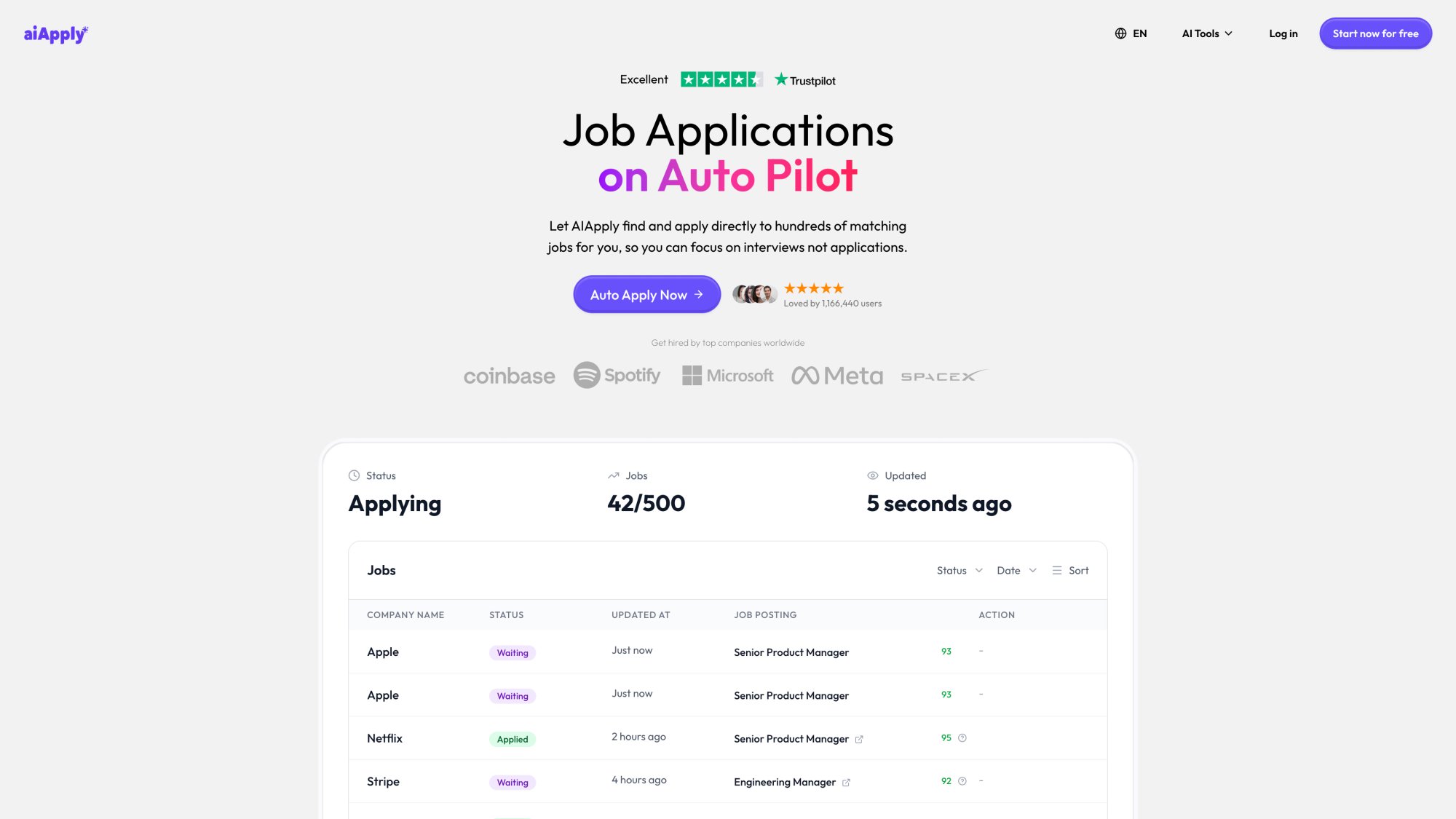
When statuses are vague, your system matters more than theirs.
AIApply's Job Search Tracker lets you log applications, track status, calculate response rate, and generate follow-ups. When you're managing dozens of applications across multiple portals, having one central dashboard prevents you from losing track of opportunities.
Can You Update Resume While Under Consideration?
Some portals treat reapplications weirdly. Some employers allow updates; others don't.
Many university systems note you typically can't change a submitted application and should email if changes are needed.
If you have a meaningful update (certification, portfolio, major achievement), send it as a value-add follow-up instead.
How to Contact Hiring Manager During Under Consideration
Some employers explicitly won't provide hiring manager contact info. In those cases, contacting the recruiter (if listed) or using formal channels is safer. If you're trying to reach out directly, learn how to send a message to a hiring manager professionally and effectively.
What Does Under Consideration Mean If Job Is Frozen?
Hiring can pause due to budget or approvals. Many organizations reference notifications when a job requisition is "frozen/unfrozen," which can explain why a status doesn't change for a while.
Under Consideration Follow-Up Email Templates
These are designed for the most common "Under Consideration" scenarios. Keep them short, calm, and specific. For more follow-up strategies, explore our guide on the best way to apply for jobs.
How to Follow Up 7-10 Days After Application
Subject: Follow-up on [Job Title] application - [Your Name]Hi [Recruiter/Hiring Manager Name],I hope you're doing well. I applied for the [Job Title] role on [date] and wanted to briefly follow up to reiterate my interest.I'm particularly excited about [specific part of role/team/product], and I believe my experience in [1-2 relevant strengths] could help with [specific business need from the job description].If helpful, I'm happy to share any additional information or work samples.Thanks for your time, and I look forward to hearing about next steps when timing allows.Best regards,[Your Name][Phone] | [LinkedIn]Why this timing: Professional follow-up guidance recommends a "Professional Check-In" sent 7-10 days after applying.
Value-Add Follow-Up Template for Under Consideration
Subject: [Job Title] - one extra idea/resource that may helpHi [Name],Quick follow-up on my application for [Job Title]. While reading more about [company/product/team], I put together [resource] that relates to [problem/opportunity in the JD].Link/attachment: [insert](Short note: [1-2 sentences explaining what it shows and why it matters])No rush - I know hiring timelines can be busy. I just wanted to share something concrete that shows how I think and work.Best,[Your Name]Why this works: You're not asking for reassurance. You're giving them signal.
Value-add follow-ups work best around 10-14 days.
Follow-Up After Interview Still Shows Under Consideration
Subject: Thank you + quick timeline check - [Job Title]Hi [Name],Thanks again for speaking with me on [date]. I enjoyed learning more about [specific topic], and I'm even more excited about the possibility of contributing to [team/goal].When you have a moment, could you share the expected timeline for next steps?Happy to provide anything else that would be helpful.Best regards,[Your Name]If you're unsure how often to follow up: Best practices suggest waiting 1-2 weeks before a check-in after silence, and generally limiting follow-ups to 2-3 total.
Why Application Status Stays Under Consideration for Weeks
A lot of job seekers assume:
"If they wanted me, they'd move me to interview fast."
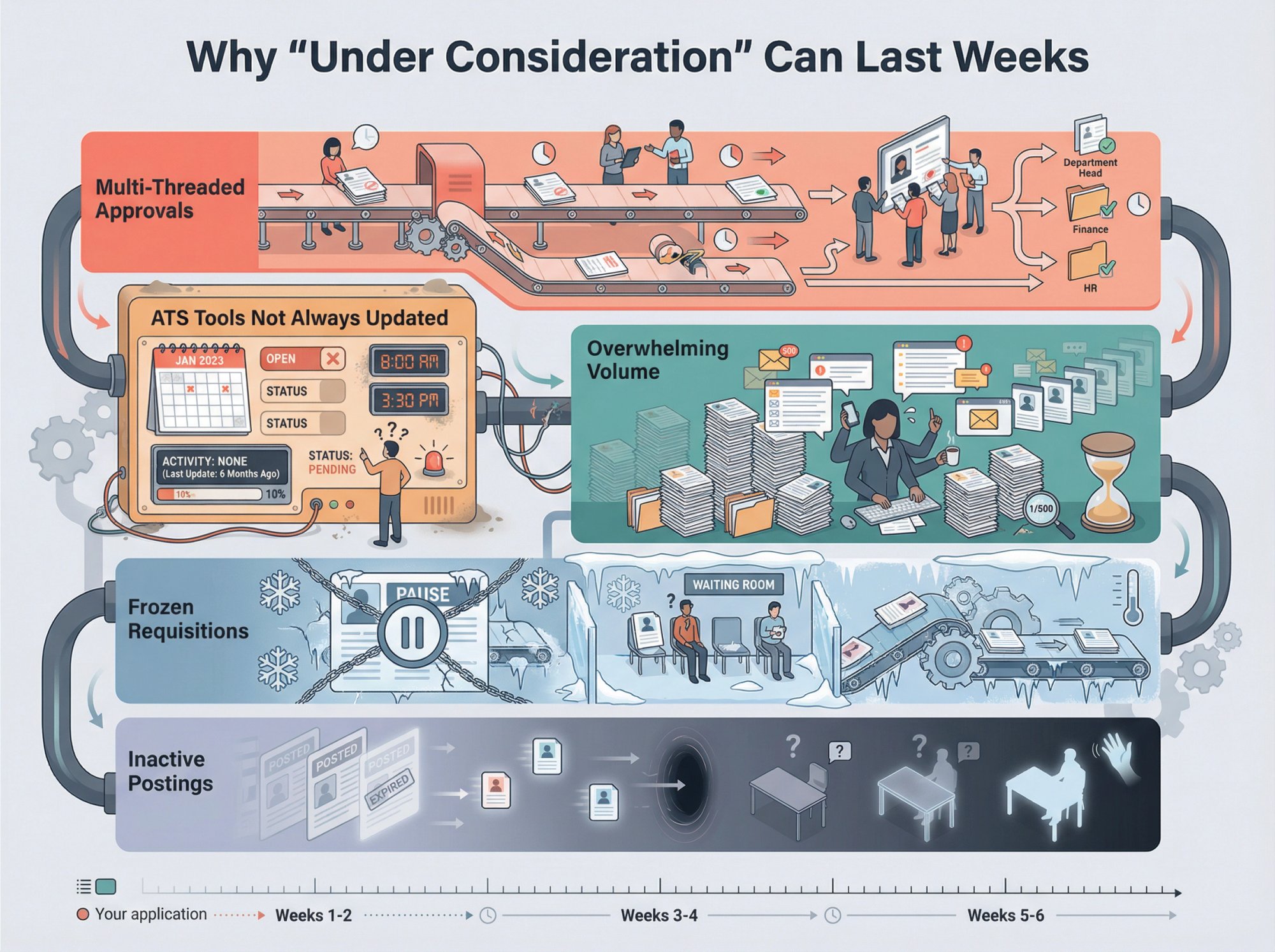
Sometimes yes, but often no. Here's why "Under Consideration" can linger even for strong candidates:
① Hiring is multi-threaded: approvals, budgeting, stakeholder alignment, scheduling.
② ATS stages are internal workflow tools and often not maintained perfectly. (Even Emerson's Workday guide emphasizes keeping information updated for candidate experience and timely declines.)
③ Volume is overwhelming: Recruiters face higher workload and candidates mass-applying, which can slow review and communication.
④ Roles get paused: Job requisitions can be frozen and unfrozen.
⑤ Some postings are "ghost jobs" (posted with no intent to hire), which means your status might remain "alive" even when the role isn't truly moving.
This is why the best strategy is a professional nudge plus pipeline diversification.
How to Get Past Under Consideration and Get Interview
While you wait, focus on actions that increase your signal without creating noise.
How to Optimize Resume to Get Past Under Consideration
Many resumes never make it to a human because of formatting, missing keywords, or unclear achievements.
Fast upgrades you can do in 30 minutes:
• Mirror the job description's core keywords (skills, tools, role title) naturally
• Lead bullets with outcomes: "Increased X by Y," "Reduced Z," "Built A that did B"
• Remove fancy formatting that breaks parsing (tables, columns, graphics-heavy layouts)
AIApply's Resume Builder uses GPT-4 via Azure OpenAI to create ATS-optimized content that mirrors job descriptions naturally. The platform scans for missing keywords and helps you restructure bullets to lead with measurable outcomes.
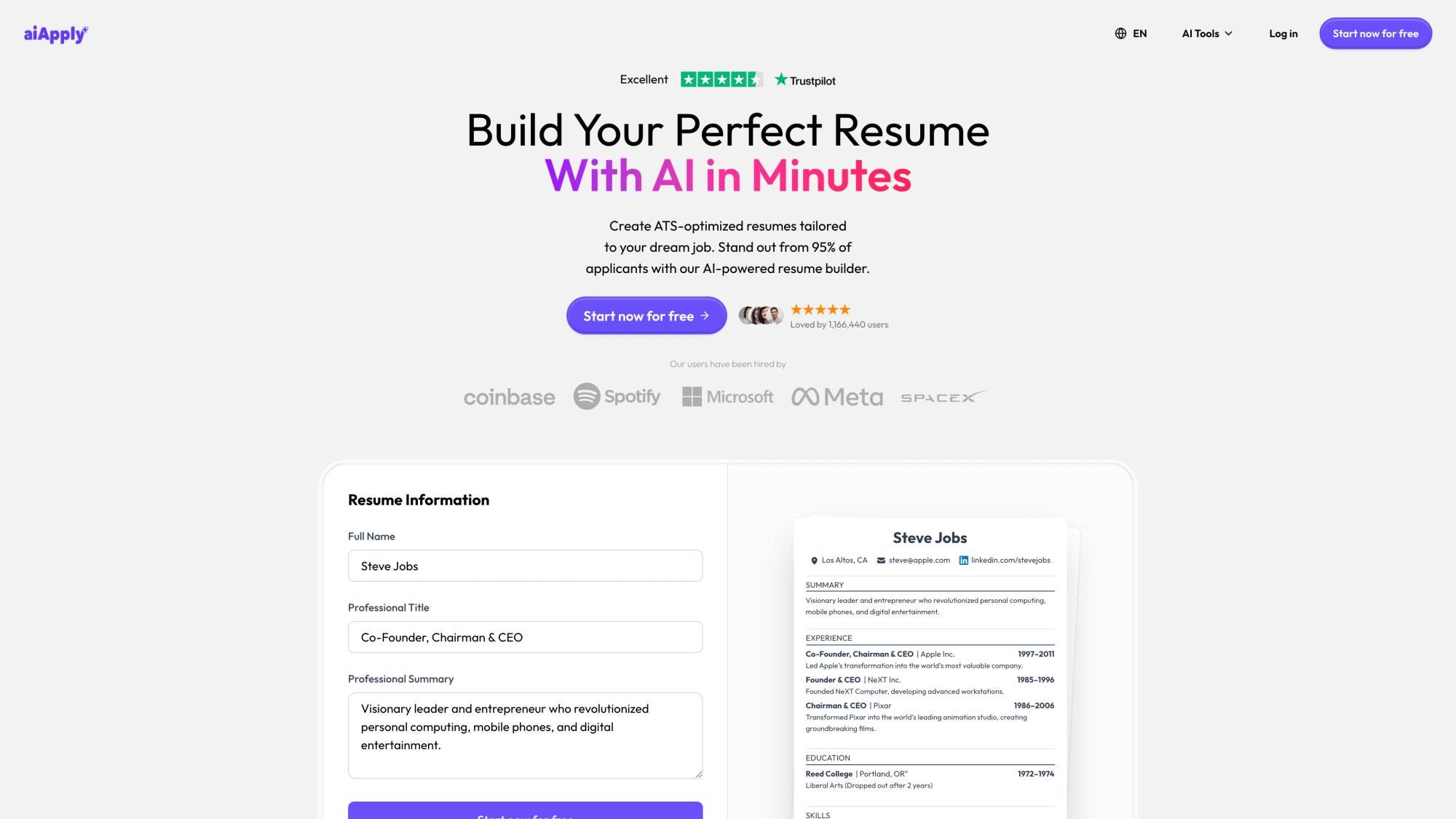
Instead of spending hours guessing which keywords matter, the AI Resume Editor identifies gaps and suggests improvements in real time. Every section is fully editable, so you maintain control while the technology handles the tedious alignment work.
You can regenerate any part until you're satisfied, and export in PDF, DOCX, or plain text formats. If you're applying from scratch, start with ATS-friendly resume templates that are proven to pass automated screening systems.
For a comprehensive approach, check out how to make a resume for your first job or learn how to write a technical resume if you're in a technical field.
How to Stand Out While Under Consideration with Portfolio
If you're in ops, finance, product, marketing, analytics, customer success, or engineering, a simple artifact stands out:
• A one-page plan
• A mini case study
• A project link
• A short audit
That's exactly what a value-add follow-up is for.
How Often Should You Follow Up on Under Consideration?
Over-following up can hurt you, not because you asked, but because you created work for someone already overloaded.
A simple rule:
• 1st follow-up: around 7-10 days
• 2nd follow-up (optional): around 10-14 days (value-add)
• Final follow-up (optional): around 3-4 weeks, only if there's a reason (posting closed, you have another offer deadline)
Best Job Application Tracker for Under Consideration
When you're juggling 20+ applications across different portals, each with vague status labels, memory fails. Spreadsheets get messy. Sticky notes disappear.
AIApply's Job Search platform helps you avoid messy spreadsheets and lets you generate follow-ups while your context is fresh. You can log application dates, track status changes, calculate response rates, and set reminders for follow-ups, all in one dashboard.
This becomes critical when "Under Consideration" lasts weeks. You'll know exactly when you applied, when you last followed up, and when it's appropriate to reach out again.
Can You Use AI for Interview Prep While Under Consideration?
Some employers explicitly ask candidates not to use AI tools during interviews and stress authenticity. For example, Northrop Grumman states interviews should assess your skills without AI assistance and notes misrepresentation may result in disqualification.
Best practice: Use AI to prepare (mock interviews, refining stories, practicing answers) and comply with each employer's rules for live interviews.
That said, preparation is where AI truly shines. AIApply's Mock Interview tool lets you paste a job description, practice with an AI interviewer, and get instant feedback on your answers.
For live interviews, Interview Answer Buddy provides real-time, on-screen coaching that's visible only to you (with a one-click hide feature before screen sharing). It works on Zoom, Google Meet, and similar platforms when you join via browser.
The key difference? Using AI before the interview to practice and prepare is smart. Using AI during the interview without disclosure violates employer policies and can backfire.
Know the rules, and use the technology to make yourself better, not to replace your authenticity. For comprehensive preparation, check out AI interview prep strategies that cover ethical AI use.
Under Consideration FAQ: Common Questions Answered
Is "Under Consideration" a good sign?
It's a neutral-to-positive sign. It means you haven't been rejected and you're in a pool being considered, but it doesn't guarantee you're shortlisted.
Does "Under Consideration" mean my resume passed ATS?
Not always. Some systems apply "Under Consideration" automatically. In other cases, it can reflect recruiter review or hiring manager interest. To ensure your resume is ATS-ready, use AIApply's Resume Checker to scan for common issues that might prevent your application from being seen.
What if it says "Under Consideration" immediately after I applied?
That's common. Treat it as a system status, not a signal of human review. Wait a few business days before doing anything.
How long should I wait before following up?
A strong default is 7-10 days after applying for the first check-in, then one value-add follow-up around 10-14 days if needed. Learn more about when to follow up on job applications.
If the job posting disappears, am I rejected?
Not necessarily. Some employers say a missing posting can simply mean it's no longer accepting new applications. You should check your status inside the portal.
What does "Completed" mean?
It depends on the employer. Northrop Grumman notes that if your status says "completed" and you didn't receive an offer, you're no longer under consideration. In other systems, "completed" can mean you completed your application. Always use the employer's own definitions if available.
My status hasn't changed in weeks. What does that mean?
It can mean:
• The hiring manager hasn't reviewed yet
• They're waiting for more applicants
• The job has been filled and the system hasn't updated yet
• The requisition is paused/frozen
Should I reach out to the hiring manager directly?
Only if you can find their contact information through professional channels (LinkedIn, company directory). Some employers explicitly won't provide hiring manager contact info. In those cases, stick with the recruiter or formal channels. For guidance, see how to send a message to a hiring manager.
Can I update my application after submitting?
Most systems don't allow post-submission edits. Many universities note you typically can't change a submitted application and should email if changes are needed. If you have a meaningful update, send it as a value-add follow-up instead.
How many times should I follow up?
Best practices suggest limiting follow-ups to 2-3 total. More than that risks creating work for an already overwhelmed recruiter.
What if I have another offer deadline?
This is one of the few scenarios where a final follow-up is justified. Mention the competing timeline professionally: "I have another offer deadline on [date] and wanted to check if there's any update on my candidacy."
Should I keep applying to other jobs while "Under Consideration"?
Absolutely. Never pause your job search based on one promising application. Research shows 61% of job seekers have been ghosted after an interview. Keep your pipeline full. Use AIApply's Auto Apply feature to maintain momentum while waiting.
Does "Under Consideration" after an interview mean I'm a finalist?
Not necessarily. Some employers use "Under Consideration" broadly for anyone who interviewed. Others reserve it for finalists. Check if the employer publishes status definitions.
How can I tell if "Under Consideration" is a good or bad sign for my specific application?
Context matters more than the label. Ask:
• How long has it been? (Days = normal, months = concerning)
• Is the posting still open? (Yes = still hiring, No = maybe filled)
• Did your status change after human interaction? (Interview status change = more promising)
• Does the employer publish timelines? (Check their FAQ)
What's the difference between "Under Consideration" and "Considering Application"?
They're functionally identical in most systems. Both indicate your application is in an active review pool. Focus on the employer's specific definitions if available.
Can I improve my chances while sitting in "Under Consideration"?
Yes. You can:
• Send a value-add follow-up with work samples or insights
• Network with employees at the company for internal referrals
• Optimize your online presence (LinkedIn, portfolio, GitHub)
• Continue applying to build your pipeline and options
Don't sit passively. Waiting without action is how strong candidates lose momentum. Learn how to find jobs quickly by diversifying your approach.
What Under Consideration Really Means for Your Job Search
"Under Consideration" is not the finish line. It's not even the halfway point. It's a signal that you're still in the race, but the race is longer than you think.
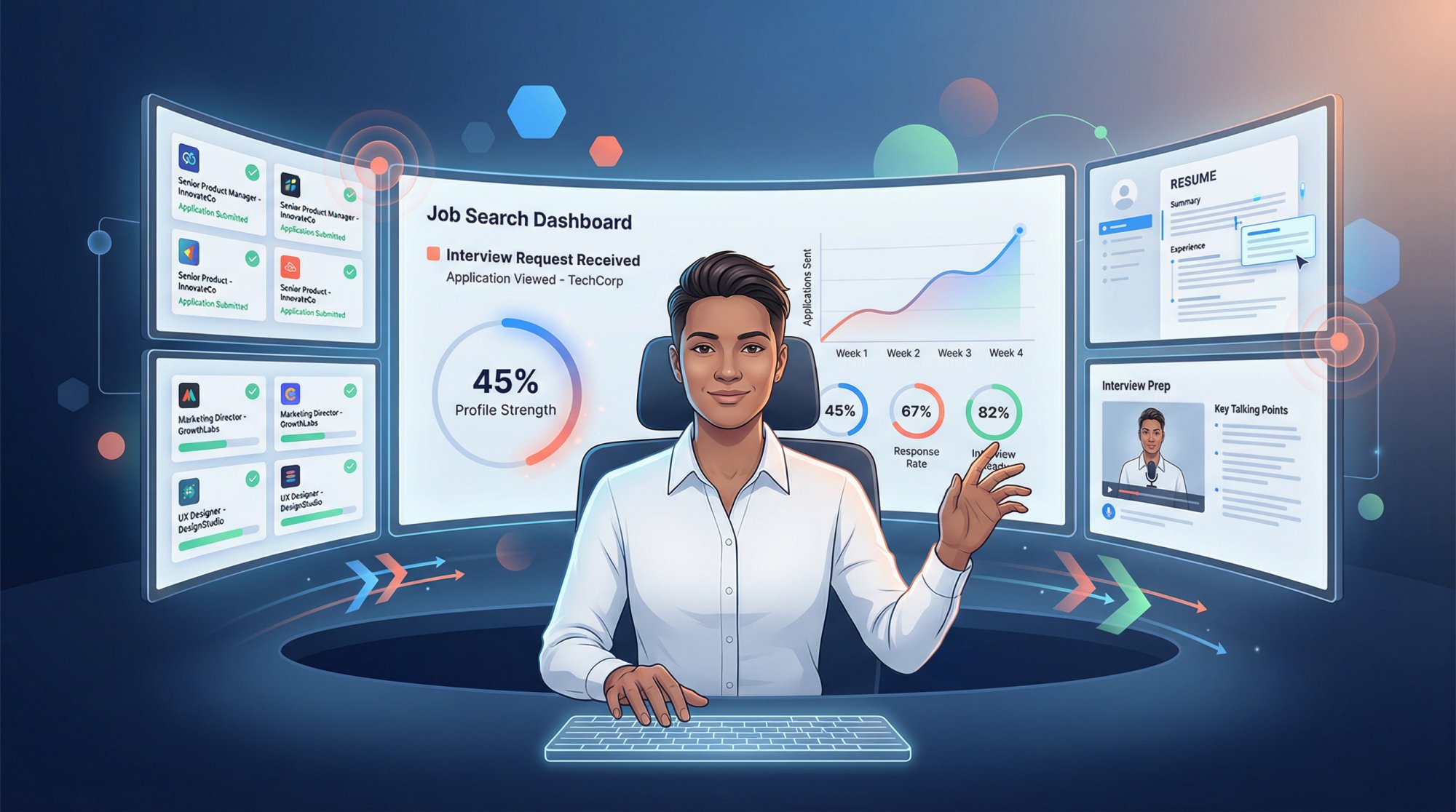
The employers who use this status genuinely mean you're being considered. But "being considered" can span days, weeks, or months depending on internal timelines, budget approvals, competing priorities, and pure organizational chaos.
Your job isn't to decode the exact meaning of the status. Your job is to control what you can control:
• Follow up professionally at the right intervals
• Keep applying to other roles so you have options
• Use tools that help you manage the chaos (AIApply's platform is built for exactly this)
• Optimize your materials so every new application has the best chance (AI Cover Letter Generator helps tailor each application)
• Stay visible through networking and value-add outreach
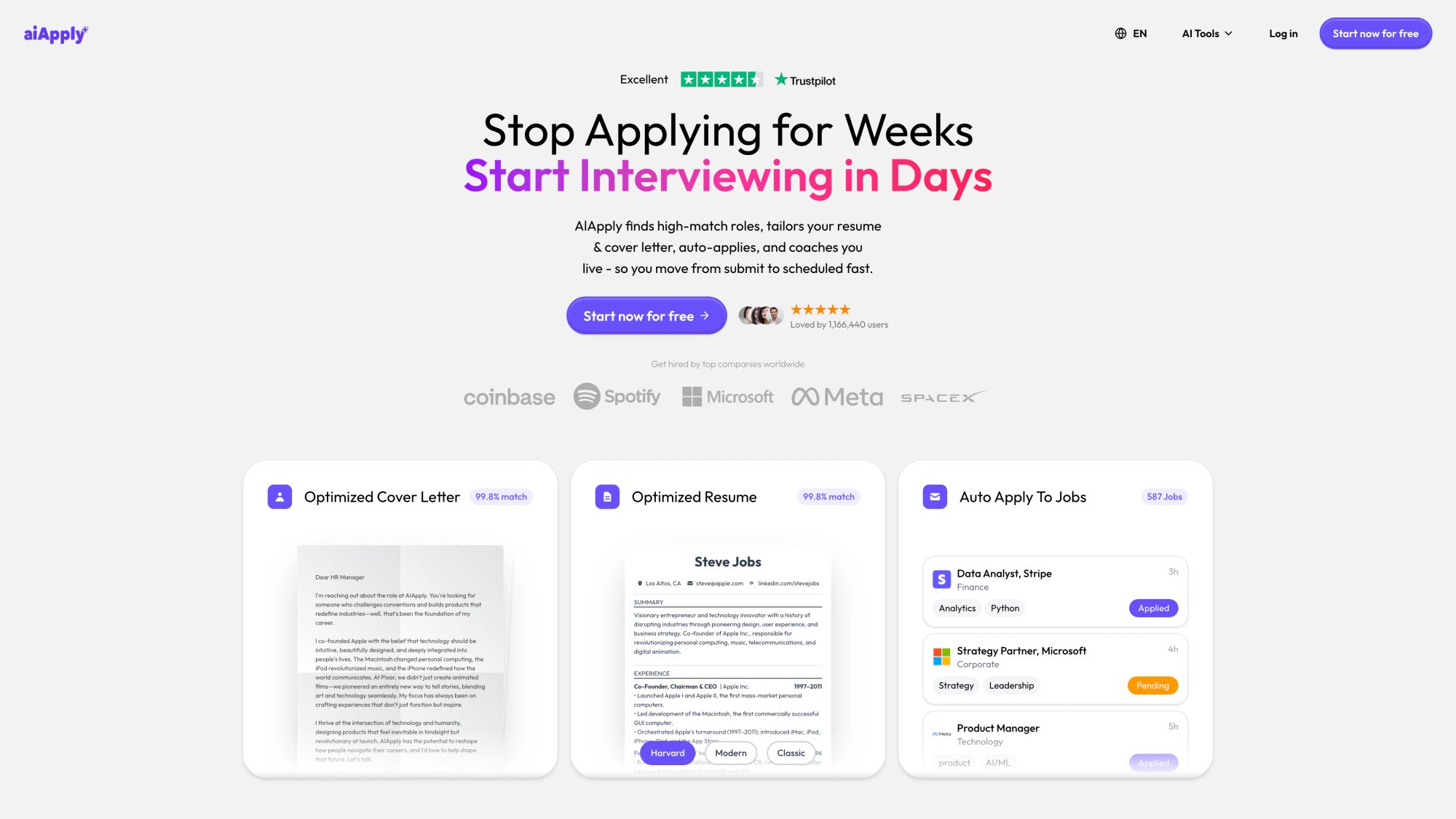
The candidates who land offers fastest aren't the ones obsessing over portal statuses.
They're the ones treating job search as a numbers game, keeping their pipeline full, and making strategic moves that increase their visibility. If you're ready to accelerate your search, explore the best way to apply for jobs with modern automation.
If you're stuck in "Under Consideration" right now, don't panic. But don't wait passively either. Take one action today (a follow-up, a networking message, a resume tweak, another application), and then take another tomorrow.
That's how you turn vague statuses into real interviews and real offers.
You just checked your application portal for the hundredth time this week. The status finally changed from "Application Received" to something new: "Under Consideration."
Is this good news? Bad news? Should you follow up? Keep waiting? The status is so vague it's almost worse than no update at all.
If you're stuck in this limbo right now, you're not alone. Thousands of job seekers see "Under Consideration" every day and have no idea what it actually means or what to do next.
This guide breaks down exactly what "Under Consideration" means across different companies and application systems, how long you'll likely wait, and the specific actions you should take right now to maximize your chances. Whether you're dealing with application tracking confusion or wondering how to get hired faster, this comprehensive resource will help you navigate the uncertainty.
What Does Under Consideration Mean On Application Status?
"Under Consideration" means the employer hasn't rejected you, and someone might be reviewing you, has flagged you for review, or has moved you into a pool of candidates they're considering.
That's it. It's a "not-no" status, not a "yes."
The tricky part? "Under Consideration" is often a workflow label inside the employer's Applicant Tracking System (ATS), and ATS labels aren't universal across employers.
Some companies use it as a holding stage. Others use it to mean active review. A few apply it automatically the moment you submit.
This is why understanding the context behind your specific status matters more than the label itself. If you want to ensure your application makes it past the ATS screening stage, consider using AIApply's Resume Scanner to identify gaps and optimize your resume for better visibility.
How Do Different Companies Use Under Consideration Status?
Instead of guessing, look at how employers themselves explain the label. Here are credible, real-world definitions that show why "Under Consideration" can feel both hopeful and frustrating.
Under Consideration in Workday: How the Bookmark Stage Works
An Emerson HR Workday recruiting guide explains "Under Consideration" as:
→ The candidate is of interest and could potentially move forward
→ It's "a great way to bookmark candidates"
→ Workday does not send an email to the candidate at this stage
What this means for you: You could sit in "Under Consideration" with zero outbound contact even if you're genuinely being reviewed.
What Does Under Consideration Mean When Recruiter Reviews?
Northrop Grumman's application process page states:
→ "Under consideration" means your application is under detailed review by the recruiter
What this means for you: At some employers, it's basically "Under Review," just phrased differently.
Does Under Consideration Mean Hiring Team Has Your Application?
Some organizations use "Under Consideration" to indicate that your application has moved beyond the initial recruiter screen and has been forwarded to the hiring team for review.
What this means for you: At some organizations, it's a step forward. Your application moved beyond "recruiter screen" into a hiring-team decision point.
What Does Under Consideration Mean in Active Review Stage?
Many Workday-based systems use "Under Consideration" to indicate that Talent Acquisition is actively reviewing your application.
Important note: Different employers using the same ATS (like Workday) may define status labels differently, so treat these as general guidelines rather than universal rules.
What Are the 3 Types of Under Consideration Status?
Across multiple employers and systems, "Under Consideration" reliably means one of these three states:
① Queue state: Your application is in the pool that may be reviewed soon
② Active review state: Recruiter or hiring manager is reviewing
③ Shortlist-holding state: You've passed a first filter and are being compared against other "maybes"
Your job is to figure out which of the three you're in without spiraling. Understanding ATS-friendly resume formatting can help you optimize your application strategy.
Under Consideration vs Under Review vs In Progress: What's the Difference?
Because companies label things differently, here's a translation cheat sheet based on how real employers describe statuses.
Use this as a guide, not gospel. The same label can mean different things in different ATS setups.
How Long Does Under Consideration Status Last?
This depends on industry, seniority, internal approvals, and whether the job is truly open. But here's what the hiring process typically looks like based on industry research and employer timelines:
• Some employers explicitly ask candidates to allow 6-8 weeks for contact or a status change
• Some hiring departments may take 4-8 weeks just to identify interviewees after materials are routed
• Industry data shows a median "time to hire across industries" of approximately 8 weeks, though this varies significantly by sector and role level
So, "Under Consideration" lasting weeks is common even when nothing is "wrong."
When to Follow Up After Under Consideration Status?
Use this timeline if you don't have explicit instructions from the employer:
Days 0-3 after applying
Confirm the application is complete and you received a confirmation email (if the company sends one). Don't follow up yet unless you have a referral who can internally nudge.
Days 4-10 after applying
If your status is "Under Consideration," assume you're in the review pool. If you have a recruiter email, plan a polite check-in at around 7-10 days. Professional follow-up strategies recommend this as the "professional check-in" window.
Days 10-21
If no response, consider a value-add follow-up (send something useful, not just "checking in"). Effective follow-up techniques suggest 10-14 days as a good window for value-add follow-ups. Keep applying elsewhere. Don't let one application freeze your job search.
3-6 weeks
It's reasonable to do one final check-in if you've had prior contact or if the posting just closed. Expect slower timelines in academia, government, and large enterprise hiring (committees, approvals, scheduling).
What to Do When Job Status Says Under Consideration?
If you're staring at "Under Consideration" right now, do this in order:
How to Find What Under Consideration Means at Your Company
Many companies literally publish a status guide like "What to know about our application process" or "Careers FAQ." Northrop Grumman and other major employers do this, and it removes a ton of guesswork. Understanding employer-specific terminology helps you find jobs quickly and respond appropriately.
How to find it fast:
Google: [company name] + "application status" or "candidate home status"
How to Identify Which ATS System You're Using
If you see phrases like "Candidate Home," "Workday," "My Applications," or "In Progress," you're probably in Workday or a Workday-like portal. Many large organizations explicitly reference their ATS and status labels in candidate FAQs.
Why this matters: In some Workday setups, "Under Consideration" can be a bookmark stage and not trigger messages.
Does Under Consideration Mean the Job Posting Is Closed?
Even if the job listing disappears, you may still be under review. Many employers note that if you can't locate the posting, it may simply mean it's no longer accepting applications, and you should check your status in your account.
How to Tell Which Stage of Under Consideration You're In
Ask yourself these diagnostic questions to determine your actual application stage. Understanding where you truly stand helps you decide the best way to apply for jobs strategically:
→ Did the status change immediately after applying? Likely queue/placeholder
→ Did it change after several days? Likely triaged / flagged for review
→ Did it change after an interview? Likely decision pending
What's the Best Way to Follow Up on Under Consideration?
Choose one:
Option A: A targeted follow-up email (best if you have a recruiter contact)
Professional follow-up timing recommends the first check-in at 7-10 days post-application.
Option B: A referral/nudge (best if you have internal connections)
A brief internal referral can surface you faster than any portal status change.
Option C: A value-add message (best for roles where work samples matter)
Examples:
• "Here's a 1-page teardown of your onboarding flow" (product)
• "Here's a short audit of your latest ad copy" (marketing)
• "Here's a GitHub repo showing the approach" (engineering)
Should You Apply to Other Jobs While Under Consideration?
Ghosting and slow processes are real. Research shows:
→ 61% of job seekers have been ghosted after an interview
→ Recruiter workload has increased significantly in recent quarters
→ 38% of job seekers mass-apply, flooding employers with resumes
→ A significant percentage of jobs posted are "ghost jobs" in a typical quarter
Whether or not those exact figures match your experience, the takeaway is simple:
Treat "Under Consideration" as "alive but uncertain" and keep applying.
To maximize your efficiency, AIApply's Auto Apply can help you submit up to 500 tailored applications per month while maintaining quality and precision. Learn more about automating your job applications to maintain momentum during the waiting period.
How to Track Multiple Under Consideration Applications
When statuses are vague, your system matters more than theirs.
AIApply's Job Search Tracker lets you log applications, track status, calculate response rate, and generate follow-ups. When you're managing dozens of applications across multiple portals, having one central dashboard prevents you from losing track of opportunities.
Can You Update Resume While Under Consideration?
Some portals treat reapplications weirdly. Some employers allow updates; others don't.
Many university systems note you typically can't change a submitted application and should email if changes are needed.
If you have a meaningful update (certification, portfolio, major achievement), send it as a value-add follow-up instead.
How to Contact Hiring Manager During Under Consideration
Some employers explicitly won't provide hiring manager contact info. In those cases, contacting the recruiter (if listed) or using formal channels is safer. If you're trying to reach out directly, learn how to send a message to a hiring manager professionally and effectively.
What Does Under Consideration Mean If Job Is Frozen?
Hiring can pause due to budget or approvals. Many organizations reference notifications when a job requisition is "frozen/unfrozen," which can explain why a status doesn't change for a while.
Under Consideration Follow-Up Email Templates
These are designed for the most common "Under Consideration" scenarios. Keep them short, calm, and specific. For more follow-up strategies, explore our guide on the best way to apply for jobs.
How to Follow Up 7-10 Days After Application
Subject: Follow-up on [Job Title] application - [Your Name]Hi [Recruiter/Hiring Manager Name],I hope you're doing well. I applied for the [Job Title] role on [date] and wanted to briefly follow up to reiterate my interest.I'm particularly excited about [specific part of role/team/product], and I believe my experience in [1-2 relevant strengths] could help with [specific business need from the job description].If helpful, I'm happy to share any additional information or work samples.Thanks for your time, and I look forward to hearing about next steps when timing allows.Best regards,[Your Name][Phone] | [LinkedIn]Why this timing: Professional follow-up guidance recommends a "Professional Check-In" sent 7-10 days after applying.
Value-Add Follow-Up Template for Under Consideration
Subject: [Job Title] - one extra idea/resource that may helpHi [Name],Quick follow-up on my application for [Job Title]. While reading more about [company/product/team], I put together [resource] that relates to [problem/opportunity in the JD].Link/attachment: [insert](Short note: [1-2 sentences explaining what it shows and why it matters])No rush - I know hiring timelines can be busy. I just wanted to share something concrete that shows how I think and work.Best,[Your Name]Why this works: You're not asking for reassurance. You're giving them signal.
Value-add follow-ups work best around 10-14 days.
Follow-Up After Interview Still Shows Under Consideration
Subject: Thank you + quick timeline check - [Job Title]Hi [Name],Thanks again for speaking with me on [date]. I enjoyed learning more about [specific topic], and I'm even more excited about the possibility of contributing to [team/goal].When you have a moment, could you share the expected timeline for next steps?Happy to provide anything else that would be helpful.Best regards,[Your Name]If you're unsure how often to follow up: Best practices suggest waiting 1-2 weeks before a check-in after silence, and generally limiting follow-ups to 2-3 total.
Why Application Status Stays Under Consideration for Weeks
A lot of job seekers assume:
"If they wanted me, they'd move me to interview fast."
Sometimes yes, but often no. Here's why "Under Consideration" can linger even for strong candidates:
① Hiring is multi-threaded: approvals, budgeting, stakeholder alignment, scheduling.
② ATS stages are internal workflow tools and often not maintained perfectly. (Even Emerson's Workday guide emphasizes keeping information updated for candidate experience and timely declines.)
③ Volume is overwhelming: Recruiters face higher workload and candidates mass-applying, which can slow review and communication.
④ Roles get paused: Job requisitions can be frozen and unfrozen.
⑤ Some postings are "ghost jobs" (posted with no intent to hire), which means your status might remain "alive" even when the role isn't truly moving.
This is why the best strategy is a professional nudge plus pipeline diversification.
How to Get Past Under Consideration and Get Interview
While you wait, focus on actions that increase your signal without creating noise.
How to Optimize Resume to Get Past Under Consideration
Many resumes never make it to a human because of formatting, missing keywords, or unclear achievements.
Fast upgrades you can do in 30 minutes:
• Mirror the job description's core keywords (skills, tools, role title) naturally
• Lead bullets with outcomes: "Increased X by Y," "Reduced Z," "Built A that did B"
• Remove fancy formatting that breaks parsing (tables, columns, graphics-heavy layouts)
AIApply's Resume Builder uses GPT-4 via Azure OpenAI to create ATS-optimized content that mirrors job descriptions naturally. The platform scans for missing keywords and helps you restructure bullets to lead with measurable outcomes.
Instead of spending hours guessing which keywords matter, the AI Resume Editor identifies gaps and suggests improvements in real time. Every section is fully editable, so you maintain control while the technology handles the tedious alignment work.
You can regenerate any part until you're satisfied, and export in PDF, DOCX, or plain text formats. If you're applying from scratch, start with ATS-friendly resume templates that are proven to pass automated screening systems.
For a comprehensive approach, check out how to make a resume for your first job or learn how to write a technical resume if you're in a technical field.
How to Stand Out While Under Consideration with Portfolio
If you're in ops, finance, product, marketing, analytics, customer success, or engineering, a simple artifact stands out:
• A one-page plan
• A mini case study
• A project link
• A short audit
That's exactly what a value-add follow-up is for.
How Often Should You Follow Up on Under Consideration?
Over-following up can hurt you, not because you asked, but because you created work for someone already overloaded.
A simple rule:
• 1st follow-up: around 7-10 days
• 2nd follow-up (optional): around 10-14 days (value-add)
• Final follow-up (optional): around 3-4 weeks, only if there's a reason (posting closed, you have another offer deadline)
Best Job Application Tracker for Under Consideration
When you're juggling 20+ applications across different portals, each with vague status labels, memory fails. Spreadsheets get messy. Sticky notes disappear.
AIApply's Job Search platform helps you avoid messy spreadsheets and lets you generate follow-ups while your context is fresh. You can log application dates, track status changes, calculate response rates, and set reminders for follow-ups, all in one dashboard.
This becomes critical when "Under Consideration" lasts weeks. You'll know exactly when you applied, when you last followed up, and when it's appropriate to reach out again.
Can You Use AI for Interview Prep While Under Consideration?
Some employers explicitly ask candidates not to use AI tools during interviews and stress authenticity. For example, Northrop Grumman states interviews should assess your skills without AI assistance and notes misrepresentation may result in disqualification.
Best practice: Use AI to prepare (mock interviews, refining stories, practicing answers) and comply with each employer's rules for live interviews.
That said, preparation is where AI truly shines. AIApply's Mock Interview tool lets you paste a job description, practice with an AI interviewer, and get instant feedback on your answers.
For live interviews, Interview Answer Buddy provides real-time, on-screen coaching that's visible only to you (with a one-click hide feature before screen sharing). It works on Zoom, Google Meet, and similar platforms when you join via browser.
The key difference? Using AI before the interview to practice and prepare is smart. Using AI during the interview without disclosure violates employer policies and can backfire.
Know the rules, and use the technology to make yourself better, not to replace your authenticity. For comprehensive preparation, check out AI interview prep strategies that cover ethical AI use.
Under Consideration FAQ: Common Questions Answered
Is "Under Consideration" a good sign?
It's a neutral-to-positive sign. It means you haven't been rejected and you're in a pool being considered, but it doesn't guarantee you're shortlisted.
Does "Under Consideration" mean my resume passed ATS?
Not always. Some systems apply "Under Consideration" automatically. In other cases, it can reflect recruiter review or hiring manager interest. To ensure your resume is ATS-ready, use AIApply's Resume Checker to scan for common issues that might prevent your application from being seen.
What if it says "Under Consideration" immediately after I applied?
That's common. Treat it as a system status, not a signal of human review. Wait a few business days before doing anything.
How long should I wait before following up?
A strong default is 7-10 days after applying for the first check-in, then one value-add follow-up around 10-14 days if needed. Learn more about when to follow up on job applications.
If the job posting disappears, am I rejected?
Not necessarily. Some employers say a missing posting can simply mean it's no longer accepting new applications. You should check your status inside the portal.
What does "Completed" mean?
It depends on the employer. Northrop Grumman notes that if your status says "completed" and you didn't receive an offer, you're no longer under consideration. In other systems, "completed" can mean you completed your application. Always use the employer's own definitions if available.
My status hasn't changed in weeks. What does that mean?
It can mean:
• The hiring manager hasn't reviewed yet
• They're waiting for more applicants
• The job has been filled and the system hasn't updated yet
• The requisition is paused/frozen
Should I reach out to the hiring manager directly?
Only if you can find their contact information through professional channels (LinkedIn, company directory). Some employers explicitly won't provide hiring manager contact info. In those cases, stick with the recruiter or formal channels. For guidance, see how to send a message to a hiring manager.
Can I update my application after submitting?
Most systems don't allow post-submission edits. Many universities note you typically can't change a submitted application and should email if changes are needed. If you have a meaningful update, send it as a value-add follow-up instead.
How many times should I follow up?
Best practices suggest limiting follow-ups to 2-3 total. More than that risks creating work for an already overwhelmed recruiter.
What if I have another offer deadline?
This is one of the few scenarios where a final follow-up is justified. Mention the competing timeline professionally: "I have another offer deadline on [date] and wanted to check if there's any update on my candidacy."
Should I keep applying to other jobs while "Under Consideration"?
Absolutely. Never pause your job search based on one promising application. Research shows 61% of job seekers have been ghosted after an interview. Keep your pipeline full. Use AIApply's Auto Apply feature to maintain momentum while waiting.
Does "Under Consideration" after an interview mean I'm a finalist?
Not necessarily. Some employers use "Under Consideration" broadly for anyone who interviewed. Others reserve it for finalists. Check if the employer publishes status definitions.
How can I tell if "Under Consideration" is a good or bad sign for my specific application?
Context matters more than the label. Ask:
• How long has it been? (Days = normal, months = concerning)
• Is the posting still open? (Yes = still hiring, No = maybe filled)
• Did your status change after human interaction? (Interview status change = more promising)
• Does the employer publish timelines? (Check their FAQ)
What's the difference between "Under Consideration" and "Considering Application"?
They're functionally identical in most systems. Both indicate your application is in an active review pool. Focus on the employer's specific definitions if available.
Can I improve my chances while sitting in "Under Consideration"?
Yes. You can:
• Send a value-add follow-up with work samples or insights
• Network with employees at the company for internal referrals
• Optimize your online presence (LinkedIn, portfolio, GitHub)
• Continue applying to build your pipeline and options
Don't sit passively. Waiting without action is how strong candidates lose momentum. Learn how to find jobs quickly by diversifying your approach.
What Under Consideration Really Means for Your Job Search
"Under Consideration" is not the finish line. It's not even the halfway point. It's a signal that you're still in the race, but the race is longer than you think.
The employers who use this status genuinely mean you're being considered. But "being considered" can span days, weeks, or months depending on internal timelines, budget approvals, competing priorities, and pure organizational chaos.
Your job isn't to decode the exact meaning of the status. Your job is to control what you can control:
• Follow up professionally at the right intervals
• Keep applying to other roles so you have options
• Use tools that help you manage the chaos (AIApply's platform is built for exactly this)
• Optimize your materials so every new application has the best chance (AI Cover Letter Generator helps tailor each application)
• Stay visible through networking and value-add outreach
The candidates who land offers fastest aren't the ones obsessing over portal statuses.
They're the ones treating job search as a numbers game, keeping their pipeline full, and making strategic moves that increase their visibility. If you're ready to accelerate your search, explore the best way to apply for jobs with modern automation.
If you're stuck in "Under Consideration" right now, don't panic. But don't wait passively either. Take one action today (a follow-up, a networking message, a resume tweak, another application), and then take another tomorrow.
That's how you turn vague statuses into real interviews and real offers.
.webp)
%20(1).webp)
.webp)
Don't miss out on
your next opportunity.
Create and send applications in seconds, not hours.


