
How to Get a Job at a Startup: The Complete Playbook

.webp)
Getting a job at a startup isn't like applying to a big company. At a large corporation, the process is mostly standardized: submit your application, pass through a structured pipeline, get slotted into a defined role. At a startup, the hiring conversation sounds more like: "We have a problem that's on fire. Can you put it out fast, without creating new fires?"
That difference changes everything. It changes how you position yourself, where you look for roles, how you reach out, and how you interview. And if you're still relying on the same spray-and-pray tactics that work (poorly) for corporate jobs, you're going to have a rough time.
This guide is the playbook we wish existed when we started helping job seekers navigate startup hiring at AIApply. It covers the full journey: picking the right startups, building the kind of signal that gets founders to pay attention, finding roles where startups actually post, running outreach that gets replies, interviewing like an operator, and evaluating offers (including equity) without gambling your career on vibes. If you want to skip ahead and see what getting hired fast looks like in practice, that guide covers the tactical side in detail.
Every data point below is sourced from the most recent reports available as of March 2026, and we've linked each one so you can verify it yourself.
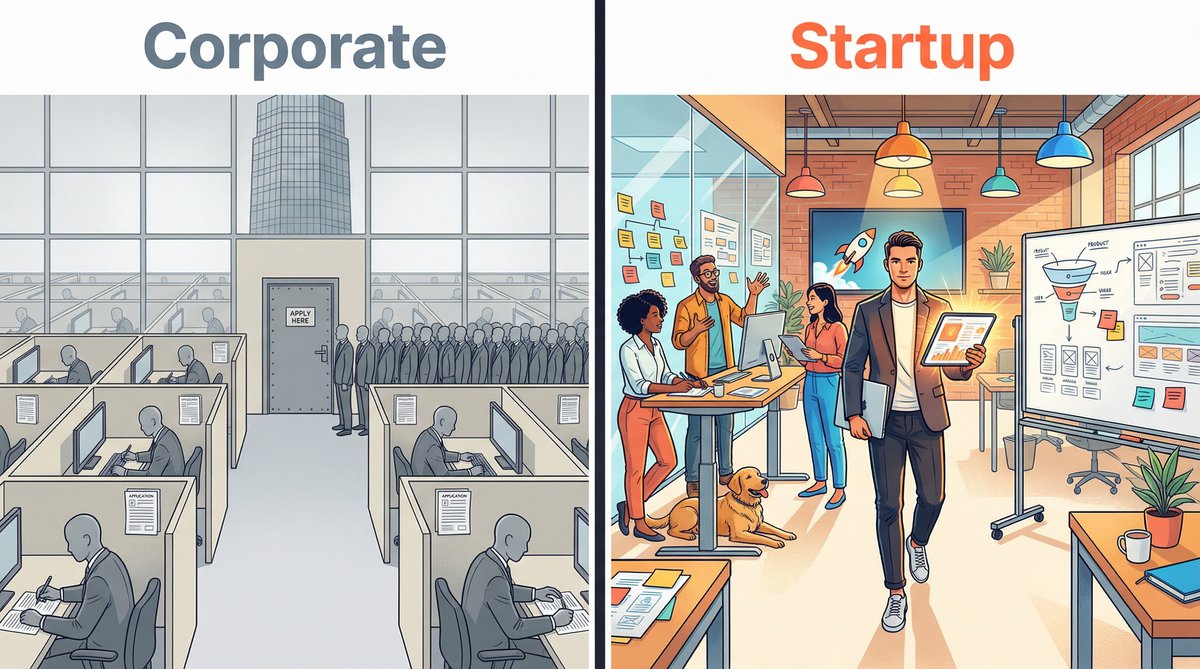
Why Startup Hiring Is Different from Corporate Jobs
Startups are drowning in applications. And that's not an exaggeration.
Ashby's 2026 report, which analyzed over 1,200 venture-backed startups, 32,000 hires, and 11 million applications (published February 23, 2026), paints a clear picture of how competitive the landscape has become. That's roughly 340 applications per hire on average, before you even account for roles that never get filled.
A few more numbers from that same report:
Remote startup jobs received about 42% more inbound applications than in-office roles
Across all startups, roughly 15 applicants get an interview for every single hire
Startup offer acceptance rates hover around 80%
So if you're playing a volume-only game (sending out 200 generic applications and hoping for the best), you're competing in the noisiest, most crowded part of the market. That approach stopped working a while ago.

Why Signal Density Beats Application Volume at Startups
In 2026, the people landing startup jobs aren't the ones submitting the most applications. They're the ones who pack the most credible signal into the fewest minutes of a founder's attention.
Think about it from the founder's side for a moment:
Every hire is expensive. Every mis-hire is existential. Every interview is time stolen from shipping.
So a startup wants evidence of three things from you:
You can produce outcomes, not just complete tasks
You can operate in ambiguity without needing constant direction
You will increase the team's speed, not slow it down
Everything in your job search should demonstrate those three qualities. Your resume, your outreach, your portfolio, your interview answers. All of it.
How to Land a Startup Job: A 4-Phase System
The whole game plan, broken into four phases:
① Target the right startups (stage, role, constraints)
② Build signal (resume, portfolio, proof-of-work)
③ Get access (warm intros + high-quality cold outreach)
④ Close (interview, offer, equity, due diligence)
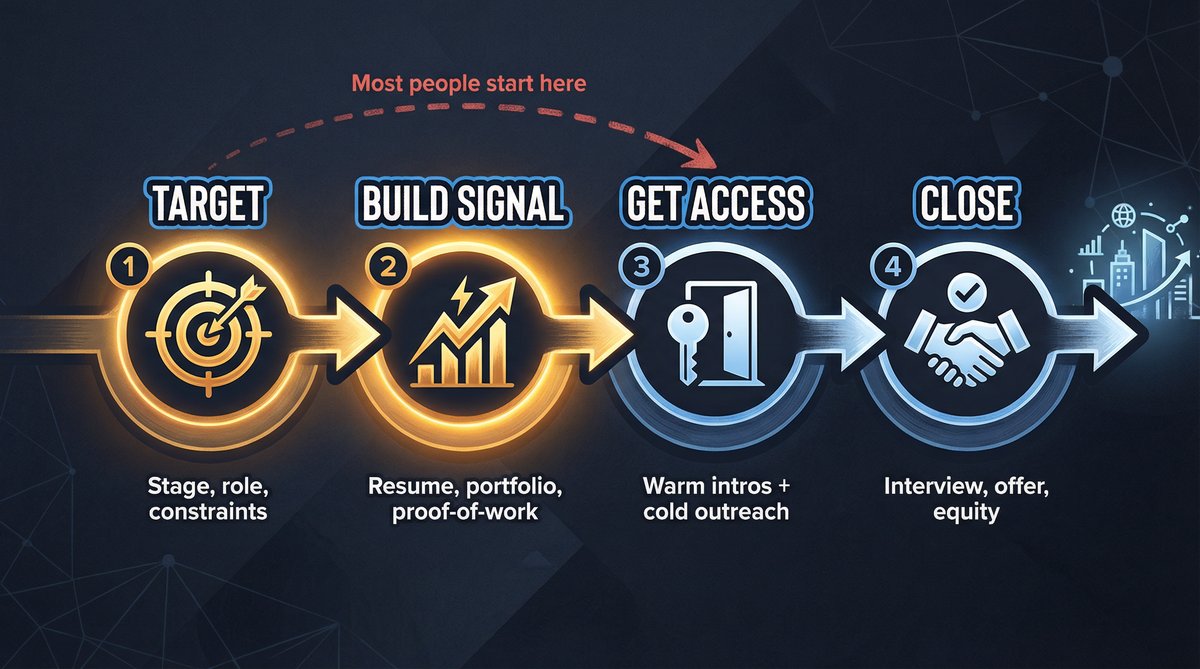
Most people fail because they skip phases ① and ②. They jump straight to applying and praying.
You're going to do the opposite.
How to Find and Target the Right Startup to Join
The biggest mistake people make is thinking "I want a startup job" is specific enough. It's not. "Startup" isn't a job category. It's a risk profile.
What you actually want is a particular mix of:
Risk (runway, funding stage, product maturity)
Learning slope (breadth vs. depth of work)
Speed (shipping cadence, decision-making velocity)
Comp structure (cash vs. equity weighting)
Constraints (visa, location, remote, time zone, family obligations)
So the first move is figuring out what kind of startup you can realistically join and thrive in. Not just any startup that'll have you.
What Each Startup Stage Looks for When Hiring
Not all startups hire the same way. The stage of the company fundamentally changes what they need, how they evaluate candidates, and what the interview feels like.
One thing worth noting about 2026 specifically: many startups are staying lean and hiring only when a function is at breaking point. Business Insider summarized a YC partner's view as "hire when things start to break" (published October 22, 2025). Whether you agree with that philosophy or not, it means startups are hiring for fewer, higher-impact roles. Which means your signal needs to be that much sharper.

How to Build Your Startup Filter Before Applying
Before you look at a single job posting, write down your non-negotiables:
Remote, hybrid, or in-office?
What time zones and travel are you willing to accept?
What's the minimum cash compensation you need to live on?
How much runway risk can you stomach? ("I can join a startup with X months of runway")
Role type: do you want to build, manage, or specialize?
Domain: what do you care about enough to suffer through the hard parts?
If you skip this step, you'll default to whatever job posting is loudest, not whatever job is actually right for you. Before you start filtering startups, it also helps to research the companies you're targeting. Understanding their product, funding history, and team will sharpen your targeting significantly.
How to Build a Resume and Portfolio Founders Trust
How to Write a Resume for a Startup Job in 2026
A startup resume is not a history document. It's a risk-reduction document.
The founder reading it is asking one question: "If I drop you into a messy situation, will you create leverage quickly?"
So your resume needs to answer four things:
What did you own?
What changed because of you?
How fast did you move?
How did you handle ambiguity?
The rules that separate startup resumes from the corporate kind:
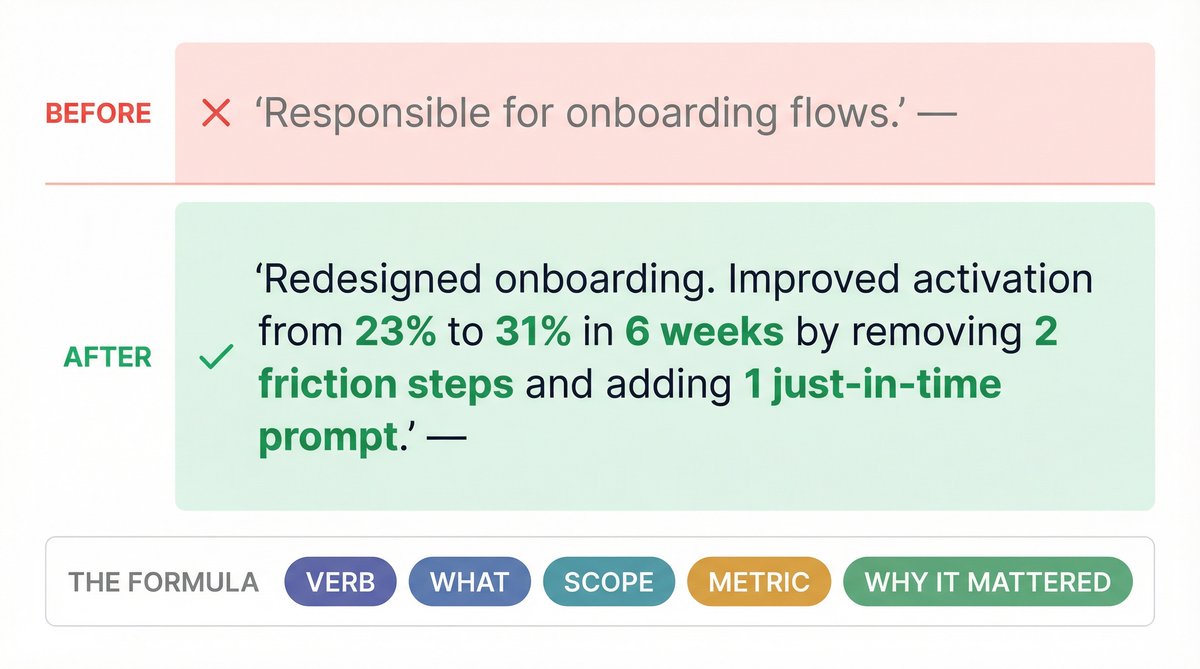
Lead with outcomes, not responsibilities.
Bad: "Responsible for onboarding flows."
Good: "Redesigned onboarding, improved activation from 23% to 31% in 6 weeks by removing 2 friction steps and adding 1 just-in-time prompt."
Show ownership boundaries. Founders want to know what you truly owned, end to end. Not what your team did. What you did.
Use startup verbs. Built, shipped, launched, simplified, removed, automated, debugged, negotiated, closed, scaled, reduced. These words tell a founder you move fast.
Include constraints. "With 2 engineers." "No budget." "In 10 days." Constraints are credibility. They prove you can do a lot with a little.
Make it scan-proof. Short bullets. Numbers. Clear nouns. The person reading your resume is exhausted from a 12-hour day. Respect their attention span.
For role-specific inspiration, reviewing a software engineer resume example or a product manager resume example can show you exactly how to structure your experience for startup roles. If you're targeting a technical role, the guide to writing a technical resume covers how to present engineering work in a way that resonates with startup hiring teams.
The Resume Bullet Formula That Works for Startups
Verb + What + Scope + Metric + Why It Mattered
Example:
"Automated customer onboarding emails (7-step sequence) and reduced time-to-first-value from 5 days to 2 days, freeing the team from manual follow-ups."
This format is dense with signal. It tells a founder exactly what you did, at what scale, with what result, and why it mattered to the business.
If crafting these kinds of bullets feels tedious (and it is), tools like our AI Resume Builder can help you generate role-specific, outcome-focused bullet points in minutes. You still need to add the real numbers and context from your experience, but it handles the structural heavy lifting so you can focus on what actually makes your resume unique.
For existing resumes that need a startup-friendly overhaul, our AI Resume Rewriter can restructure your bullet points to follow this outcome-first format without starting from scratch.
Why Proof of Work Beats Resume Claims at Startups
Startups are allergic to fluff. So wherever possible, add proof links to your resume and application:
GitHub repo
Portfolio case study
Live project you built
Teardown doc
Writing samples
Demo video (keep it under 2 minutes)
If you don't have proof yet, create it. That's what the next section is for. Not sure how to present your portfolio effectively? The guide to creating a professional portfolio covers exactly what to include and how to structure it so hiring managers can evaluate your work quickly.
Before you send anything, run your resume through an AI Resume Scanner to check how well it would perform against Applicant Tracking Systems. Even at startups that don't use heavy ATS filtering, a well-structured, keyword-aligned resume signals professionalism. For templates that are already structured to pass ATS checks, this collection of ATS-friendly resume templates is worth reviewing before you finalize your format.
Proof-of-Work Projects That Get You Hired at Startups
If you're not getting interviews, the most likely problem is that your signal is too weak relative to the competition. The fastest way to fix that? Build a small proof-of-work project.
The ideal proof-of-work project is small (4 to 8 hours of work), specific to the startup's current problem, and easy to evaluate. A founder should understand the value in 2 minutes.
The goal isn't to do free labor. The goal is to create a conversation where you're obviously useful.
What proof-of-work looks like for different roles:
→ Engineering
Fix a small issue in an open-source repo they use (or their public repo if available)
Build a tiny tool that matches their domain (for an AI startup, maybe a small RAG demo)
Write a technical teardown: "How I'd improve latency or cost in your product"
→ Product
A 2-page product teardown of their onboarding or core loop
A one-page PRD for a feature they should ship next
A metrics map: what to instrument, what to monitor, what to optimize
→ Design
Redesign one critical screen and explain your tradeoffs
Improve their accessibility and document the issues you found
Create a mini design system audit
→ Marketing
Rewrite one landing page section with a clear hypothesis
Build a 10-keyword SEO plan based on intent
Draft 3 ad concepts and a testing plan
→ Sales / BD
List 25 target accounts and explain why they fit
Draft a 5-email outbound sequence tailored to their ICP
Build a competitor battlecard
→ Ops / Finance / Chief of Staff
Create a lightweight process improvement plan (hiring, onboarding, or customer support)
Build a runway model (simple assumptions, clear inputs)
Draft a KPI dashboard spec
Where to Find Startup Jobs in 2026
Knowing where to look matters just as much as knowing how to apply. You want channels where startups are actively posting, where founders or hiring managers actually read applications, and where you can differentiate yourself from the pile.
1. Y Combinator's Work at a Startup Platform
Y Combinator's "Work at a Startup" lets you submit one profile and be discovered by YC-backed founders. Their own explanation: you fill out a single application, and YC companies browse and contact people they're interested in. The platform emphasizes single-profile applications and direct founder contact.
If you're a student or early in your career, YC also runs a dedicated Summer '26 internships page (current as of March 2026), which is worth checking on their jobs site. We also have a dedicated students page with tools and resources designed specifically for students and recent graduates entering the job market.
2. Hacker News: How to Use the Monthly Who Is Hiring Thread
The monthly "Who is Hiring?" threads on Hacker News remain one of the best channels for early-stage and founder-posted roles. The March 2026 thread is live right now.
The key isn't just applying through these threads. It's replying with a short, credible pitch and proof links. Most people leave a generic "interested, here's my resume" comment. You'll stand out by being specific about what you can do for that particular startup.
3. Wellfound (AngelList Talent): Best Platform for Startup Jobs
AngelList announced in November 2022 that AngelList Talent was becoming Wellfound. Wellfound's CEO confirmed the rebrand in January 2023.
Wellfound is strong for discovering startups and roles in one place, and the platform is free for job seekers. It's particularly useful for browsing early to mid-stage startup roles with transparent salary ranges.
4. Welcome to the Jungle and What Happened to Otta
If you used Otta in the past, the landscape changed. Welcome to the Jungle announced it acquired Otta in January 2024, with plans to build a larger European tech hiring platform.
This matters in 2026 because many UK and EU candidates still search for "Otta" without realizing the rebrand happened. If that's you, head to Welcome to the Jungle instead.
5. VC Portfolio Companies: How to Find Hidden Startup Jobs
A method that bypasses the noise of job boards entirely:
Find investors you respect (Sequoia, a16z, Benchmark, Accel, or smaller, sector-focused funds)
Look at their portfolio companies
Go company by company, check their careers pages
Reach out directly to founders and hiring managers
Why this works: it completely bypasses the "job board spray" dynamic. You're going directly to companies that have funding and are likely hiring.
TrueUp maintains a page ranking VCs by open portfolio jobs (counts change constantly). As of early 2026, it shows tens of thousands of open roles across major VC portfolios.
6. LinkedIn for Startup Job Hunting: A Targeted Approach
LinkedIn is noisy. But it's still valuable for two specific things:
Identifying hiring managers and founders at your target startups
Spotting hiring signals (new funding rounds, new head of function hired, expansion announcements)
LinkedIn's own 2026 data emphasizes that skills are becoming more important than titles or degrees, and notes that many job seekers feel blocked by skills gaps (published February 24, 2026). That's exactly why proof-of-work projects matter. If you're weighing whether LinkedIn is worth investing in for your job search, this breakdown of whether LinkedIn is worth it for job seekers covers the platform's real strengths and limitations.
The 3-Lane Strategy for Applying to Startup Jobs
Most people pick one lane. You need all three running simultaneously:
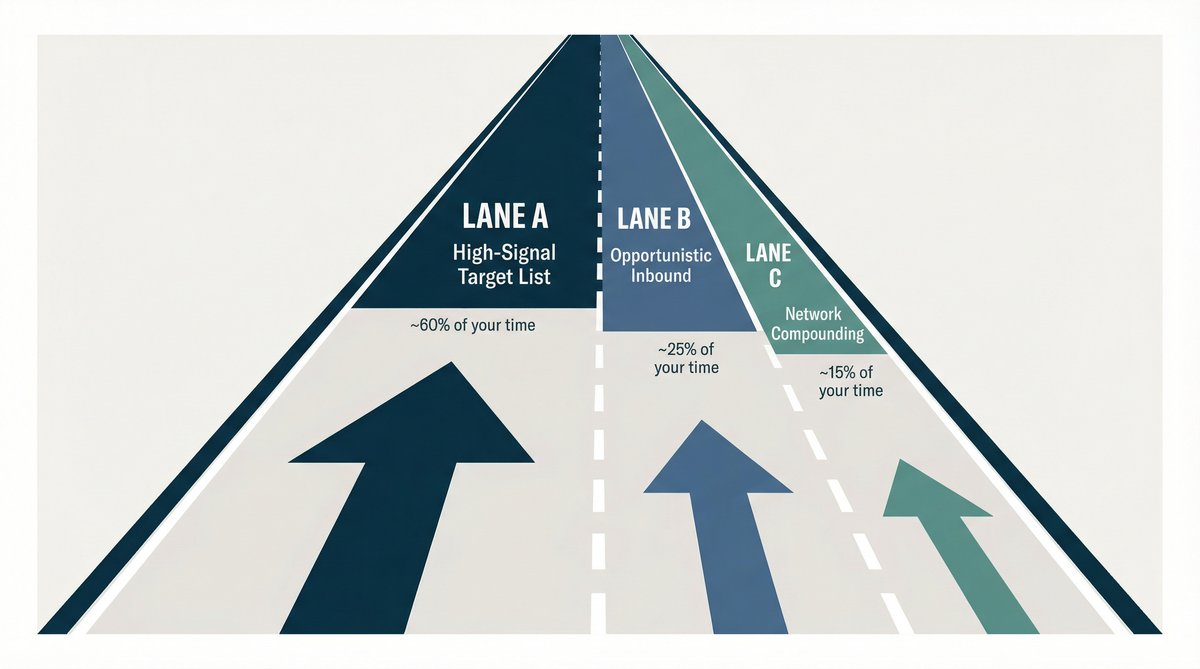
If you're only doing Lane B (applying to postings and waiting), you're playing the worst odds. Lane A is where most startup offers come from. For a broader framework on running a structured search, the job search strategy guide and modern job search techniques both cover how to run your search like a system rather than a hope.
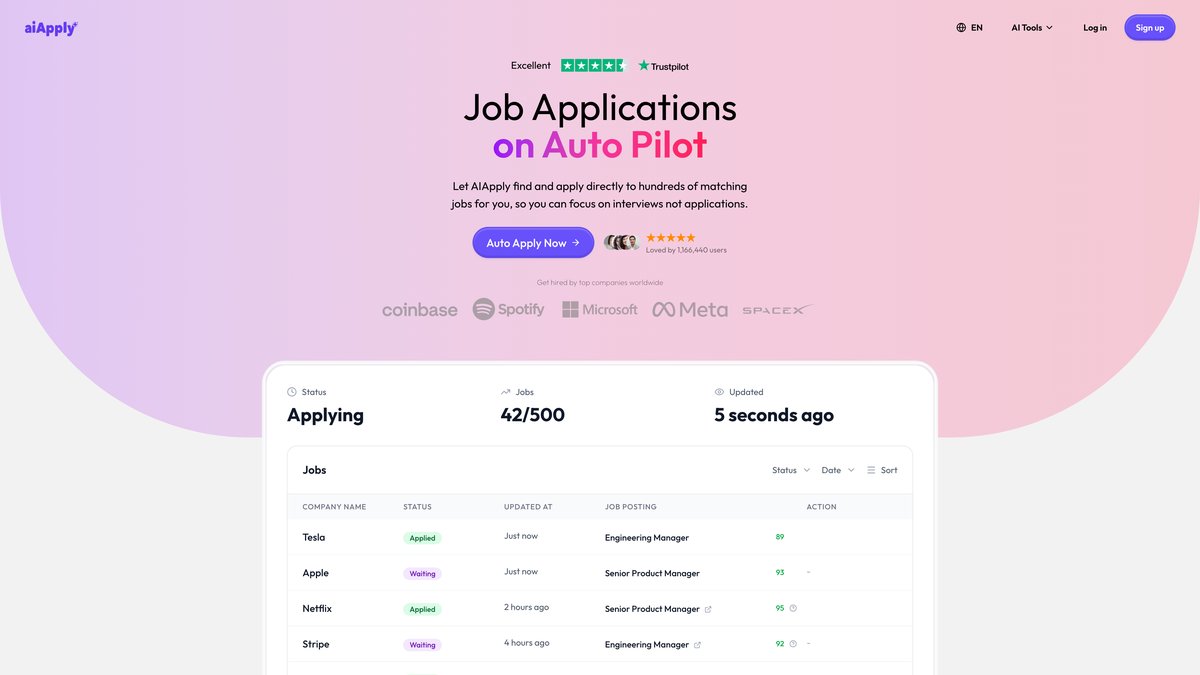
For Lane B specifically, AIApply's Auto Apply can handle the high-volume application work. It scans job postings, matches them to your profile, and submits tailored applications automatically. This frees up your time and energy for the high-signal work in Lane A and Lane C that actually wins startup offers. If you want to understand how automating job applications actually works in practice, that post walks through the mechanics.
How to Write Cold Outreach That Startup Founders Reply To
Cold outreach to startup founders and hiring managers is a skill. And like any skill, it has a structure that works.
The core principle: you're selling one thing. A low-risk next step. Not a job. Not a 30-minute call. Not a grand commitment. Just a small, easy next step.
The Cold Outreach Formula That Gets Startup Replies
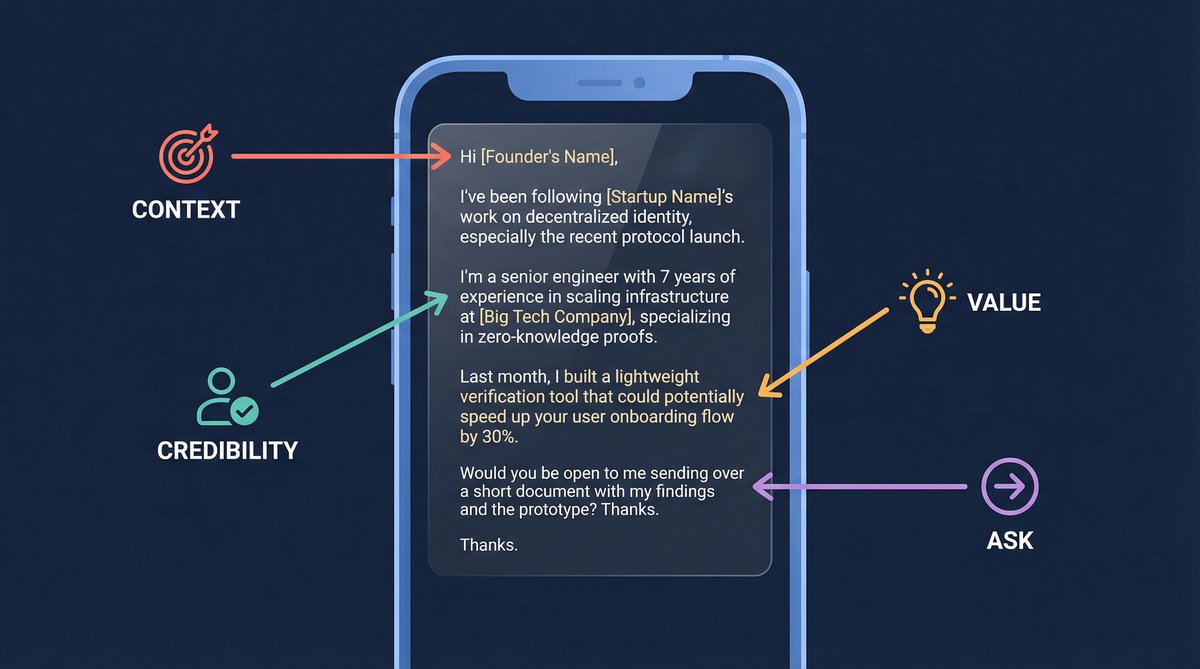
In 80 to 130 words, hit these four points:
Context: Why them specifically (not a generic compliment)
Credibility: Why you, in one sentence
Value: Something useful you noticed or built
Ask: A small next step
Three templates you can adapt:
Template 1: Short Founder DM
Hey [Name], I'm [Your Name]. I've been following [Company] since [specific thing].I built a quick [teardown / demo / analysis] on [specific problem] and I think it could help you [outcome].Two highlights:- [Insight 1]- [Insight 2]If you're hiring for [Role], I'd love to share it and see if there's a fit. Want me to send the doc?Template 2: Hiring Manager Email
Subject: 2 ideas for [team metric/problem] + [Role]Hi [Name], I'm applying for [Role]. I'm a [your role] who has [1 credible outcome].Before applying, I spent 45 minutes with [product / docs / repo]. I noticed [problem].I drafted a 1-page plan with:1) [idea]2) [idea]3) how I'd measure successIf it's useful, I can send it. If it's not aligned, no worries.Template 3: How to Ask for a Referral
Don't ask: "Can you refer me?" That puts people in an awkward spot.
Ask instead: "Can you vouch for a specific claim?"
Hey [Name], quick ask.I'm targeting [Company] for [Role]. You've worked with me on [project], so you've seen how I [specific strength].Would you be comfortable introducing me to [Hiring Manager/Founder] with a 1-liner that I'm strong at [specific thing]?I'll write the draft intro so it's easy.How to Follow Up After Applying to a Startup
Most people never follow up. That's a mistake, because startups are busy and your message probably got buried, not ignored. Knowing how to send a message to a hiring manager that gets opened and replied to is its own skill. That guide covers what to include and what to avoid.
→ Day 0: Initial message
→ Day 3: Follow-up with one extra useful insight
→ Day 7: Final follow-up with an easy exit ("Totally understand if the timing isn't right")
Following up isn't annoying when you're adding value each time. It's professional. For the follow-up emails specifically, these follow-up email after application samples show exactly how to structure each touchpoint.
For the cover letters and initial application materials that complement your outreach, our AI Cover Letter Generator creates role-specific letters that match the tone and language of startup job descriptions. You'll want to personalize them with specifics from your proof-of-work, but it gives you a strong starting structure.
If you want to see what a strong startup application cover letter looks like, reviewing a software engineer cover letter example or a product manager cover letter example can give you a concrete benchmark to work from.
How to Interview at a Startup and Actually Stand Out
What Startup Interviewers Are Really Evaluating
A startup interview is not primarily about "are you smart enough." It's about:
Do you create momentum?
Do you make good decisions with incomplete information?
Do you communicate clearly without a lot of context?
Do you take ownership without being managed?
Research shows that hired candidates spend roughly 2.5 to 3 hours interviewing at startups (not counting take-homes). That's short. Teams are trying to keep interview loops compact and high-signal.
So you need to make every minute count.
7 Common Startup Interview Questions to Prepare For
Every startup interview circles around these core questions, even if they're worded differently:
What have you shipped that mattered? (They want to see real impact, not task completion)
What do you do when you get stuck? (Resourcefulness check)
How do you decide what to do first? (Prioritization under ambiguity)
How do you learn fast? (Learning velocity matters more than current knowledge)
Tell me about conflict and hard tradeoffs. (Emotional maturity and decision-making)
Why this startup, right now? (Genuine interest vs. spray-and-pray)
What would you do in your first 30 days? (Can you think like an operator?)
Prepare your answers as stories with clear outcomes. Not theoretical frameworks. Stories. If you're coming from a corporate background, these behavioral interview questions and answers will help you reframe your experience in outcome-first terms that resonate with startup interviewers.

How to Build Your Interview Story Bank
You need 8 stories ready before you walk into any interview:
Your biggest win
Your fastest ship
Your hardest failure
Your conflict story
Your ambiguous problem story
Your leadership story
Your customer obsession story
Your learning story
Write them down once. Practice them out loud. You'll reuse them in different combinations across every interview.
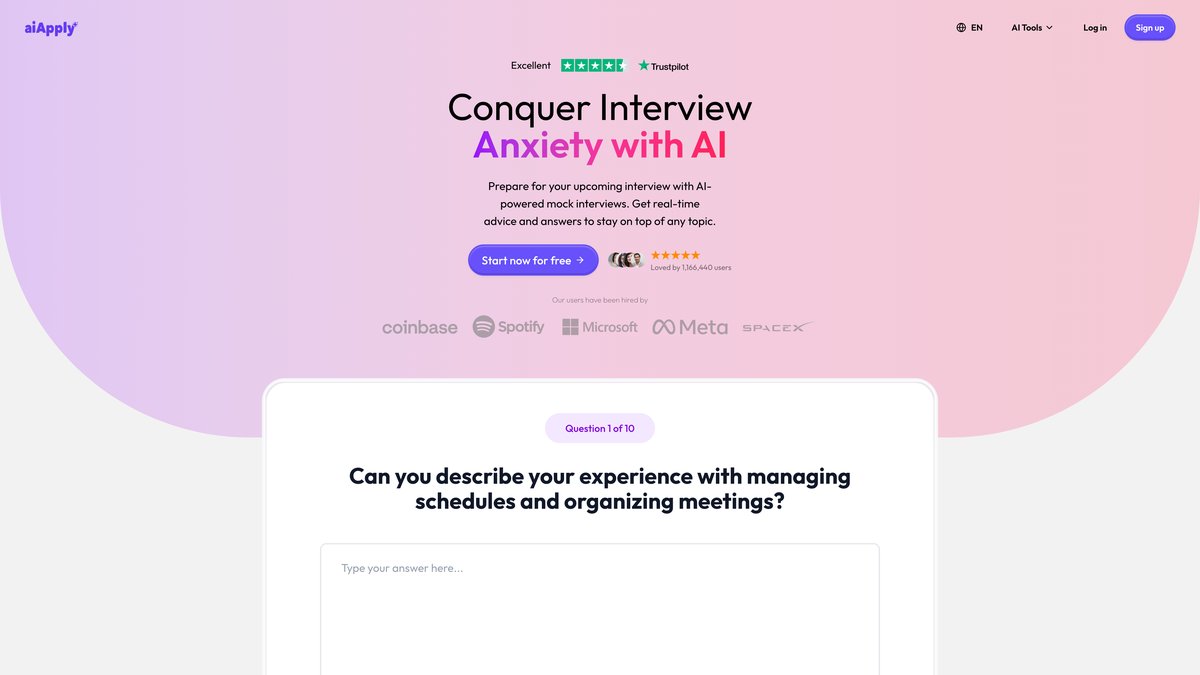
Our AI Mock Interview tool can help here. Paste in the job description, and it generates tailored interview questions powered by GPT-4. You get instant feedback on your answers, which helps you refine before the real thing. A complete mock session takes about 15 to 30 minutes. For technical roles specifically, the guide to preparing for technical interviews at startups covers how to approach coding challenges and system design questions.
And for the interview itself, Interview Buddy is a desktop app that provides real-time, on-screen coaching during live video interviews on Zoom, Google Meet, or Teams. It listens to the questions being asked and suggests personalized answers based on the job description and your experience. It includes a one-click hide feature before screen sharing, so it's discreet.
How to Handle Startup Take-Home Assignments Fairly
Take-home assignments can be a fair evaluation method. They can also be free consulting in disguise.
You want the assignment to be:
Time-boxed (2 to 4 hours max)
Clearly scoped (you know exactly what they're evaluating)
Clearly evaluated (they tell you the criteria upfront)
If they send you something massive with no boundaries, respond like this:
Happy to do a work sample. To keep it fair, can we time-box it to ~3 hours?If you want deeper work, I'm also open to a paid trial day.Many founders respect this kind of response because they also hate wasted time. Setting boundaries early signals confidence and professionalism.
Why AI Literacy Is Now Required for Startup Jobs in 2026
AI is no longer a niche skill that only "AI people" need to worry about. If you're applying to startups in 2026, you need to demonstrate some level of AI fluency regardless of your role.
Research data shows that the share of jobs with "AI" in the title doubled from 2% to 4%, and that AI is now mentioned in about 33% of all job postings. Ravio's 2026 compensation trends report for European tech (published December 4, 2025) found that AI/ML hiring grew 88% year over year, with pay premiums in the single to low-double digits depending on seniority.
LinkedIn's UK "Jobs on the Rise 2026" list (published January 7, 2026) highlights AI engineers and machine learning researchers as fast-growing roles, explicitly listing skills like LLMs, Retrieval-Augmented Generation (RAG), and NLP.
What this means practically: Even if you're not applying for an AI role, you should be able to articulate how you use AI tools in your work. Whether that's using LLMs for research, automating repetitive tasks, or evaluating AI-generated output, showing that you can work alongside AI tools responsibly is becoming table stakes.
If you want to see the specific skills that are valued in startup engineering roles, the software engineer skills page and product manager skills page outline exactly what employers are looking for in 2026.
How to Evaluate a Startup Job Offer
You got an offer. That's genuinely exciting. But a startup offer isn't as simple as checking the salary. You need to understand the full picture.
How Startup Stock Options Work: A Simple Explanation
Equity can be life-changing. It can also be worth zero. So don't treat equity like guaranteed money. Treat it like a financial instrument with:
Upside (what it could be worth)
Probability (how likely is that outcome)
Time (how long until you see any value)
Dilution (your percentage shrinks with each funding round)
Liquidity constraints (can you actually sell these shares?)
In most startups, you get stock options that vest over time. A common structure is vesting over four years with a one-year cliff, but exact terms vary. The deeper point is this: you don't own the shares on day one. You earn the right to buy them later, at a price set when you join (the "strike price").
10 Questions to Ask About Startup Equity Before Signing
Before you sign anything, get clear answers to these:
What is the equity grant (number of options, not just a percentage)?
What are the total shares outstanding (so you can compute your actual percentage)?
What is the strike price?
What is the current valuation and the last round price?
What is the vesting schedule and cliff?
What happens if the company is acquired? (Look for acceleration terms.)
What is the post-termination exercise window if you leave?
Is early exercise allowed?
Are there secondary sale opportunities?
What is the tax treatment in your country?
If a startup can't answer these basic questions, that's a red flag. Any company offering equity should be transparent about how it works.
UK Startup Equity: What Are EMI Options?
If you're joining a UK startup, EMI options are a common equity structure because they come with significant tax advantages.
Government guidance on GOV.UK (accessed March 2026) states that a company can offer EMIs if it has:
Assets of £30 million or less
Fewer than 250 full-time employees
EMIs can provide share options up to £250,000 in value over a 3-year period, and you must work at least 25 hours per week (or 75% of your working time) for the company.
An important nuance: HMRC's internal manual explains that if an EMI option is exercised within 90 days of a disqualifying event, the tax advantages can be preserved (HMRC guidance, still widely referenced as of 2026).
This is not tax advice. EMI rules can change and your personal situation matters. Use these points to ask better questions, then verify with a qualified tax advisor.
Startup Compensation Trends in 2026: What the Data Shows
Carta's "State of Startup Compensation: H1 2025" (published August 26, 2025) reports that startup salaries in their data rose, including increases since January 2024, while equity packages were more static. It also notes that hiring slowed in many sectors, with exceptions like hardware.
That combination often shows up in real offers: more negotiation pressure on cash, and equity grants that are "standard for level" with limited room to move.
So if cash matters to you (and it probably should), you need to negotiate the full package. To understand what compensation you should reasonably expect, benchmarking your target role against current market data is essential. The software engineer salary data and product manager salary benchmarks can give you a solid anchor for those conversations.
How to Negotiate a Startup Offer: Script and Tactics
A template you can adapt for any startup offer conversation:
I'm excited about the role. Before I sign, I'd like to understand the full compensation package.Could we review:- base salary- any bonus or commission (if relevant)- equity: number of options, vesting schedule, strike price, and post-termination exercise windowIf we can't move base, I'm open to discussing a bigger equity grant or other levers (sign-on, earlier review, etc.).This approach is calm, professional, and shows you've done your homework. Most founders respect candidates who negotiate thoughtfully because it signals the same kind of rigor they want on their team. Once you've negotiated and are ready to sign, this guide on how to accept an offer letter covers the exact steps and what to confirm before committing.
How to Vet a Startup Before Accepting a Job Offer
You're not just accepting a job. You're accepting a market bet, a team bet, a leadership bet, and a liquidity bet. So do your homework before you say yes.

1. How to Evaluate Role Clarity Before Joining
Ask these questions directly:
What does success in 90 days look like?
What does "good" output look like weekly?
Who decides priorities?
If they can't answer these, you will suffer. Lack of role clarity at a startup means you'll spend your first months guessing what matters instead of shipping.
2. Startup Runway: What to Ask Before Joining
Ask directly:
"How many months of runway do you have at current burn?"
"What is your plan if fundraising takes 2x longer than expected?"
If they refuse to discuss this at all, treat that as risk. A transparent startup founder will give you at least a general sense of the financial picture.
3. How to Check a Startup's Legal and Financial Status
For UK companies, you can verify basic company information using Companies House. GOV.UK provides guidance on searching the Companies House register.
Check for obvious red flags: late filings, multiple director changes in a short period, or any registered charges that seem unusual.
4. How to Really Evaluate a Startup's Culture
Don't ask "What's your culture?" You'll get a marketing answer.
Ask instead:
"Tell me about the last time you missed a deadline. What happened?"
"What behavior gets rewarded here?"
"What type of person fails here?"
You want stories, not slogans. The answers to these questions reveal far more than any "about us" page.
The 30-Day Startup Job Search Plan
Stop thinking about your job search as an indefinite activity. Run it like a sprint with clear weekly goals.
If you do this with discipline, you'll stop "job searching" and start "running a pipeline." And pipelines produce results.
Frequently Asked Questions About Getting a Job at a Startup
How is working at a startup different from working at a big company?
The pace is faster, the scope of your role is broader, and the structure is thinner. At a startup, you'll likely own entire functions instead of narrow slices. Decision-making is faster (sometimes uncomfortably so), and your work will have a more direct impact on whether the company succeeds or fails. The tradeoff is less stability, less process, and often lower base pay, partially offset by equity upside.
Do I need startup experience to get hired at a startup?
No. What you need is evidence that you can operate like a startup person: shipping fast, owning outcomes, handling ambiguity, and learning on the fly. If your background is corporate, translate your experience into startup language by leading with outcomes, constraints, and speed. Proof-of-work projects are the fastest way to bridge this gap.
What's the best way to find startup jobs that aren't on major job boards?
The highest-signal channels include YC's "Work at a Startup" platform, Hacker News monthly "Who is Hiring?" threads, Wellfound (formerly AngelList Talent), and directly browsing VC portfolio pages on sites like TrueUp. Many startup roles are filled through warm introductions before they ever hit a public job board.
Should I accept lower pay to work at a startup?
It depends on the full package. Carta's H1 2025 compensation data shows startup salaries have been rising, so the gap isn't as large as it used to be. Evaluate total compensation: base salary, equity value (and its probability of paying out), learning opportunities, and career trajectory. If the equity is meaningful and the company's fundamentals are strong, a lower base might be worthwhile. If the equity is tiny and the runway is short, it's just a pay cut.

How important is a cover letter for startup applications?
It depends on the channel. For direct outreach to founders, your message essentially is your cover letter, so it matters a lot. For job board applications, a strong cover letter can differentiate you from identical resumes. The key is making it specific to the startup, not generic. Our AI Cover Letter Generator creates role-specific letters in minutes, which gives you a starting point to personalize with your own research.
How do I evaluate if a startup's equity is actually worth something?
Ask the 10 questions listed in the equity section above. Pay special attention to: total shares outstanding (so you know your actual percentage), current valuation, post-termination exercise window (how long you have to buy your shares if you leave), and whether secondary sales are possible. Treat equity as a call option, not as guaranteed compensation. The earlier the stage, the higher the potential upside, but also the higher the chance it's worth nothing.
What should I do if a startup asks me to do an unpaid trial or huge take-home project?
Set boundaries politely but firmly. A 2 to 4 hour time-boxed take-home is reasonable. Anything significantly larger should be compensated. Use the script from the interview section: "Happy to do a work sample. Can we time-box it to about 3 hours? If you want deeper work, I'm open to a paid trial day." Most good founders will respect this.
How can AI tools help with my startup job search without replacing the human work?
AI tools are best used to eliminate low-value, repetitive work so you can spend your time on high-signal activities. Use AIApply to generate tailored resumes and cover letters quickly, scan your resume for ATS compatibility with the Resume Scanner, and practice your delivery with mock interview tools.
But don't let AI replace the parts that actually win jobs: the proof-of-work, the personalized outreach, and the genuine connections. AI handles the mechanical parts. You bring the judgment, context, and human touch.
Is it better to join a seed-stage startup or a Series B+ company?
Neither is objectively better. It depends on what you're optimizing for. Seed-stage startups offer maximum learning, broad scope, and higher equity upside, but with more chaos and risk. Series B+ companies have more structure, clearer roles, better base pay, and lower risk of the company failing, but the equity upside is smaller and you'll have a narrower scope. Use the startup stage map in this guide to match your personal risk tolerance and career goals to the right stage.
How do I prepare for a startup interview if I've only done corporate interviews?
The biggest shift is moving from "here's my process" to "here's what I shipped and what changed because of it." Build your story bank of 8 stories focused on outcomes, speed, ownership, and handling ambiguity. Practice them out loud. Research the specific startup deeply and come prepared with observations about their product, market, or growth opportunities. Our Mock Interview tool generates startup-specific questions based on the job description, which is a fast way to practice the right kinds of questions.
Getting a job at a startup isn't like applying to a big company. At a large corporation, the process is mostly standardized: submit your application, pass through a structured pipeline, get slotted into a defined role. At a startup, the hiring conversation sounds more like: "We have a problem that's on fire. Can you put it out fast, without creating new fires?"
That difference changes everything. It changes how you position yourself, where you look for roles, how you reach out, and how you interview. And if you're still relying on the same spray-and-pray tactics that work (poorly) for corporate jobs, you're going to have a rough time.
This guide is the playbook we wish existed when we started helping job seekers navigate startup hiring at AIApply. It covers the full journey: picking the right startups, building the kind of signal that gets founders to pay attention, finding roles where startups actually post, running outreach that gets replies, interviewing like an operator, and evaluating offers (including equity) without gambling your career on vibes. If you want to skip ahead and see what getting hired fast looks like in practice, that guide covers the tactical side in detail.
Every data point below is sourced from the most recent reports available as of March 2026, and we've linked each one so you can verify it yourself.
Why Startup Hiring Is Different from Corporate Jobs
Startups are drowning in applications. And that's not an exaggeration.
Ashby's 2026 report, which analyzed over 1,200 venture-backed startups, 32,000 hires, and 11 million applications (published February 23, 2026), paints a clear picture of how competitive the landscape has become. That's roughly 340 applications per hire on average, before you even account for roles that never get filled.
A few more numbers from that same report:
Remote startup jobs received about 42% more inbound applications than in-office roles
Across all startups, roughly 15 applicants get an interview for every single hire
Startup offer acceptance rates hover around 80%
So if you're playing a volume-only game (sending out 200 generic applications and hoping for the best), you're competing in the noisiest, most crowded part of the market. That approach stopped working a while ago.
Why Signal Density Beats Application Volume at Startups
In 2026, the people landing startup jobs aren't the ones submitting the most applications. They're the ones who pack the most credible signal into the fewest minutes of a founder's attention.
Think about it from the founder's side for a moment:
Every hire is expensive. Every mis-hire is existential. Every interview is time stolen from shipping.
So a startup wants evidence of three things from you:
You can produce outcomes, not just complete tasks
You can operate in ambiguity without needing constant direction
You will increase the team's speed, not slow it down
Everything in your job search should demonstrate those three qualities. Your resume, your outreach, your portfolio, your interview answers. All of it.
How to Land a Startup Job: A 4-Phase System
The whole game plan, broken into four phases:
① Target the right startups (stage, role, constraints)
② Build signal (resume, portfolio, proof-of-work)
③ Get access (warm intros + high-quality cold outreach)
④ Close (interview, offer, equity, due diligence)
Most people fail because they skip phases ① and ②. They jump straight to applying and praying.
You're going to do the opposite.
How to Find and Target the Right Startup to Join
The biggest mistake people make is thinking "I want a startup job" is specific enough. It's not. "Startup" isn't a job category. It's a risk profile.
What you actually want is a particular mix of:
Risk (runway, funding stage, product maturity)
Learning slope (breadth vs. depth of work)
Speed (shipping cadence, decision-making velocity)
Comp structure (cash vs. equity weighting)
Constraints (visa, location, remote, time zone, family obligations)
So the first move is figuring out what kind of startup you can realistically join and thrive in. Not just any startup that'll have you.
What Each Startup Stage Looks for When Hiring
Not all startups hire the same way. The stage of the company fundamentally changes what they need, how they evaluate candidates, and what the interview feels like.
One thing worth noting about 2026 specifically: many startups are staying lean and hiring only when a function is at breaking point. Business Insider summarized a YC partner's view as "hire when things start to break" (published October 22, 2025). Whether you agree with that philosophy or not, it means startups are hiring for fewer, higher-impact roles. Which means your signal needs to be that much sharper.
How to Build Your Startup Filter Before Applying
Before you look at a single job posting, write down your non-negotiables:
Remote, hybrid, or in-office?
What time zones and travel are you willing to accept?
What's the minimum cash compensation you need to live on?
How much runway risk can you stomach? ("I can join a startup with X months of runway")
Role type: do you want to build, manage, or specialize?
Domain: what do you care about enough to suffer through the hard parts?
If you skip this step, you'll default to whatever job posting is loudest, not whatever job is actually right for you. Before you start filtering startups, it also helps to research the companies you're targeting. Understanding their product, funding history, and team will sharpen your targeting significantly.
How to Build a Resume and Portfolio Founders Trust
How to Write a Resume for a Startup Job in 2026
A startup resume is not a history document. It's a risk-reduction document.
The founder reading it is asking one question: "If I drop you into a messy situation, will you create leverage quickly?"
So your resume needs to answer four things:
What did you own?
What changed because of you?
How fast did you move?
How did you handle ambiguity?
The rules that separate startup resumes from the corporate kind:
Lead with outcomes, not responsibilities.
Bad: "Responsible for onboarding flows."
Good: "Redesigned onboarding, improved activation from 23% to 31% in 6 weeks by removing 2 friction steps and adding 1 just-in-time prompt."
Show ownership boundaries. Founders want to know what you truly owned, end to end. Not what your team did. What you did.
Use startup verbs. Built, shipped, launched, simplified, removed, automated, debugged, negotiated, closed, scaled, reduced. These words tell a founder you move fast.
Include constraints. "With 2 engineers." "No budget." "In 10 days." Constraints are credibility. They prove you can do a lot with a little.
Make it scan-proof. Short bullets. Numbers. Clear nouns. The person reading your resume is exhausted from a 12-hour day. Respect their attention span.
For role-specific inspiration, reviewing a software engineer resume example or a product manager resume example can show you exactly how to structure your experience for startup roles. If you're targeting a technical role, the guide to writing a technical resume covers how to present engineering work in a way that resonates with startup hiring teams.
The Resume Bullet Formula That Works for Startups
Verb + What + Scope + Metric + Why It Mattered
Example:
"Automated customer onboarding emails (7-step sequence) and reduced time-to-first-value from 5 days to 2 days, freeing the team from manual follow-ups."
This format is dense with signal. It tells a founder exactly what you did, at what scale, with what result, and why it mattered to the business.
If crafting these kinds of bullets feels tedious (and it is), tools like our AI Resume Builder can help you generate role-specific, outcome-focused bullet points in minutes. You still need to add the real numbers and context from your experience, but it handles the structural heavy lifting so you can focus on what actually makes your resume unique.
For existing resumes that need a startup-friendly overhaul, our AI Resume Rewriter can restructure your bullet points to follow this outcome-first format without starting from scratch.
Why Proof of Work Beats Resume Claims at Startups
Startups are allergic to fluff. So wherever possible, add proof links to your resume and application:
GitHub repo
Portfolio case study
Live project you built
Teardown doc
Writing samples
Demo video (keep it under 2 minutes)
If you don't have proof yet, create it. That's what the next section is for. Not sure how to present your portfolio effectively? The guide to creating a professional portfolio covers exactly what to include and how to structure it so hiring managers can evaluate your work quickly.
Before you send anything, run your resume through an AI Resume Scanner to check how well it would perform against Applicant Tracking Systems. Even at startups that don't use heavy ATS filtering, a well-structured, keyword-aligned resume signals professionalism. For templates that are already structured to pass ATS checks, this collection of ATS-friendly resume templates is worth reviewing before you finalize your format.
Proof-of-Work Projects That Get You Hired at Startups
If you're not getting interviews, the most likely problem is that your signal is too weak relative to the competition. The fastest way to fix that? Build a small proof-of-work project.
The ideal proof-of-work project is small (4 to 8 hours of work), specific to the startup's current problem, and easy to evaluate. A founder should understand the value in 2 minutes.
The goal isn't to do free labor. The goal is to create a conversation where you're obviously useful.
What proof-of-work looks like for different roles:
→ Engineering
Fix a small issue in an open-source repo they use (or their public repo if available)
Build a tiny tool that matches their domain (for an AI startup, maybe a small RAG demo)
Write a technical teardown: "How I'd improve latency or cost in your product"
→ Product
A 2-page product teardown of their onboarding or core loop
A one-page PRD for a feature they should ship next
A metrics map: what to instrument, what to monitor, what to optimize
→ Design
Redesign one critical screen and explain your tradeoffs
Improve their accessibility and document the issues you found
Create a mini design system audit
→ Marketing
Rewrite one landing page section with a clear hypothesis
Build a 10-keyword SEO plan based on intent
Draft 3 ad concepts and a testing plan
→ Sales / BD
List 25 target accounts and explain why they fit
Draft a 5-email outbound sequence tailored to their ICP
Build a competitor battlecard
→ Ops / Finance / Chief of Staff
Create a lightweight process improvement plan (hiring, onboarding, or customer support)
Build a runway model (simple assumptions, clear inputs)
Draft a KPI dashboard spec
Where to Find Startup Jobs in 2026
Knowing where to look matters just as much as knowing how to apply. You want channels where startups are actively posting, where founders or hiring managers actually read applications, and where you can differentiate yourself from the pile.
1. Y Combinator's Work at a Startup Platform
Y Combinator's "Work at a Startup" lets you submit one profile and be discovered by YC-backed founders. Their own explanation: you fill out a single application, and YC companies browse and contact people they're interested in. The platform emphasizes single-profile applications and direct founder contact.
If you're a student or early in your career, YC also runs a dedicated Summer '26 internships page (current as of March 2026), which is worth checking on their jobs site. We also have a dedicated students page with tools and resources designed specifically for students and recent graduates entering the job market.
2. Hacker News: How to Use the Monthly Who Is Hiring Thread
The monthly "Who is Hiring?" threads on Hacker News remain one of the best channels for early-stage and founder-posted roles. The March 2026 thread is live right now.
The key isn't just applying through these threads. It's replying with a short, credible pitch and proof links. Most people leave a generic "interested, here's my resume" comment. You'll stand out by being specific about what you can do for that particular startup.
3. Wellfound (AngelList Talent): Best Platform for Startup Jobs
AngelList announced in November 2022 that AngelList Talent was becoming Wellfound. Wellfound's CEO confirmed the rebrand in January 2023.
Wellfound is strong for discovering startups and roles in one place, and the platform is free for job seekers. It's particularly useful for browsing early to mid-stage startup roles with transparent salary ranges.
4. Welcome to the Jungle and What Happened to Otta
If you used Otta in the past, the landscape changed. Welcome to the Jungle announced it acquired Otta in January 2024, with plans to build a larger European tech hiring platform.
This matters in 2026 because many UK and EU candidates still search for "Otta" without realizing the rebrand happened. If that's you, head to Welcome to the Jungle instead.
5. VC Portfolio Companies: How to Find Hidden Startup Jobs
A method that bypasses the noise of job boards entirely:
Find investors you respect (Sequoia, a16z, Benchmark, Accel, or smaller, sector-focused funds)
Look at their portfolio companies
Go company by company, check their careers pages
Reach out directly to founders and hiring managers
Why this works: it completely bypasses the "job board spray" dynamic. You're going directly to companies that have funding and are likely hiring.
TrueUp maintains a page ranking VCs by open portfolio jobs (counts change constantly). As of early 2026, it shows tens of thousands of open roles across major VC portfolios.
6. LinkedIn for Startup Job Hunting: A Targeted Approach
LinkedIn is noisy. But it's still valuable for two specific things:
Identifying hiring managers and founders at your target startups
Spotting hiring signals (new funding rounds, new head of function hired, expansion announcements)
LinkedIn's own 2026 data emphasizes that skills are becoming more important than titles or degrees, and notes that many job seekers feel blocked by skills gaps (published February 24, 2026). That's exactly why proof-of-work projects matter. If you're weighing whether LinkedIn is worth investing in for your job search, this breakdown of whether LinkedIn is worth it for job seekers covers the platform's real strengths and limitations.
The 3-Lane Strategy for Applying to Startup Jobs
Most people pick one lane. You need all three running simultaneously:
If you're only doing Lane B (applying to postings and waiting), you're playing the worst odds. Lane A is where most startup offers come from. For a broader framework on running a structured search, the job search strategy guide and modern job search techniques both cover how to run your search like a system rather than a hope.
For Lane B specifically, AIApply's Auto Apply can handle the high-volume application work. It scans job postings, matches them to your profile, and submits tailored applications automatically. This frees up your time and energy for the high-signal work in Lane A and Lane C that actually wins startup offers. If you want to understand how automating job applications actually works in practice, that post walks through the mechanics.
How to Write Cold Outreach That Startup Founders Reply To
Cold outreach to startup founders and hiring managers is a skill. And like any skill, it has a structure that works.
The core principle: you're selling one thing. A low-risk next step. Not a job. Not a 30-minute call. Not a grand commitment. Just a small, easy next step.
The Cold Outreach Formula That Gets Startup Replies
In 80 to 130 words, hit these four points:
Context: Why them specifically (not a generic compliment)
Credibility: Why you, in one sentence
Value: Something useful you noticed or built
Ask: A small next step
Three templates you can adapt:
Template 1: Short Founder DM
Hey [Name], I'm [Your Name]. I've been following [Company] since [specific thing].I built a quick [teardown / demo / analysis] on [specific problem] and I think it could help you [outcome].Two highlights:- [Insight 1]- [Insight 2]If you're hiring for [Role], I'd love to share it and see if there's a fit. Want me to send the doc?Template 2: Hiring Manager Email
Subject: 2 ideas for [team metric/problem] + [Role]Hi [Name], I'm applying for [Role]. I'm a [your role] who has [1 credible outcome].Before applying, I spent 45 minutes with [product / docs / repo]. I noticed [problem].I drafted a 1-page plan with:1) [idea]2) [idea]3) how I'd measure successIf it's useful, I can send it. If it's not aligned, no worries.Template 3: How to Ask for a Referral
Don't ask: "Can you refer me?" That puts people in an awkward spot.
Ask instead: "Can you vouch for a specific claim?"
Hey [Name], quick ask.I'm targeting [Company] for [Role]. You've worked with me on [project], so you've seen how I [specific strength].Would you be comfortable introducing me to [Hiring Manager/Founder] with a 1-liner that I'm strong at [specific thing]?I'll write the draft intro so it's easy.How to Follow Up After Applying to a Startup
Most people never follow up. That's a mistake, because startups are busy and your message probably got buried, not ignored. Knowing how to send a message to a hiring manager that gets opened and replied to is its own skill. That guide covers what to include and what to avoid.
→ Day 0: Initial message
→ Day 3: Follow-up with one extra useful insight
→ Day 7: Final follow-up with an easy exit ("Totally understand if the timing isn't right")
Following up isn't annoying when you're adding value each time. It's professional. For the follow-up emails specifically, these follow-up email after application samples show exactly how to structure each touchpoint.
For the cover letters and initial application materials that complement your outreach, our AI Cover Letter Generator creates role-specific letters that match the tone and language of startup job descriptions. You'll want to personalize them with specifics from your proof-of-work, but it gives you a strong starting structure.
If you want to see what a strong startup application cover letter looks like, reviewing a software engineer cover letter example or a product manager cover letter example can give you a concrete benchmark to work from.
How to Interview at a Startup and Actually Stand Out
What Startup Interviewers Are Really Evaluating
A startup interview is not primarily about "are you smart enough." It's about:
Do you create momentum?
Do you make good decisions with incomplete information?
Do you communicate clearly without a lot of context?
Do you take ownership without being managed?
Research shows that hired candidates spend roughly 2.5 to 3 hours interviewing at startups (not counting take-homes). That's short. Teams are trying to keep interview loops compact and high-signal.
So you need to make every minute count.
7 Common Startup Interview Questions to Prepare For
Every startup interview circles around these core questions, even if they're worded differently:
What have you shipped that mattered? (They want to see real impact, not task completion)
What do you do when you get stuck? (Resourcefulness check)
How do you decide what to do first? (Prioritization under ambiguity)
How do you learn fast? (Learning velocity matters more than current knowledge)
Tell me about conflict and hard tradeoffs. (Emotional maturity and decision-making)
Why this startup, right now? (Genuine interest vs. spray-and-pray)
What would you do in your first 30 days? (Can you think like an operator?)
Prepare your answers as stories with clear outcomes. Not theoretical frameworks. Stories. If you're coming from a corporate background, these behavioral interview questions and answers will help you reframe your experience in outcome-first terms that resonate with startup interviewers.
How to Build Your Interview Story Bank
You need 8 stories ready before you walk into any interview:
Your biggest win
Your fastest ship
Your hardest failure
Your conflict story
Your ambiguous problem story
Your leadership story
Your customer obsession story
Your learning story
Write them down once. Practice them out loud. You'll reuse them in different combinations across every interview.
Our AI Mock Interview tool can help here. Paste in the job description, and it generates tailored interview questions powered by GPT-4. You get instant feedback on your answers, which helps you refine before the real thing. A complete mock session takes about 15 to 30 minutes. For technical roles specifically, the guide to preparing for technical interviews at startups covers how to approach coding challenges and system design questions.
And for the interview itself, Interview Buddy is a desktop app that provides real-time, on-screen coaching during live video interviews on Zoom, Google Meet, or Teams. It listens to the questions being asked and suggests personalized answers based on the job description and your experience. It includes a one-click hide feature before screen sharing, so it's discreet.
How to Handle Startup Take-Home Assignments Fairly
Take-home assignments can be a fair evaluation method. They can also be free consulting in disguise.
You want the assignment to be:
Time-boxed (2 to 4 hours max)
Clearly scoped (you know exactly what they're evaluating)
Clearly evaluated (they tell you the criteria upfront)
If they send you something massive with no boundaries, respond like this:
Happy to do a work sample. To keep it fair, can we time-box it to ~3 hours?If you want deeper work, I'm also open to a paid trial day.Many founders respect this kind of response because they also hate wasted time. Setting boundaries early signals confidence and professionalism.
Why AI Literacy Is Now Required for Startup Jobs in 2026
AI is no longer a niche skill that only "AI people" need to worry about. If you're applying to startups in 2026, you need to demonstrate some level of AI fluency regardless of your role.
Research data shows that the share of jobs with "AI" in the title doubled from 2% to 4%, and that AI is now mentioned in about 33% of all job postings. Ravio's 2026 compensation trends report for European tech (published December 4, 2025) found that AI/ML hiring grew 88% year over year, with pay premiums in the single to low-double digits depending on seniority.
LinkedIn's UK "Jobs on the Rise 2026" list (published January 7, 2026) highlights AI engineers and machine learning researchers as fast-growing roles, explicitly listing skills like LLMs, Retrieval-Augmented Generation (RAG), and NLP.
What this means practically: Even if you're not applying for an AI role, you should be able to articulate how you use AI tools in your work. Whether that's using LLMs for research, automating repetitive tasks, or evaluating AI-generated output, showing that you can work alongside AI tools responsibly is becoming table stakes.
If you want to see the specific skills that are valued in startup engineering roles, the software engineer skills page and product manager skills page outline exactly what employers are looking for in 2026.
How to Evaluate a Startup Job Offer
You got an offer. That's genuinely exciting. But a startup offer isn't as simple as checking the salary. You need to understand the full picture.
How Startup Stock Options Work: A Simple Explanation
Equity can be life-changing. It can also be worth zero. So don't treat equity like guaranteed money. Treat it like a financial instrument with:
Upside (what it could be worth)
Probability (how likely is that outcome)
Time (how long until you see any value)
Dilution (your percentage shrinks with each funding round)
Liquidity constraints (can you actually sell these shares?)
In most startups, you get stock options that vest over time. A common structure is vesting over four years with a one-year cliff, but exact terms vary. The deeper point is this: you don't own the shares on day one. You earn the right to buy them later, at a price set when you join (the "strike price").
10 Questions to Ask About Startup Equity Before Signing
Before you sign anything, get clear answers to these:
What is the equity grant (number of options, not just a percentage)?
What are the total shares outstanding (so you can compute your actual percentage)?
What is the strike price?
What is the current valuation and the last round price?
What is the vesting schedule and cliff?
What happens if the company is acquired? (Look for acceleration terms.)
What is the post-termination exercise window if you leave?
Is early exercise allowed?
Are there secondary sale opportunities?
What is the tax treatment in your country?
If a startup can't answer these basic questions, that's a red flag. Any company offering equity should be transparent about how it works.
UK Startup Equity: What Are EMI Options?
If you're joining a UK startup, EMI options are a common equity structure because they come with significant tax advantages.
Government guidance on GOV.UK (accessed March 2026) states that a company can offer EMIs if it has:
Assets of £30 million or less
Fewer than 250 full-time employees
EMIs can provide share options up to £250,000 in value over a 3-year period, and you must work at least 25 hours per week (or 75% of your working time) for the company.
An important nuance: HMRC's internal manual explains that if an EMI option is exercised within 90 days of a disqualifying event, the tax advantages can be preserved (HMRC guidance, still widely referenced as of 2026).
This is not tax advice. EMI rules can change and your personal situation matters. Use these points to ask better questions, then verify with a qualified tax advisor.
Startup Compensation Trends in 2026: What the Data Shows
Carta's "State of Startup Compensation: H1 2025" (published August 26, 2025) reports that startup salaries in their data rose, including increases since January 2024, while equity packages were more static. It also notes that hiring slowed in many sectors, with exceptions like hardware.
That combination often shows up in real offers: more negotiation pressure on cash, and equity grants that are "standard for level" with limited room to move.
So if cash matters to you (and it probably should), you need to negotiate the full package. To understand what compensation you should reasonably expect, benchmarking your target role against current market data is essential. The software engineer salary data and product manager salary benchmarks can give you a solid anchor for those conversations.
How to Negotiate a Startup Offer: Script and Tactics
A template you can adapt for any startup offer conversation:
I'm excited about the role. Before I sign, I'd like to understand the full compensation package.Could we review:- base salary- any bonus or commission (if relevant)- equity: number of options, vesting schedule, strike price, and post-termination exercise windowIf we can't move base, I'm open to discussing a bigger equity grant or other levers (sign-on, earlier review, etc.).This approach is calm, professional, and shows you've done your homework. Most founders respect candidates who negotiate thoughtfully because it signals the same kind of rigor they want on their team. Once you've negotiated and are ready to sign, this guide on how to accept an offer letter covers the exact steps and what to confirm before committing.
How to Vet a Startup Before Accepting a Job Offer
You're not just accepting a job. You're accepting a market bet, a team bet, a leadership bet, and a liquidity bet. So do your homework before you say yes.
1. How to Evaluate Role Clarity Before Joining
Ask these questions directly:
What does success in 90 days look like?
What does "good" output look like weekly?
Who decides priorities?
If they can't answer these, you will suffer. Lack of role clarity at a startup means you'll spend your first months guessing what matters instead of shipping.
2. Startup Runway: What to Ask Before Joining
Ask directly:
"How many months of runway do you have at current burn?"
"What is your plan if fundraising takes 2x longer than expected?"
If they refuse to discuss this at all, treat that as risk. A transparent startup founder will give you at least a general sense of the financial picture.
3. How to Check a Startup's Legal and Financial Status
For UK companies, you can verify basic company information using Companies House. GOV.UK provides guidance on searching the Companies House register.
Check for obvious red flags: late filings, multiple director changes in a short period, or any registered charges that seem unusual.
4. How to Really Evaluate a Startup's Culture
Don't ask "What's your culture?" You'll get a marketing answer.
Ask instead:
"Tell me about the last time you missed a deadline. What happened?"
"What behavior gets rewarded here?"
"What type of person fails here?"
You want stories, not slogans. The answers to these questions reveal far more than any "about us" page.
The 30-Day Startup Job Search Plan
Stop thinking about your job search as an indefinite activity. Run it like a sprint with clear weekly goals.
If you do this with discipline, you'll stop "job searching" and start "running a pipeline." And pipelines produce results.
Frequently Asked Questions About Getting a Job at a Startup
How is working at a startup different from working at a big company?
The pace is faster, the scope of your role is broader, and the structure is thinner. At a startup, you'll likely own entire functions instead of narrow slices. Decision-making is faster (sometimes uncomfortably so), and your work will have a more direct impact on whether the company succeeds or fails. The tradeoff is less stability, less process, and often lower base pay, partially offset by equity upside.
Do I need startup experience to get hired at a startup?
No. What you need is evidence that you can operate like a startup person: shipping fast, owning outcomes, handling ambiguity, and learning on the fly. If your background is corporate, translate your experience into startup language by leading with outcomes, constraints, and speed. Proof-of-work projects are the fastest way to bridge this gap.
What's the best way to find startup jobs that aren't on major job boards?
The highest-signal channels include YC's "Work at a Startup" platform, Hacker News monthly "Who is Hiring?" threads, Wellfound (formerly AngelList Talent), and directly browsing VC portfolio pages on sites like TrueUp. Many startup roles are filled through warm introductions before they ever hit a public job board.
Should I accept lower pay to work at a startup?
It depends on the full package. Carta's H1 2025 compensation data shows startup salaries have been rising, so the gap isn't as large as it used to be. Evaluate total compensation: base salary, equity value (and its probability of paying out), learning opportunities, and career trajectory. If the equity is meaningful and the company's fundamentals are strong, a lower base might be worthwhile. If the equity is tiny and the runway is short, it's just a pay cut.
How important is a cover letter for startup applications?
It depends on the channel. For direct outreach to founders, your message essentially is your cover letter, so it matters a lot. For job board applications, a strong cover letter can differentiate you from identical resumes. The key is making it specific to the startup, not generic. Our AI Cover Letter Generator creates role-specific letters in minutes, which gives you a starting point to personalize with your own research.
How do I evaluate if a startup's equity is actually worth something?
Ask the 10 questions listed in the equity section above. Pay special attention to: total shares outstanding (so you know your actual percentage), current valuation, post-termination exercise window (how long you have to buy your shares if you leave), and whether secondary sales are possible. Treat equity as a call option, not as guaranteed compensation. The earlier the stage, the higher the potential upside, but also the higher the chance it's worth nothing.
What should I do if a startup asks me to do an unpaid trial or huge take-home project?
Set boundaries politely but firmly. A 2 to 4 hour time-boxed take-home is reasonable. Anything significantly larger should be compensated. Use the script from the interview section: "Happy to do a work sample. Can we time-box it to about 3 hours? If you want deeper work, I'm open to a paid trial day." Most good founders will respect this.
How can AI tools help with my startup job search without replacing the human work?
AI tools are best used to eliminate low-value, repetitive work so you can spend your time on high-signal activities. Use AIApply to generate tailored resumes and cover letters quickly, scan your resume for ATS compatibility with the Resume Scanner, and practice your delivery with mock interview tools.
But don't let AI replace the parts that actually win jobs: the proof-of-work, the personalized outreach, and the genuine connections. AI handles the mechanical parts. You bring the judgment, context, and human touch.
Is it better to join a seed-stage startup or a Series B+ company?
Neither is objectively better. It depends on what you're optimizing for. Seed-stage startups offer maximum learning, broad scope, and higher equity upside, but with more chaos and risk. Series B+ companies have more structure, clearer roles, better base pay, and lower risk of the company failing, but the equity upside is smaller and you'll have a narrower scope. Use the startup stage map in this guide to match your personal risk tolerance and career goals to the right stage.
How do I prepare for a startup interview if I've only done corporate interviews?
The biggest shift is moving from "here's my process" to "here's what I shipped and what changed because of it." Build your story bank of 8 stories focused on outcomes, speed, ownership, and handling ambiguity. Practice them out loud. Research the specific startup deeply and come prepared with observations about their product, market, or growth opportunities. Our Mock Interview tool generates startup-specific questions based on the job description, which is a fast way to practice the right kinds of questions.
.webp)
%20(1).webp)
.webp)
Don't miss out on
your next opportunity.
Create and send applications in seconds, not hours.


