
How to Decline a Job Offer Professionally in 2026

.webp)
Getting a job offer feels great. Turning one down? That's where things get uncomfortable.
Maybe you feel guilty because the team spent hours interviewing you. Maybe you're worried about burning a bridge you might need someday. Or maybe you're just not sure what to say without sounding ungrateful or wishy-washy.
What most people don't realize: declining a job offer is completely normal, and hiring managers expect it to happen. What separates a professional decline from an awkward one isn't fancy language. It's three things:
Closing the loop quickly so they can move to their next candidate
Communicating clearly so there's no back-and-forth confusion
Leaving the relationship intact so you don't torch a bridge you might want later
This guide gives you everything you need: copy-paste email templates for seven common scenarios, word-for-word phone scripts, a decision framework for when you should negotiate instead of decline, and the tricky playbook for backing out after you've already said yes.
What's in This Guide

Job Offer Decline Email Template (Copy and Paste)
If you only take one thing from this guide, make it this template. It covers about 80% of decline situations cleanly.
Subject: Offer for [Role] - [Your Name]Hi [Hiring Manager Name],Thank you so much for offering me the [Role] position at [Company].I genuinely appreciate the time you and the team invested in the process.After careful consideration, I've decided to decline the offer.I really enjoyed speaking with you and learning about what the teamis building, and I hope our paths cross again in the future.Thank you again, and I wish you and the team continued success.Best regards,[Your Name][Phone number optional]Why does this work so well? Because it hits the three things every hiring manager needs from a decline: it signals respect (the gratitude), it removes uncertainty (the clear "I've decided to decline"), and it preserves goodwill (the future-positive close). That's exactly what allows them to move forward without drama or lingering questions.
You can send this as-is for most situations. But if your scenario is more specific (you accepted another offer, the pay was too low, the process was really long), we've got tailored templates for each one further down.

Should You Decline the Job Offer or Negotiate the Terms?
This is the question a lot of people skip, and it costs them.
A surprising number of candidates decline offers when what they actually want is to negotiate. They see a salary number they don't love, panic, and fire off a polite "no thanks" email. Two weeks later, they're kicking themselves because the company might have met them halfway.
So before you write that decline email, stop and think about what you're really saying no to.
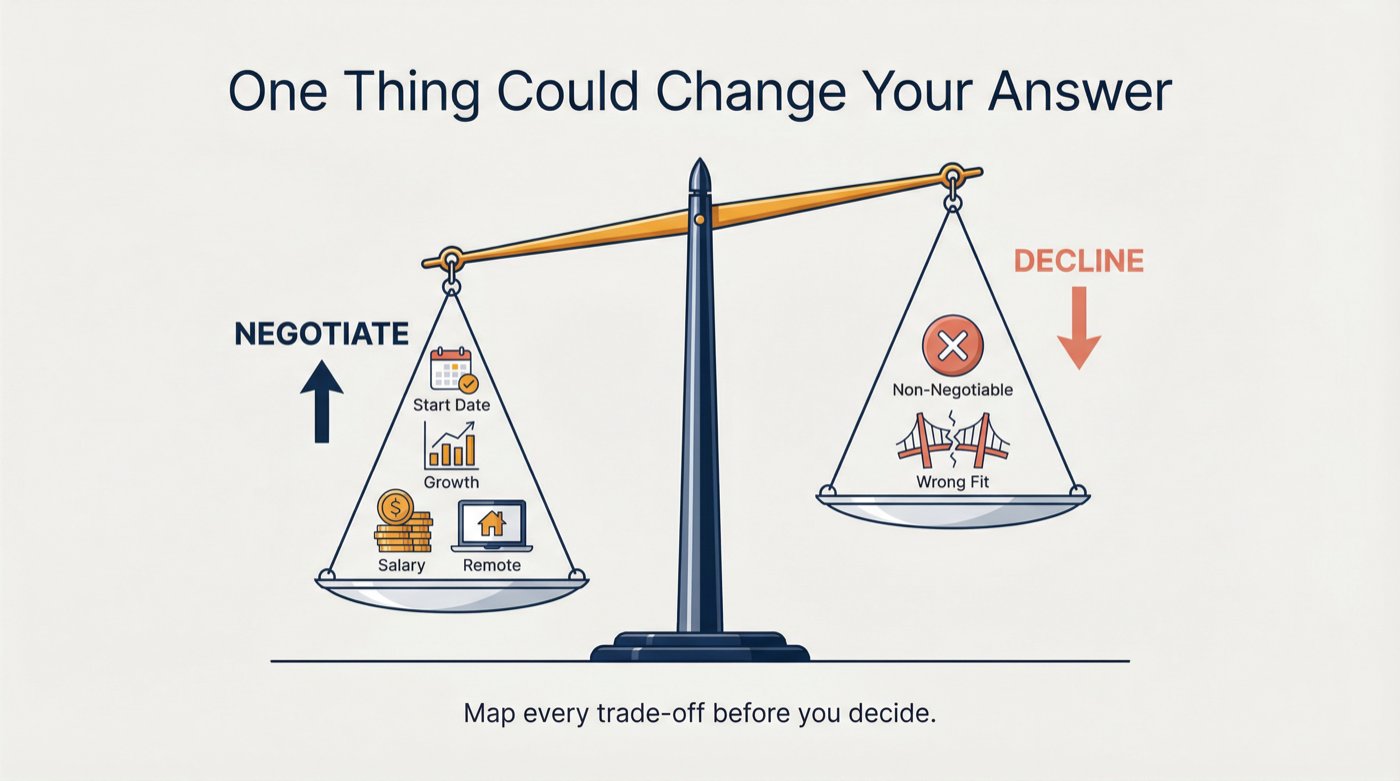
A job offer isn't just a salary. It's a bundle of trade-offs: compensation, remote work policy, growth path, manager fit, scope of the role, start date, visa support, learning curve, stability, and brand value on your resume. Before you decide, it helps to carefully evaluate the full offer, including everything beyond the base number. Career advisors at major companies recommend writing down the specific conditions that must be met (salary, benefits, remote flexibility) and using that list as the basis for your decision, not just a gut feeling.
How to Decide If You Should Decline a Job Offer
Before you decline, run through these three questions honestly:
1. If they changed one thing, would I say yes?
If the answer is yes, you probably want to negotiate or ask for time, not decline. There's a big difference between "I don't want this job" and "I want this job at a different price." If compensation is the issue, understanding how to respond to salary expectations before your final decision can save you from walking away from a negotiable number.
2. Is that "one thing" negotiable in their world?
Some things often are: salary, start date, title, scope of responsibilities. Some things often aren't: remote policy, office location, visa sponsorship. Knowing which category your dealbreaker falls into saves everyone time. If you're unsure about the market value of what you're asking for, entry-level salary negotiation tactics apply even to experienced professionals when you're moving into a new market, industry, or role type.
3. Am I declining because I'm under pressure or confused?
Pressure leads to messy acceptances, which later lead to reneging (backing out after you said yes). If you're feeling rushed, the smarter move is almost always to ask for a few more days rather than make a snap decision in either direction.
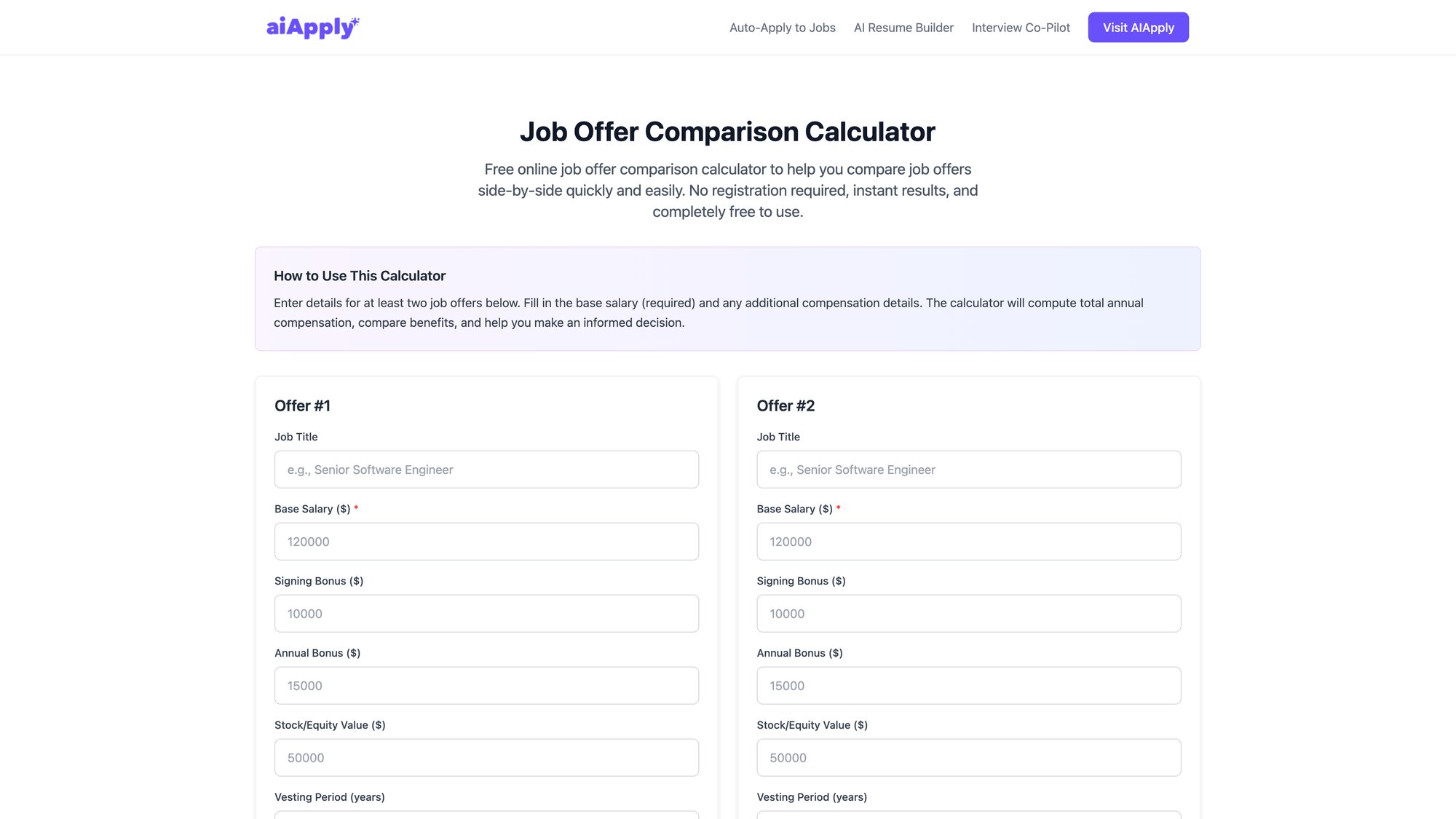
If you're comparing two offers right now, AIApply's Job Offer Comparison Calculator lets you evaluate offers side-by-side across salary, bonuses, equity, PTO, and remote policy. It takes about two minutes and makes the decision surprisingly concrete.
If you're not sure whether your salary expectations are realistic for your market, our Expected Salary Calculator can help you sanity-check your range before you negotiate or walk away.
How to Ask for More Time to Consider a Job Offer
If you're not ready to decline, don't. It's almost always smarter to ask for a short extension than to accept impulsively or reject prematurely.
Most employers expect candidates to take some time with an offer. In campus-style recruiting contexts, a one- to two-week decision window is common (though it varies by employer). And our salary negotiation guide at AIApply notes that the best negotiation window is after the offer lands and before you accept. Once you've said yes, your leverage drops significantly.

Here are two scripts you can use right away:
Email Template: Asking for More Time on a Job Offer
Subject: Offer for [Role] - Request for decision timelineHi [Name],Thank you again for the offer for the [Role] position. I'm excitedabout the opportunity.Before I respond, I'd like to take a bit of time to review thedetails thoughtfully. Would it be possible to give you my finalanswer by [Day, Date]?Thank you,[Your Name]Phone Script: How to Ask for More Time on a Job Offer
"Thank you so much for the offer. I'm excited and I want to review everything carefully. Could I confirm that I can get you my final decision by [Day]?"
Short, respectful, done. No one will hold this against you.
If you decide you do want to negotiate rather than decline, AIApply's Salary Negotiation Template Generator can produce a clean negotiation script tailored to your exact numbers and situation.
What to Include in a Professional Job Offer Decline Message
Every effective decline message, whether it's an email, phone call, or even a LinkedIn message, follows the same four-part structure:
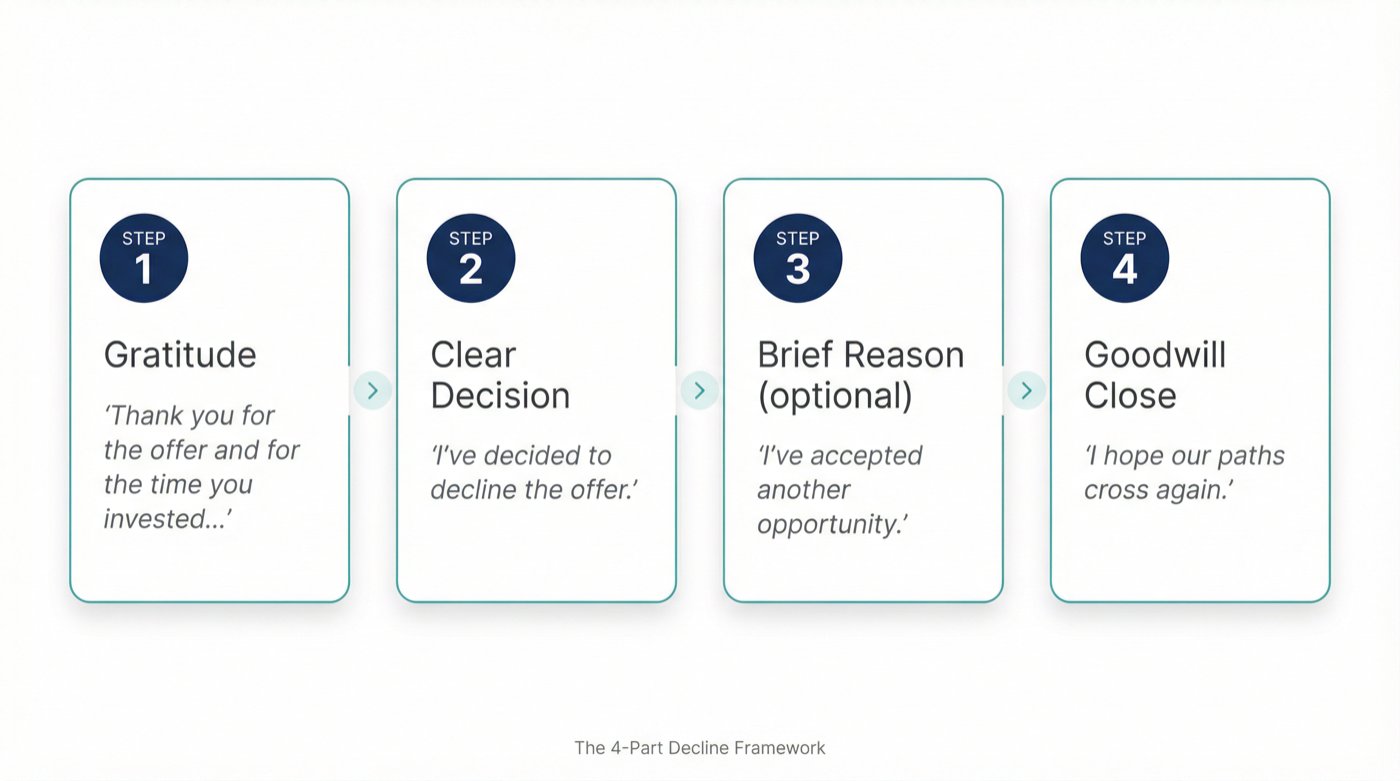
This structure aligns with what career services departments and experienced recruiters consistently recommend: be direct, be brief, be professional, express gratitude, and optionally include a stay-in-touch line. For a broader view of how professional email examples work across different job-seeking contexts, see our full guide covering seven email types.
A mindset shift that helps: You're not writing a "please don't be mad at me" email. You're performing a handoff. You're stepping out so they can move to their next best candidate. The cleaner and faster you make that handoff, the more professional you look, and the more likely they are to remember you positively.
Email or Phone: How to Decline a Job Offer the Right Way
Email is usually enough, especially for:
Junior or mid-level roles
Situations where most of your communication was over email
When you didn't build a strong personal rapport with the hiring manager
Phone first is better when:
The role is senior or executive-level
You built a genuine relationship with the hiring manager during the process
They invested heavily in you (multiple rounds, travel, presentations, panel interviews)
The company culture is relationship-driven
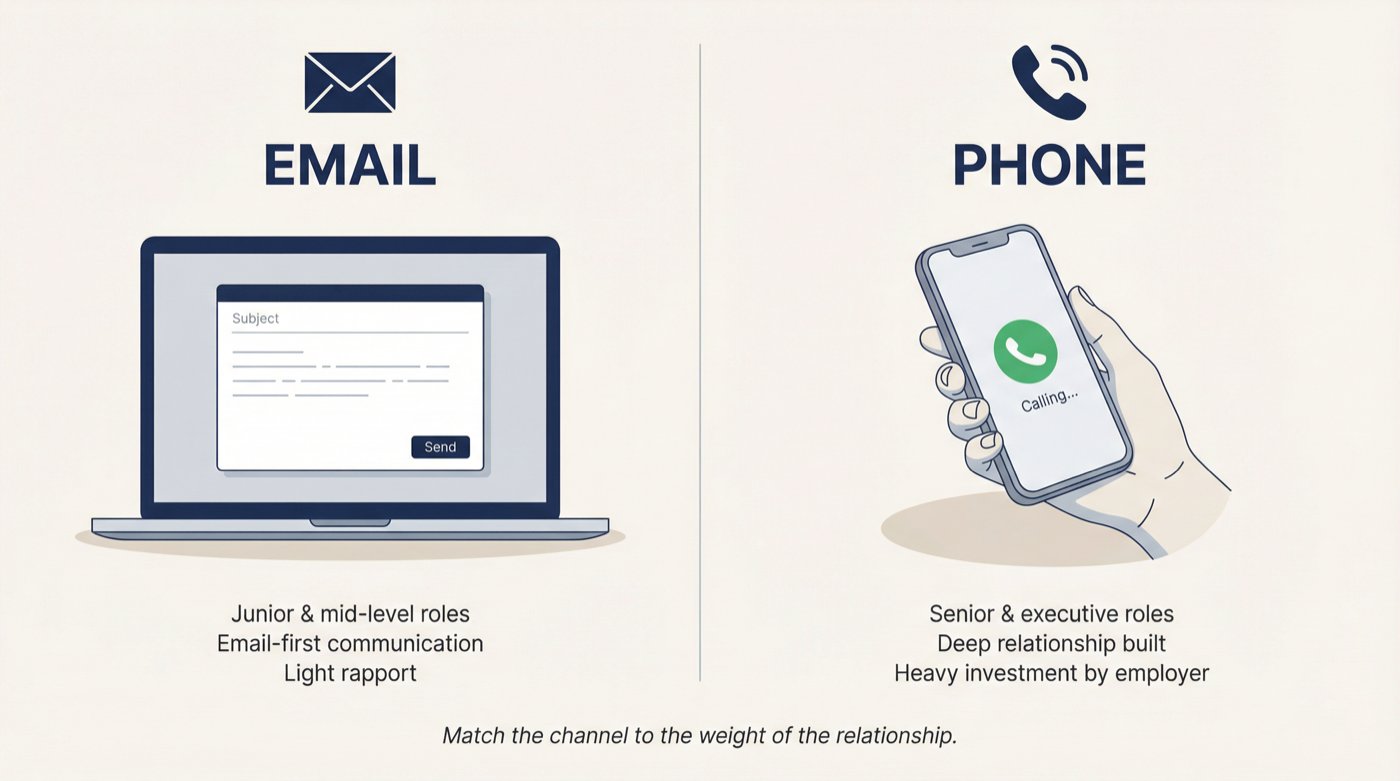
Hiring experts note that a phone call adds warmth and personal respect, while email works perfectly well when timing or availability is tight. The key is matching the channel to the weight of the relationship. If you're unsure how to strike the right professional tone when sending a message to a hiring manager, the same principles apply: lead with respect and get to the point.
The best approach for important declines: Call to deliver the news human-to-human, then follow up with a short email recap so there's a written record they can forward internally. This combination covers both the personal touch and the practical documentation.
Best Subject Lines for Declining a Job Offer
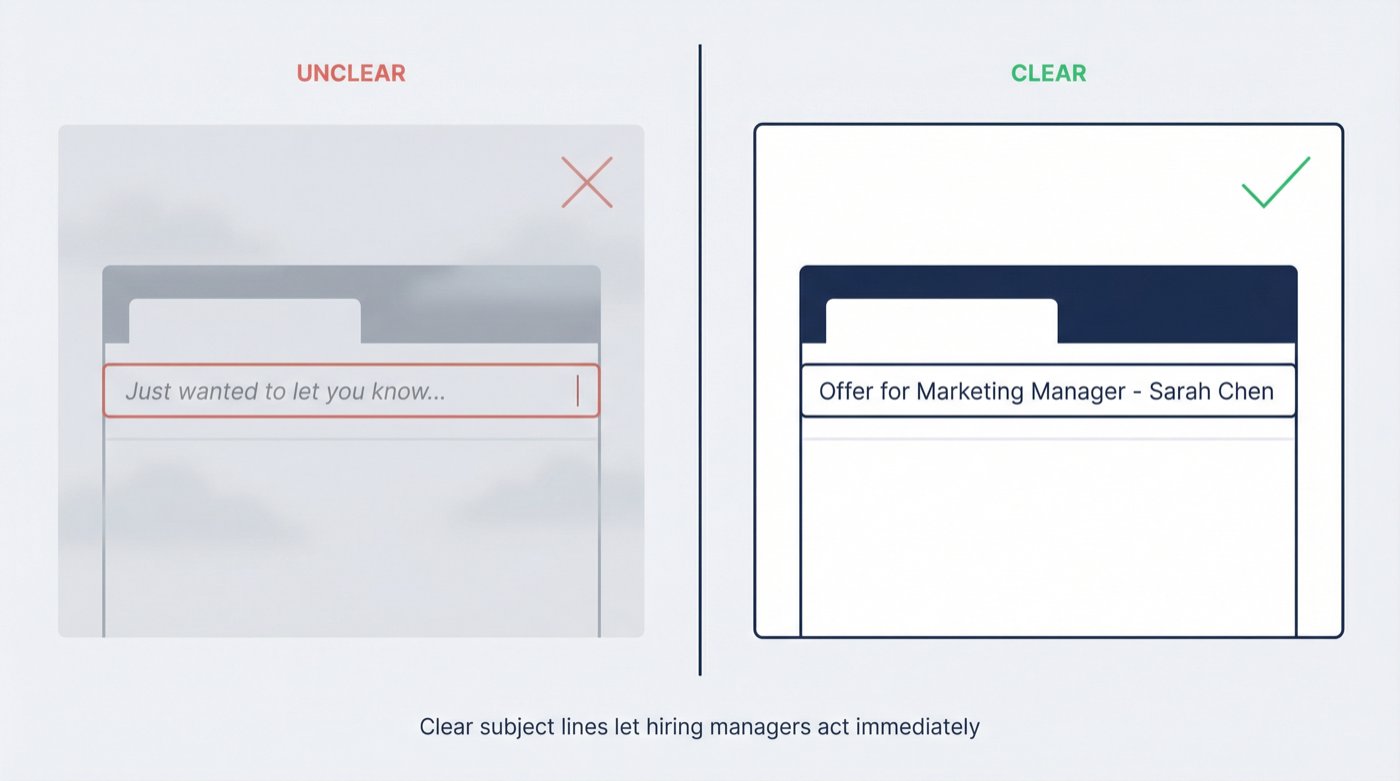
Your subject line should make it instantly clear what your email is about so the hiring manager can route it to the right person.
Good subject line options:
Offer for [Role] - [Your Name]Re: [Role] offer - [Your Name]Decision on [Company] offer - [Your Name]
Keep it simple and identifiable. Don't try to soften the blow in the subject line. They'll find out when they open the email, and a clear subject actually makes their life easier.
If you want to test a few variations quickly, AIApply has a free Email Subject Line Creator that can generate options in seconds.
Job Offer Decline Email Templates for Every Situation
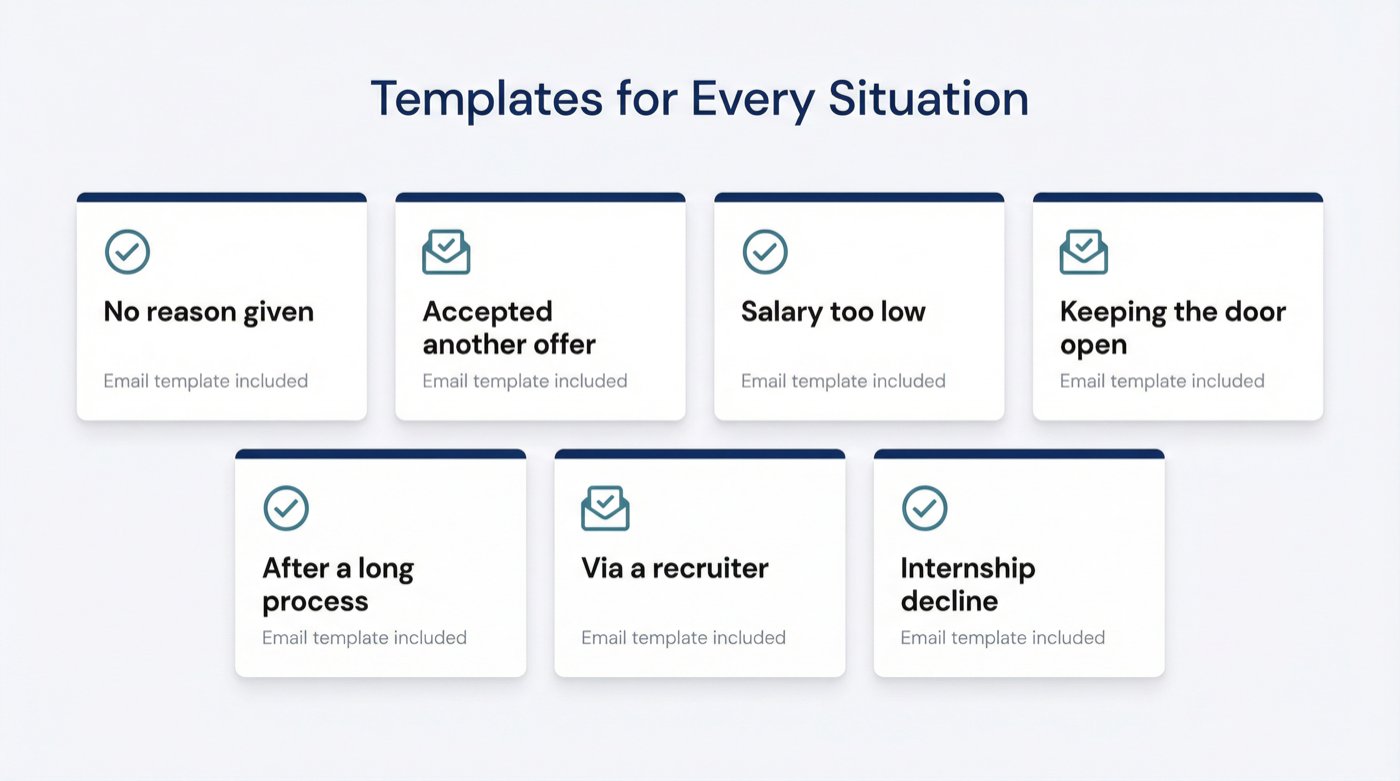
Below are seven templates covering the situations you're most likely to encounter. Each one follows the four-part formula (gratitude, clear decision, optional brief reason, goodwill close) and can be copied directly into your email client.
How to Decline a Job Offer Without Giving a Reason
Use this when you simply want to be polite and move on without explaining yourself.
Subject: Offer for [Role] - [Your Name]Hi [Name],Thank you for the offer for the [Role] position. I appreciate thetime you and the team spent with me.After careful consideration, I've decided to decline the offer.Thank you again, and I wish you and the team all the best.Best,[Your Name]How to Decline a Job Offer Because You Accepted Another One
Use this when you've committed to a different role. Keep the reason vague enough that it doesn't invite debate.
Subject: Offer for [Role] - [Your Name]Hi [Name],Thank you again for offering me the [Role] position. I reallyenjoyed meeting the team and learning more about the work.After careful consideration, I've decided to accept anotheropportunity that's a closer fit for my current goals, so I'llneed to decline.I'm grateful for your time and I hope we can stay in touch.Best regards,[Your Name]This "brief, non-specific reason" approach is widely recommended by career professionals because it avoids inviting a counter-argument while still sounding human and honest.
How to Decline a Job Offer Because the Salary Is Too Low
Use this when the pay is too far off and you're not interested in negotiating.
Subject: Offer for [Role] - [Your Name]Hi [Name],Thank you for the offer and for the time you and your team investedthroughout the process.After reviewing the full package, I've decided to decline becausethe compensation is not aligned with what I would need to makethe move.I really enjoyed our conversations and I appreciate the opportunity.Best,[Your Name]Important: If you would accept at a different number, don't send this. Negotiate instead. This template is specifically for situations where the gap is too wide to bridge.
How to Decline a Job Offer but Keep the Door Open
Use this sparingly, and only if it's genuinely true. Otherwise you'll create confusion.
Subject: Offer for [Role] - [Your Name]Hi [Name],Thank you so much for the offer for the [Role] position.At this time, I'm going to decline, mainly due to [non-negotiableconstraint: location / start date / scope].If the team ever considers [the specific change] for this role(or a similar role), I'd be very open to reconnecting. I enjoyedspeaking with you and appreciate your time.Best regards,[Your Name]How to Decline a Job Offer After a Long Interview Process
Use this when you went through many rounds and want to acknowledge the extra effort they put in.
Subject: Offer for [Role] - [Your Name]Hi [Name],Thank you for the offer for the [Role] position and for the timeyou and the team spent with me across the process. I trulyappreciated the conversations.After careful consideration, I've decided to decline the offer.I'm grateful for the opportunity and I hope we can stay in touch.Best,[Your Name]How to Decline a Job Offer Through a Recruiter
Use this when a recruiter was your primary contact.
Hi [Recruiter Name],Thank you for sharing the offer and for all your help throughthe process.After careful consideration, I've decided to decline the offer.The role isn't the right fit for me at this point.I appreciate your support and I'd love to stay on your radar forroles that are closer to [your target: level / domain /compensation / location].Best,[Your Name]How to Decline an Internship Offer Professionally
Internship declines follow the same structure. The recommended pattern is the same: gratitude, clear decline, positive close, optional future connection.
Subject: Internship offer - [Your Name]Hi [Name],Thank you for the offer. It was a pleasure meeting you andlearning more about the team.After careful consideration, I've decided to decline the offeras I'm pursuing another opportunity that's a closer match formy current interests.I'm grateful for your time and I hope to stay connected inthe future.Best,[Your Name]Word-for-Word Phone Scripts to Decline a Job Offer
Not everyone is comfortable picking up the phone, so here are three scripts you can rehearse before dialing. Each one takes about 30 seconds.

Phone Script: Simple Job Offer Decline
"Hi [Name], thank you again for the offer. I really appreciated meeting the team. After careful consideration, I've decided to decline. I wanted to let you know directly and thank you for your time."
Phone Script: Declining Because You Accepted Another Job
"Hi [Name], thank you for the offer. After thinking it through, I've decided to accept another opportunity that's a closer fit right now, so I'm going to decline. I really enjoyed our conversations and I appreciate your time."
Phone Script: Declining Due to Salary
Career experts recommend a straightforward approach for this one: thank them, state you're declining because the package is outside what you need, and close positively.
"Hi [Name], thank you again for the offer. After reviewing the package, I'm going to decline because it's outside what I would need to make a move. I really appreciate your time and I wish you and the team the best."
Why You Should Always Follow Up a Phone Decline With an Email
Even if you decline by phone, send a short follow-up email. This prevents miscommunication and makes it easy for the hiring manager to forward your decision internally. It doesn't need to be long. Two or three sentences confirming what you discussed is plenty. For a template and tone guide, our professional email examples page covers how to structure follow-up messages that hit the right note every time.
How to Decline a Job Offer After You Already Accepted
This is the hardest scenario, and it happens more than people admit. A better offer shows up after you said yes. Your life circumstances change unexpectedly. A red flag surfaces late in the process.
If you're in this situation, your goal is damage control. You can't undo the awkwardness entirely, but you can minimize it.
The 5-step approach:
① Decide fast. Dragging it out increases the cost for them and the awkwardness for you. Every day you wait is a day they're not filling the role.
② Call first (if at all possible). A phone call signals that you take this seriously and respect their time.
③ Apologize once, clearly. Not groveling. Not a string of excuses. One clear, accountable apology.
④ Be brief about the reason. "Personal circumstances changed" or "I accepted another opportunity" are both acceptable. You don't owe a detailed explanation.
⑤ Follow up in writing. One clean email to document the conversation.
A word of caution: Career ethics guidelines explicitly warn against accepting an offer without the genuine intention of honoring it. Reneging should be a last resort, not a negotiation tactic. If you realize the fit isn't right after accepting, it's also worth reviewing whether it's time to change jobs at all, or whether a different role within the same company might work.
Email Template: How to Withdraw a Job Offer Acceptance
Subject: Update on accepted offer - [Your Name]Hi [Name],I'm very sorry, but I need to withdraw from the offer that Ipreviously accepted for the [Role] position.I realize this creates inconvenience for you and the team, andI genuinely apologize. After a change in circumstances, I'mnot able to proceed.Thank you again for the opportunity and for the time you investedin me through the process.Sincerely,[Your Name]If you've signed documents, received equipment, or been paid anything (a sign-on bonus, relocation assistance), stop and review the specific terms before sending anything. That is not the situation to wing it. You may need legal advice, especially in the UK.
UK Law: What Happens When You Decline a Job Offer After Accepting
AIApply is UK-registered, and many of our users apply to UK employers, so it's worth being clear on one important legal distinction.
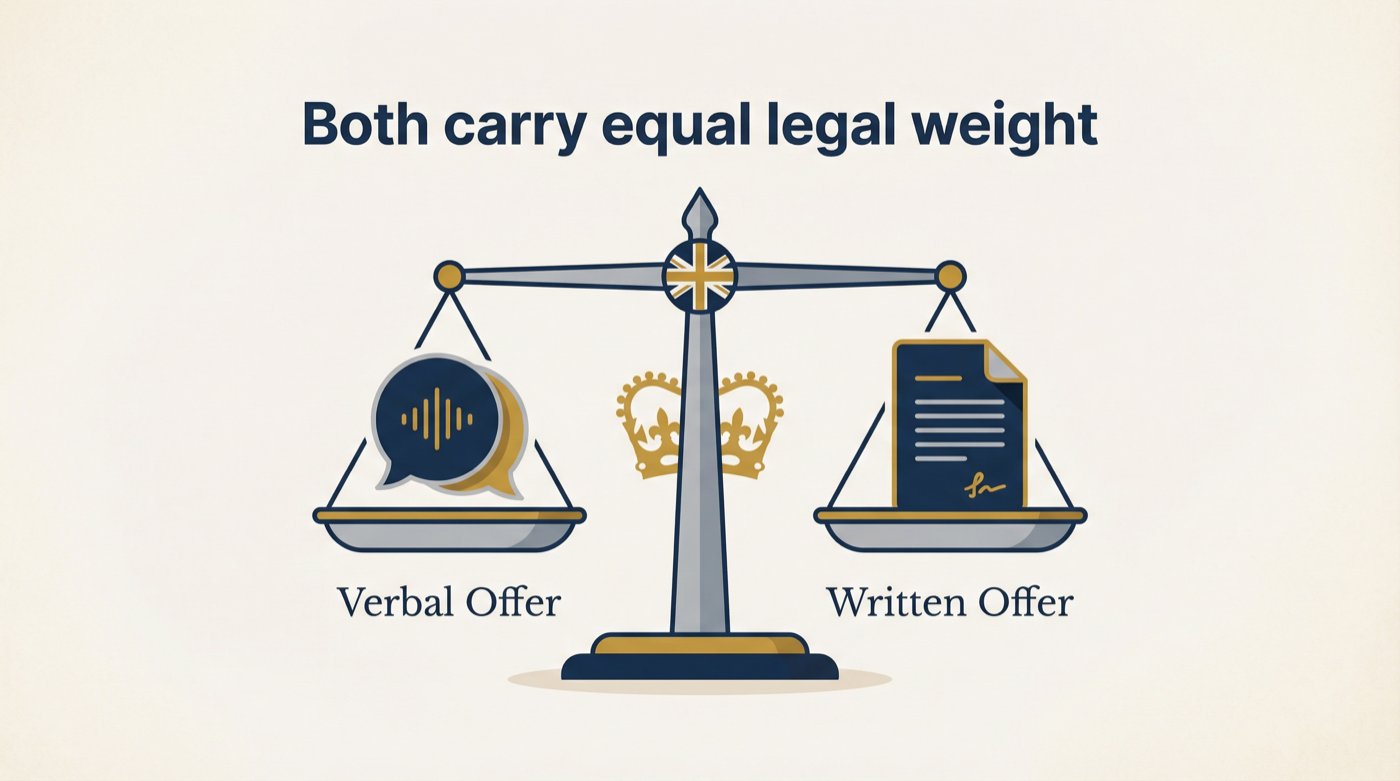
According to GOV.UK, once someone accepts an unconditional job offer, they're in a legally binding contract of employment. And offers and acceptance can be verbal or in writing.
ACAS further explains that an employment contract could begin as soon as someone accepts a job offer, even if that acceptance was verbal. If an applicant withdraws from an unconditional offer (or from a conditional offer once all conditions are met), it could be considered a breach of contract, and the employer might be able to make a claim.
ACAS also emphasizes that employment contracts can be legally binding agreements regardless of whether they were agreed verbally or in writing.
What this means in plain English:
→ Don't accept casually if you're not sure. Ask for time. It's always better to say "I need a few days" than to say yes and then back out.
→ Try to get the offer details in writing (pay, start date, key terms). ACAS notes that verbal offers carry the same legal weight as written ones, but they're harder to prove if details are disputed later.
→ If you already accepted and need to back out, communicate fast. The longer you wait, the more complicated it gets.
→ Get professional advice if the situation is messy, especially if there's a notice period, signed contract, or money involved.
This is general information, not legal advice. If your situation involves signed agreements or financial commitments, consult a qualified professional.
Job Offer Decline Mistakes That Burn Bridges
These come up again and again in recruiter feedback, and they're all avoidable.
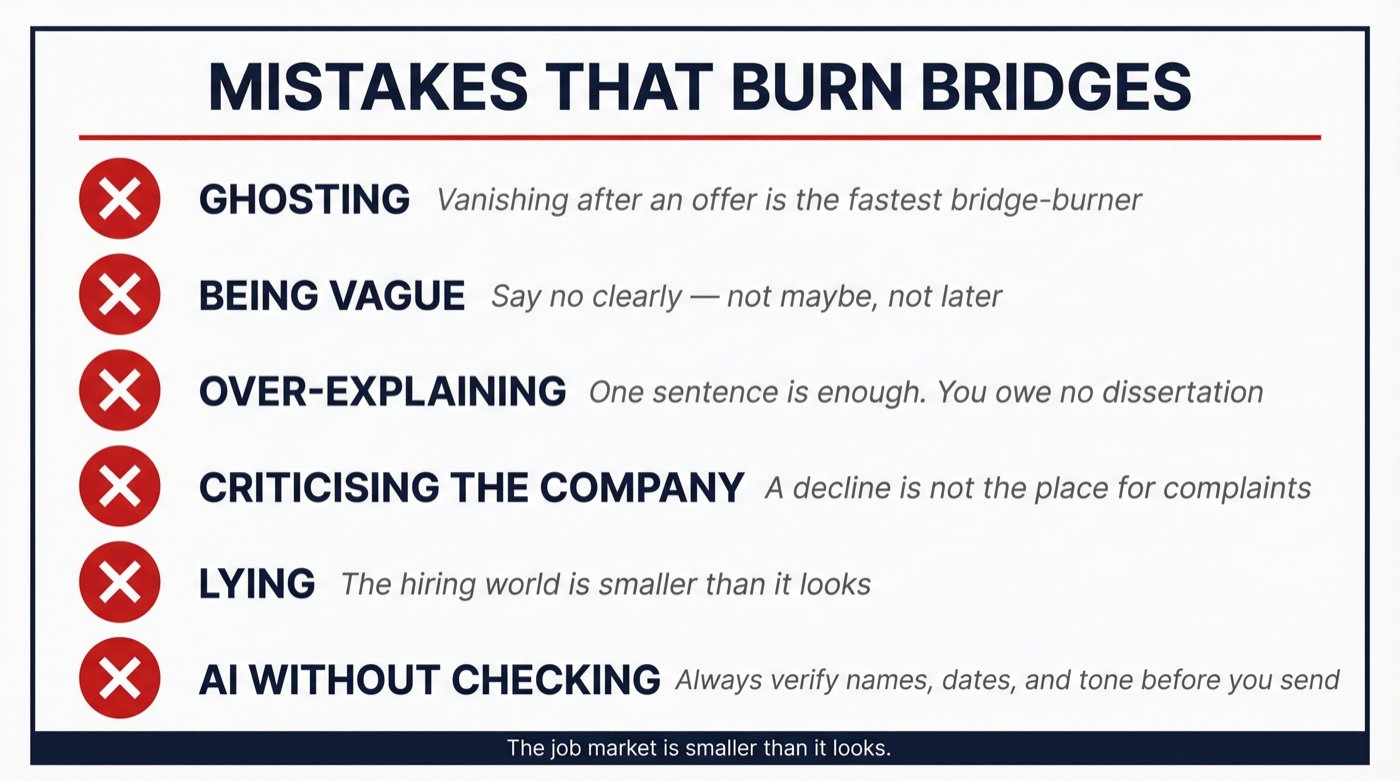
Ghosting. Just vanishing after receiving an offer forces them to chase you and wastes everyone's time. It's the single fastest way to guarantee you'll never be considered there again.
Being vague. Saying "I'm not sure" or "maybe later" when you actually mean no creates unnecessary back-and-forth and keeps them in limbo. If you've decided, say so.
Over-explaining. The more details you give about why you're declining, the more ammunition you give them to argue with. "I've decided to decline" is a complete sentence. You don't owe a dissertation.
Criticizing the company, lying about your plans, or sending a ghosted-then-panicked email are the three moves that will follow you. The job market is smaller than it looks.
Criticizing the company or team. Even if you have legitimate complaints, a decline email is not the place. If they ask for feedback, keep it constructive and brief. Burning bridges on the way out is never worth it.
Lying. The hiring world is smaller than it looks. If you say you're "leaving the industry" and then show up at a competitor next month, you lose trust permanently.
Using AI to draft your decline without checking the details. AI tools can speed up the writing process, but you must verify names, role titles, dates, and tone before hitting send. A generic-sounding template with the wrong hiring manager name is worse than a short email you wrote yourself.
Free Tools to Help You Decide on a Job Offer
We built several free tools specifically to help with the moments around offer decisions and professional communication. Here's what's relevant to this situation:
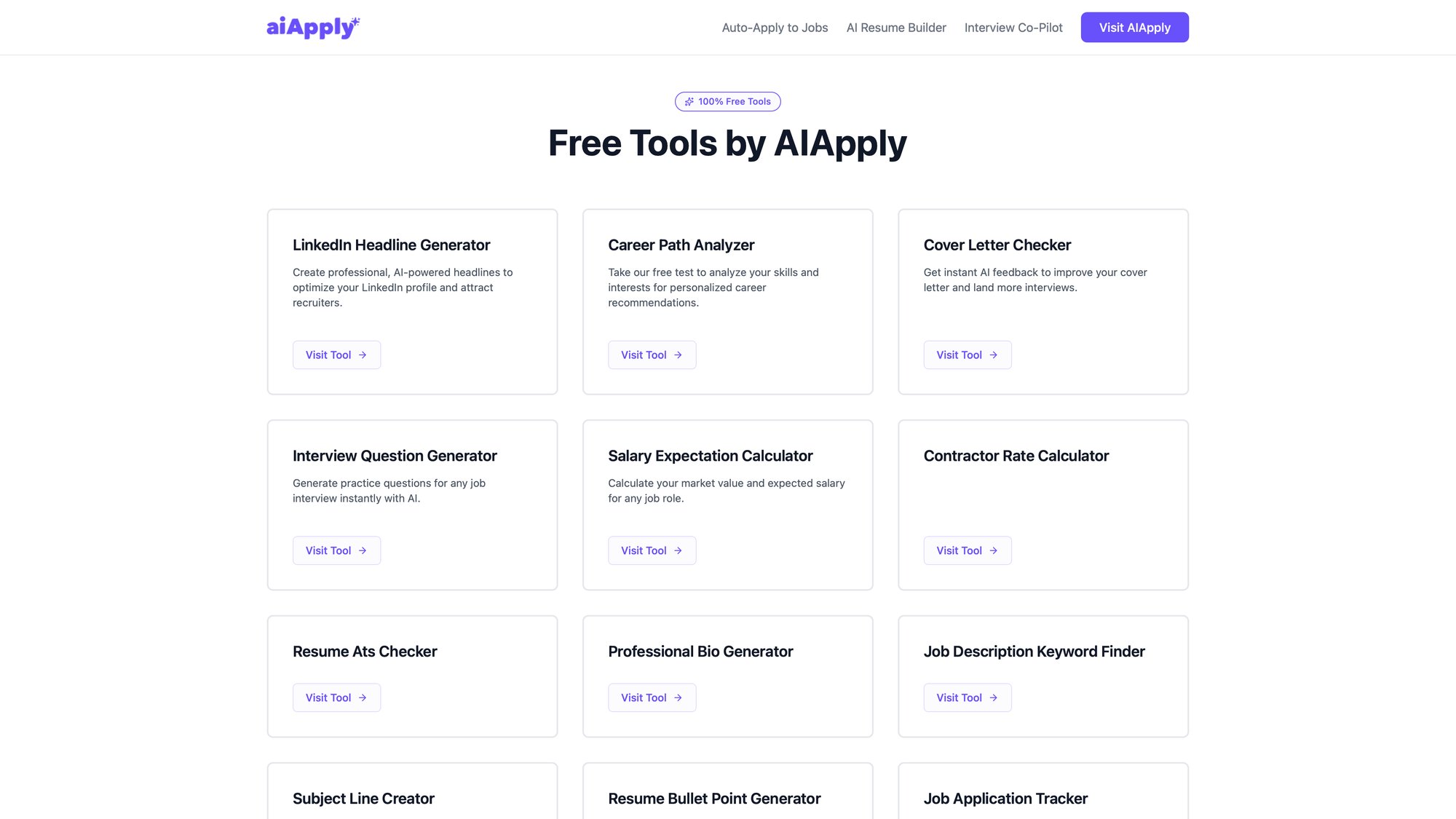
Once you've declined and you're ready to keep your job search moving, AIApply's AI Resume Builder can generate tailored, ATS-optimized resumes for each new role you target, and the AI Cover Letter Generator can pair them with role-specific letters in minutes. If you'd rather take a more strategic approach to your whole search, our job search strategy guide covers how to structure a targeted, efficient campaign that gets results faster.
Frequently Asked Questions About Declining a Job Offer
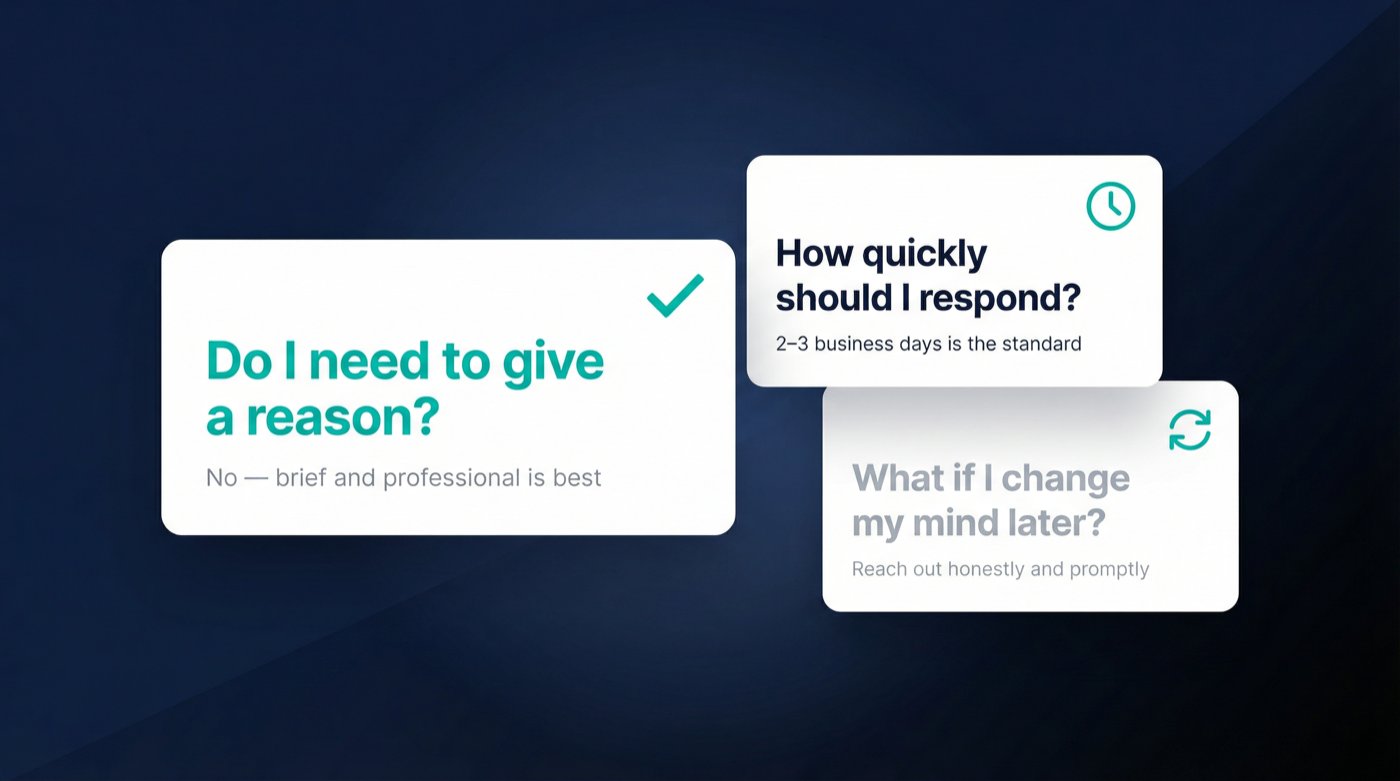
Do I Have to Give a Reason When Declining a Job Offer?
No, and many career professionals actually recommend keeping it brief or skipping the reason entirely. A simple "After careful consideration, I've decided to decline" is completely sufficient. If you want to share a reason (and it's a diplomatic one like "I accepted another opportunity"), that's fine. But long explanations tend to invite debate, and you don't owe anyone a justification for your career decisions.
Should I Decline a Job Offer by Email or Phone Call?
Email works perfectly for most situations, especially junior and mid-level roles or when your primary communication has been over email. Phone is better when the role is senior, the process was extensive, or you built a personal relationship with the hiring manager. When in doubt, call first and then send a short email recap. You'll never be faulted for being too respectful.
Can I Decline a Job Offer by Text or WhatsApp?
If that's the channel you've been communicating through (which is common in some regions and industries), it can be acceptable for the initial decline. But it's still smart to follow up with a proper email so the decision is clearly documented and easy for them to reference internally. Our professional email examples guide can help you draft that follow-up quickly.
Should I Connect on LinkedIn After Declining an Offer?
If you genuinely liked the people and want to keep the professional relationship alive, absolutely. Several career guides recommend including a "stay in touch" line in your decline email and then following through with a LinkedIn connection request. It shows you meant what you said about keeping the door open.
If you want help drafting that "stay connected" message, our free Networking Email Template Generator at AIApply can create a personalized note in seconds.
How Quickly Should I Decline a Job Offer?
As soon as you've made your decision. Most hiring managers appreciate a response within two to three business days. Every day you delay is a day they can't move forward with their next candidate, and it can strain the relationship unnecessarily. If you need more time to decide, ask for it explicitly rather than just going silent.
What If I Want to Decline but Might Want to Work There in the Future?
This is actually one of the most important reasons to decline well. Use the "open to reconnecting" template from this guide, be specific about what would need to change, and follow through by connecting on LinkedIn. Hiring managers rotate roles and companies all the time. The person you're saying no to today could be hiring for your dream role at a different company in two years. If you're unsure whether you're at a point in your career where the timing just isn't right, rather than the role itself being wrong, our guide on knowing when it's time to change jobs can help you make that distinction.
Can a Company Withdraw an Offer If I Take Too Long to Respond?
Yes. Most offer letters include a response deadline, and even when they don't, there's an implied expectation of reasonable timing. If you need extra days, ask for them. A proactive request for more time is always better received than radio silence followed by a last-minute answer.
Is It Okay to Decline a Job Offer Over Salary Alone?
Absolutely. Compensation is a fundamental part of any employment agreement, and there's nothing wrong with walking away if the numbers don't work. The key is being direct and professional about it. If you'd accept at a different number, negotiate, and use our Salary Negotiation Template Generator to structure that conversation cleanly. If the gap is too wide, decline cleanly using the compensation mismatch template above.
What Happens If I Decline and Then Change My Mind?
It depends on timing and the company. If you declined very recently and they haven't moved to another candidate, it's worth reaching out honestly: "I reconsidered, and I'd like to accept if the opportunity is still available." There's no guarantee they'll say yes, but people respect honesty. The longer you wait, the less likely the position will still be open.
How Do I Decline a Job Offer From a Company Where a Friend Referred Me?
This one adds a social layer, but the approach is the same: be prompt, be gracious, and communicate clearly. It's also courteous to give your friend a heads-up before you send the decline email, so they're not caught off guard. A quick message like "I'm going to pass on the role but wanted you to know first" goes a long way in preserving that friendship.
What to Do After You Decline a Job Offer
Declining a job offer isn't the end of the road. It's a reset. The best next move is to keep your pipeline healthy so you have strong options in front of you before you make your next decision.
AIApply makes it easy to stay active and strategic:
Use the Auto Apply feature to automatically submit tailored applications to matching roles while you focus on evaluating the ones that come back
Keep your documents sharp with the AI Resume Scanner so every new application hits its target
If you haven't already, read our guide on how to decline a job interview, and the same professional principles apply earlier in the process; handling those declines well keeps your reputation intact across every company in your search
Use the Job Search Tracker to track every offer, deadline, and follow-up in one place so nothing slips through the cracks
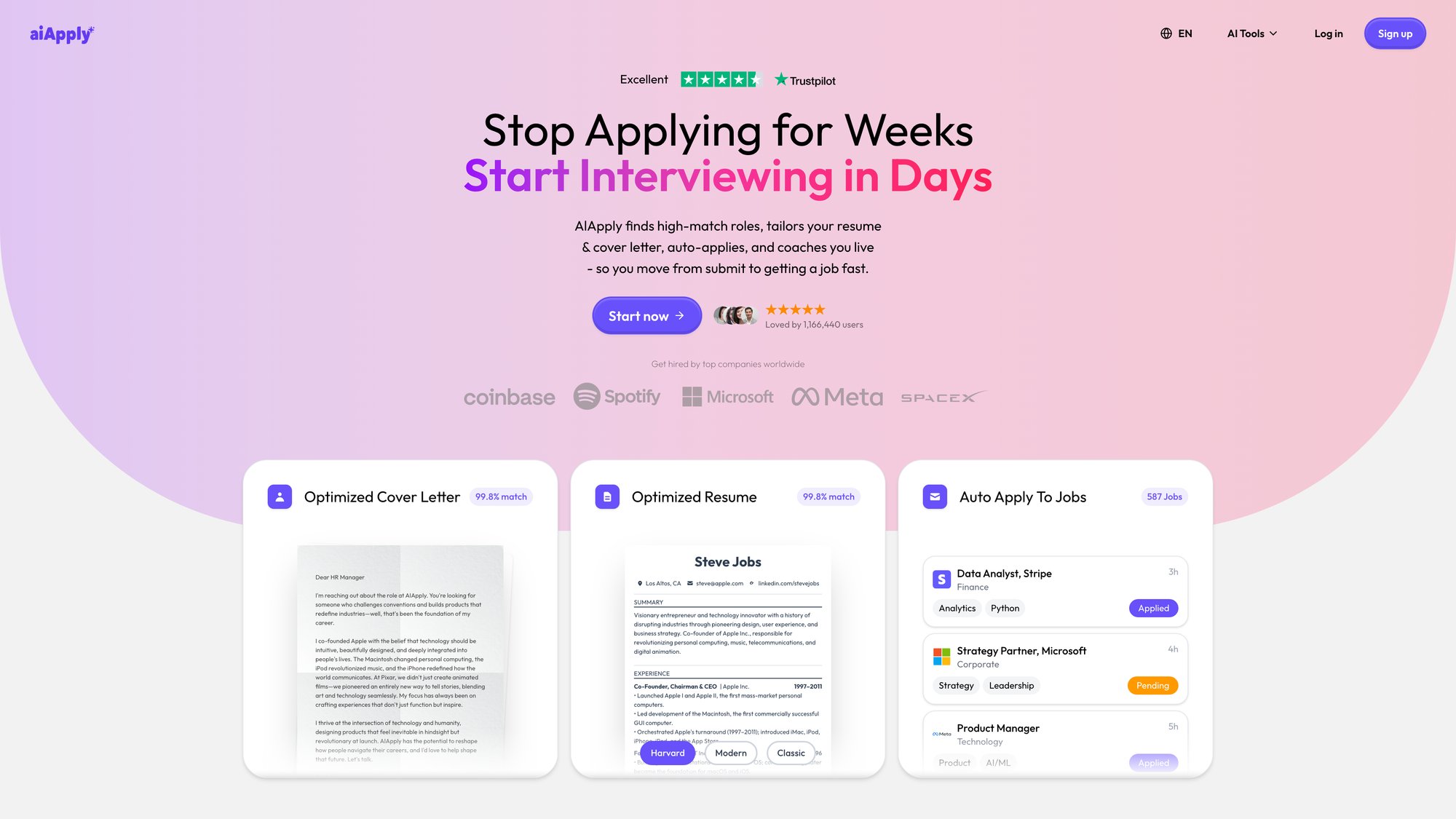
The candidates who move fastest after a decline are the ones who never let their pipeline go cold. Keep applying, keep tracking, and use the tools at your disposal to stay ahead.
Getting a job offer feels great. Turning one down? That's where things get uncomfortable.
Maybe you feel guilty because the team spent hours interviewing you. Maybe you're worried about burning a bridge you might need someday. Or maybe you're just not sure what to say without sounding ungrateful or wishy-washy.
What most people don't realize: declining a job offer is completely normal, and hiring managers expect it to happen. What separates a professional decline from an awkward one isn't fancy language. It's three things:
Closing the loop quickly so they can move to their next candidate
Communicating clearly so there's no back-and-forth confusion
Leaving the relationship intact so you don't torch a bridge you might want later
This guide gives you everything you need: copy-paste email templates for seven common scenarios, word-for-word phone scripts, a decision framework for when you should negotiate instead of decline, and the tricky playbook for backing out after you've already said yes.
What's in This Guide
Job Offer Decline Email Template (Copy and Paste)
If you only take one thing from this guide, make it this template. It covers about 80% of decline situations cleanly.
Subject: Offer for [Role] - [Your Name]Hi [Hiring Manager Name],Thank you so much for offering me the [Role] position at [Company].I genuinely appreciate the time you and the team invested in the process.After careful consideration, I've decided to decline the offer.I really enjoyed speaking with you and learning about what the teamis building, and I hope our paths cross again in the future.Thank you again, and I wish you and the team continued success.Best regards,[Your Name][Phone number optional]Why does this work so well? Because it hits the three things every hiring manager needs from a decline: it signals respect (the gratitude), it removes uncertainty (the clear "I've decided to decline"), and it preserves goodwill (the future-positive close). That's exactly what allows them to move forward without drama or lingering questions.
You can send this as-is for most situations. But if your scenario is more specific (you accepted another offer, the pay was too low, the process was really long), we've got tailored templates for each one further down.
Should You Decline the Job Offer or Negotiate the Terms?
This is the question a lot of people skip, and it costs them.
A surprising number of candidates decline offers when what they actually want is to negotiate. They see a salary number they don't love, panic, and fire off a polite "no thanks" email. Two weeks later, they're kicking themselves because the company might have met them halfway.
So before you write that decline email, stop and think about what you're really saying no to.
A job offer isn't just a salary. It's a bundle of trade-offs: compensation, remote work policy, growth path, manager fit, scope of the role, start date, visa support, learning curve, stability, and brand value on your resume. Before you decide, it helps to carefully evaluate the full offer, including everything beyond the base number. Career advisors at major companies recommend writing down the specific conditions that must be met (salary, benefits, remote flexibility) and using that list as the basis for your decision, not just a gut feeling.
How to Decide If You Should Decline a Job Offer
Before you decline, run through these three questions honestly:
1. If they changed one thing, would I say yes?
If the answer is yes, you probably want to negotiate or ask for time, not decline. There's a big difference between "I don't want this job" and "I want this job at a different price." If compensation is the issue, understanding how to respond to salary expectations before your final decision can save you from walking away from a negotiable number.
2. Is that "one thing" negotiable in their world?
Some things often are: salary, start date, title, scope of responsibilities. Some things often aren't: remote policy, office location, visa sponsorship. Knowing which category your dealbreaker falls into saves everyone time. If you're unsure about the market value of what you're asking for, entry-level salary negotiation tactics apply even to experienced professionals when you're moving into a new market, industry, or role type.
3. Am I declining because I'm under pressure or confused?
Pressure leads to messy acceptances, which later lead to reneging (backing out after you said yes). If you're feeling rushed, the smarter move is almost always to ask for a few more days rather than make a snap decision in either direction.
If you're comparing two offers right now, AIApply's Job Offer Comparison Calculator lets you evaluate offers side-by-side across salary, bonuses, equity, PTO, and remote policy. It takes about two minutes and makes the decision surprisingly concrete.
If you're not sure whether your salary expectations are realistic for your market, our Expected Salary Calculator can help you sanity-check your range before you negotiate or walk away.
How to Ask for More Time to Consider a Job Offer
If you're not ready to decline, don't. It's almost always smarter to ask for a short extension than to accept impulsively or reject prematurely.
Most employers expect candidates to take some time with an offer. In campus-style recruiting contexts, a one- to two-week decision window is common (though it varies by employer). And our salary negotiation guide at AIApply notes that the best negotiation window is after the offer lands and before you accept. Once you've said yes, your leverage drops significantly.
Here are two scripts you can use right away:
Email Template: Asking for More Time on a Job Offer
Subject: Offer for [Role] - Request for decision timelineHi [Name],Thank you again for the offer for the [Role] position. I'm excitedabout the opportunity.Before I respond, I'd like to take a bit of time to review thedetails thoughtfully. Would it be possible to give you my finalanswer by [Day, Date]?Thank you,[Your Name]Phone Script: How to Ask for More Time on a Job Offer
"Thank you so much for the offer. I'm excited and I want to review everything carefully. Could I confirm that I can get you my final decision by [Day]?"
Short, respectful, done. No one will hold this against you.
If you decide you do want to negotiate rather than decline, AIApply's Salary Negotiation Template Generator can produce a clean negotiation script tailored to your exact numbers and situation.
What to Include in a Professional Job Offer Decline Message
Every effective decline message, whether it's an email, phone call, or even a LinkedIn message, follows the same four-part structure:
This structure aligns with what career services departments and experienced recruiters consistently recommend: be direct, be brief, be professional, express gratitude, and optionally include a stay-in-touch line. For a broader view of how professional email examples work across different job-seeking contexts, see our full guide covering seven email types.
A mindset shift that helps: You're not writing a "please don't be mad at me" email. You're performing a handoff. You're stepping out so they can move to their next best candidate. The cleaner and faster you make that handoff, the more professional you look, and the more likely they are to remember you positively.
Email or Phone: How to Decline a Job Offer the Right Way
Email is usually enough, especially for:
Junior or mid-level roles
Situations where most of your communication was over email
When you didn't build a strong personal rapport with the hiring manager
Phone first is better when:
The role is senior or executive-level
You built a genuine relationship with the hiring manager during the process
They invested heavily in you (multiple rounds, travel, presentations, panel interviews)
The company culture is relationship-driven
Hiring experts note that a phone call adds warmth and personal respect, while email works perfectly well when timing or availability is tight. The key is matching the channel to the weight of the relationship. If you're unsure how to strike the right professional tone when sending a message to a hiring manager, the same principles apply: lead with respect and get to the point.
The best approach for important declines: Call to deliver the news human-to-human, then follow up with a short email recap so there's a written record they can forward internally. This combination covers both the personal touch and the practical documentation.
Best Subject Lines for Declining a Job Offer
Your subject line should make it instantly clear what your email is about so the hiring manager can route it to the right person.
Good subject line options:
Offer for [Role] - [Your Name]Re: [Role] offer - [Your Name]Decision on [Company] offer - [Your Name]
Keep it simple and identifiable. Don't try to soften the blow in the subject line. They'll find out when they open the email, and a clear subject actually makes their life easier.
If you want to test a few variations quickly, AIApply has a free Email Subject Line Creator that can generate options in seconds.
Job Offer Decline Email Templates for Every Situation
Below are seven templates covering the situations you're most likely to encounter. Each one follows the four-part formula (gratitude, clear decision, optional brief reason, goodwill close) and can be copied directly into your email client.
How to Decline a Job Offer Without Giving a Reason
Use this when you simply want to be polite and move on without explaining yourself.
Subject: Offer for [Role] - [Your Name]Hi [Name],Thank you for the offer for the [Role] position. I appreciate thetime you and the team spent with me.After careful consideration, I've decided to decline the offer.Thank you again, and I wish you and the team all the best.Best,[Your Name]How to Decline a Job Offer Because You Accepted Another One
Use this when you've committed to a different role. Keep the reason vague enough that it doesn't invite debate.
Subject: Offer for [Role] - [Your Name]Hi [Name],Thank you again for offering me the [Role] position. I reallyenjoyed meeting the team and learning more about the work.After careful consideration, I've decided to accept anotheropportunity that's a closer fit for my current goals, so I'llneed to decline.I'm grateful for your time and I hope we can stay in touch.Best regards,[Your Name]This "brief, non-specific reason" approach is widely recommended by career professionals because it avoids inviting a counter-argument while still sounding human and honest.
How to Decline a Job Offer Because the Salary Is Too Low
Use this when the pay is too far off and you're not interested in negotiating.
Subject: Offer for [Role] - [Your Name]Hi [Name],Thank you for the offer and for the time you and your team investedthroughout the process.After reviewing the full package, I've decided to decline becausethe compensation is not aligned with what I would need to makethe move.I really enjoyed our conversations and I appreciate the opportunity.Best,[Your Name]Important: If you would accept at a different number, don't send this. Negotiate instead. This template is specifically for situations where the gap is too wide to bridge.
How to Decline a Job Offer but Keep the Door Open
Use this sparingly, and only if it's genuinely true. Otherwise you'll create confusion.
Subject: Offer for [Role] - [Your Name]Hi [Name],Thank you so much for the offer for the [Role] position.At this time, I'm going to decline, mainly due to [non-negotiableconstraint: location / start date / scope].If the team ever considers [the specific change] for this role(or a similar role), I'd be very open to reconnecting. I enjoyedspeaking with you and appreciate your time.Best regards,[Your Name]How to Decline a Job Offer After a Long Interview Process
Use this when you went through many rounds and want to acknowledge the extra effort they put in.
Subject: Offer for [Role] - [Your Name]Hi [Name],Thank you for the offer for the [Role] position and for the timeyou and the team spent with me across the process. I trulyappreciated the conversations.After careful consideration, I've decided to decline the offer.I'm grateful for the opportunity and I hope we can stay in touch.Best,[Your Name]How to Decline a Job Offer Through a Recruiter
Use this when a recruiter was your primary contact.
Hi [Recruiter Name],Thank you for sharing the offer and for all your help throughthe process.After careful consideration, I've decided to decline the offer.The role isn't the right fit for me at this point.I appreciate your support and I'd love to stay on your radar forroles that are closer to [your target: level / domain /compensation / location].Best,[Your Name]How to Decline an Internship Offer Professionally
Internship declines follow the same structure. The recommended pattern is the same: gratitude, clear decline, positive close, optional future connection.
Subject: Internship offer - [Your Name]Hi [Name],Thank you for the offer. It was a pleasure meeting you andlearning more about the team.After careful consideration, I've decided to decline the offeras I'm pursuing another opportunity that's a closer match formy current interests.I'm grateful for your time and I hope to stay connected inthe future.Best,[Your Name]Word-for-Word Phone Scripts to Decline a Job Offer
Not everyone is comfortable picking up the phone, so here are three scripts you can rehearse before dialing. Each one takes about 30 seconds.
Phone Script: Simple Job Offer Decline
"Hi [Name], thank you again for the offer. I really appreciated meeting the team. After careful consideration, I've decided to decline. I wanted to let you know directly and thank you for your time."
Phone Script: Declining Because You Accepted Another Job
"Hi [Name], thank you for the offer. After thinking it through, I've decided to accept another opportunity that's a closer fit right now, so I'm going to decline. I really enjoyed our conversations and I appreciate your time."
Phone Script: Declining Due to Salary
Career experts recommend a straightforward approach for this one: thank them, state you're declining because the package is outside what you need, and close positively.
"Hi [Name], thank you again for the offer. After reviewing the package, I'm going to decline because it's outside what I would need to make a move. I really appreciate your time and I wish you and the team the best."
Why You Should Always Follow Up a Phone Decline With an Email
Even if you decline by phone, send a short follow-up email. This prevents miscommunication and makes it easy for the hiring manager to forward your decision internally. It doesn't need to be long. Two or three sentences confirming what you discussed is plenty. For a template and tone guide, our professional email examples page covers how to structure follow-up messages that hit the right note every time.
How to Decline a Job Offer After You Already Accepted
This is the hardest scenario, and it happens more than people admit. A better offer shows up after you said yes. Your life circumstances change unexpectedly. A red flag surfaces late in the process.
If you're in this situation, your goal is damage control. You can't undo the awkwardness entirely, but you can minimize it.
The 5-step approach:
① Decide fast. Dragging it out increases the cost for them and the awkwardness for you. Every day you wait is a day they're not filling the role.
② Call first (if at all possible). A phone call signals that you take this seriously and respect their time.
③ Apologize once, clearly. Not groveling. Not a string of excuses. One clear, accountable apology.
④ Be brief about the reason. "Personal circumstances changed" or "I accepted another opportunity" are both acceptable. You don't owe a detailed explanation.
⑤ Follow up in writing. One clean email to document the conversation.
A word of caution: Career ethics guidelines explicitly warn against accepting an offer without the genuine intention of honoring it. Reneging should be a last resort, not a negotiation tactic. If you realize the fit isn't right after accepting, it's also worth reviewing whether it's time to change jobs at all, or whether a different role within the same company might work.
Email Template: How to Withdraw a Job Offer Acceptance
Subject: Update on accepted offer - [Your Name]Hi [Name],I'm very sorry, but I need to withdraw from the offer that Ipreviously accepted for the [Role] position.I realize this creates inconvenience for you and the team, andI genuinely apologize. After a change in circumstances, I'mnot able to proceed.Thank you again for the opportunity and for the time you investedin me through the process.Sincerely,[Your Name]If you've signed documents, received equipment, or been paid anything (a sign-on bonus, relocation assistance), stop and review the specific terms before sending anything. That is not the situation to wing it. You may need legal advice, especially in the UK.
UK Law: What Happens When You Decline a Job Offer After Accepting
AIApply is UK-registered, and many of our users apply to UK employers, so it's worth being clear on one important legal distinction.
According to GOV.UK, once someone accepts an unconditional job offer, they're in a legally binding contract of employment. And offers and acceptance can be verbal or in writing.
ACAS further explains that an employment contract could begin as soon as someone accepts a job offer, even if that acceptance was verbal. If an applicant withdraws from an unconditional offer (or from a conditional offer once all conditions are met), it could be considered a breach of contract, and the employer might be able to make a claim.
ACAS also emphasizes that employment contracts can be legally binding agreements regardless of whether they were agreed verbally or in writing.
What this means in plain English:
→ Don't accept casually if you're not sure. Ask for time. It's always better to say "I need a few days" than to say yes and then back out.
→ Try to get the offer details in writing (pay, start date, key terms). ACAS notes that verbal offers carry the same legal weight as written ones, but they're harder to prove if details are disputed later.
→ If you already accepted and need to back out, communicate fast. The longer you wait, the more complicated it gets.
→ Get professional advice if the situation is messy, especially if there's a notice period, signed contract, or money involved.
This is general information, not legal advice. If your situation involves signed agreements or financial commitments, consult a qualified professional.
Job Offer Decline Mistakes That Burn Bridges
These come up again and again in recruiter feedback, and they're all avoidable.
Ghosting. Just vanishing after receiving an offer forces them to chase you and wastes everyone's time. It's the single fastest way to guarantee you'll never be considered there again.
Being vague. Saying "I'm not sure" or "maybe later" when you actually mean no creates unnecessary back-and-forth and keeps them in limbo. If you've decided, say so.
Over-explaining. The more details you give about why you're declining, the more ammunition you give them to argue with. "I've decided to decline" is a complete sentence. You don't owe a dissertation.
Criticizing the company, lying about your plans, or sending a ghosted-then-panicked email are the three moves that will follow you. The job market is smaller than it looks.
Criticizing the company or team. Even if you have legitimate complaints, a decline email is not the place. If they ask for feedback, keep it constructive and brief. Burning bridges on the way out is never worth it.
Lying. The hiring world is smaller than it looks. If you say you're "leaving the industry" and then show up at a competitor next month, you lose trust permanently.
Using AI to draft your decline without checking the details. AI tools can speed up the writing process, but you must verify names, role titles, dates, and tone before hitting send. A generic-sounding template with the wrong hiring manager name is worse than a short email you wrote yourself.
Free Tools to Help You Decide on a Job Offer
We built several free tools specifically to help with the moments around offer decisions and professional communication. Here's what's relevant to this situation:
Once you've declined and you're ready to keep your job search moving, AIApply's AI Resume Builder can generate tailored, ATS-optimized resumes for each new role you target, and the AI Cover Letter Generator can pair them with role-specific letters in minutes. If you'd rather take a more strategic approach to your whole search, our job search strategy guide covers how to structure a targeted, efficient campaign that gets results faster.
Frequently Asked Questions About Declining a Job Offer
Do I Have to Give a Reason When Declining a Job Offer?
No, and many career professionals actually recommend keeping it brief or skipping the reason entirely. A simple "After careful consideration, I've decided to decline" is completely sufficient. If you want to share a reason (and it's a diplomatic one like "I accepted another opportunity"), that's fine. But long explanations tend to invite debate, and you don't owe anyone a justification for your career decisions.
Should I Decline a Job Offer by Email or Phone Call?
Email works perfectly for most situations, especially junior and mid-level roles or when your primary communication has been over email. Phone is better when the role is senior, the process was extensive, or you built a personal relationship with the hiring manager. When in doubt, call first and then send a short email recap. You'll never be faulted for being too respectful.
Can I Decline a Job Offer by Text or WhatsApp?
If that's the channel you've been communicating through (which is common in some regions and industries), it can be acceptable for the initial decline. But it's still smart to follow up with a proper email so the decision is clearly documented and easy for them to reference internally. Our professional email examples guide can help you draft that follow-up quickly.
Should I Connect on LinkedIn After Declining an Offer?
If you genuinely liked the people and want to keep the professional relationship alive, absolutely. Several career guides recommend including a "stay in touch" line in your decline email and then following through with a LinkedIn connection request. It shows you meant what you said about keeping the door open.
If you want help drafting that "stay connected" message, our free Networking Email Template Generator at AIApply can create a personalized note in seconds.
How Quickly Should I Decline a Job Offer?
As soon as you've made your decision. Most hiring managers appreciate a response within two to three business days. Every day you delay is a day they can't move forward with their next candidate, and it can strain the relationship unnecessarily. If you need more time to decide, ask for it explicitly rather than just going silent.
What If I Want to Decline but Might Want to Work There in the Future?
This is actually one of the most important reasons to decline well. Use the "open to reconnecting" template from this guide, be specific about what would need to change, and follow through by connecting on LinkedIn. Hiring managers rotate roles and companies all the time. The person you're saying no to today could be hiring for your dream role at a different company in two years. If you're unsure whether you're at a point in your career where the timing just isn't right, rather than the role itself being wrong, our guide on knowing when it's time to change jobs can help you make that distinction.
Can a Company Withdraw an Offer If I Take Too Long to Respond?
Yes. Most offer letters include a response deadline, and even when they don't, there's an implied expectation of reasonable timing. If you need extra days, ask for them. A proactive request for more time is always better received than radio silence followed by a last-minute answer.
Is It Okay to Decline a Job Offer Over Salary Alone?
Absolutely. Compensation is a fundamental part of any employment agreement, and there's nothing wrong with walking away if the numbers don't work. The key is being direct and professional about it. If you'd accept at a different number, negotiate, and use our Salary Negotiation Template Generator to structure that conversation cleanly. If the gap is too wide, decline cleanly using the compensation mismatch template above.
What Happens If I Decline and Then Change My Mind?
It depends on timing and the company. If you declined very recently and they haven't moved to another candidate, it's worth reaching out honestly: "I reconsidered, and I'd like to accept if the opportunity is still available." There's no guarantee they'll say yes, but people respect honesty. The longer you wait, the less likely the position will still be open.
How Do I Decline a Job Offer From a Company Where a Friend Referred Me?
This one adds a social layer, but the approach is the same: be prompt, be gracious, and communicate clearly. It's also courteous to give your friend a heads-up before you send the decline email, so they're not caught off guard. A quick message like "I'm going to pass on the role but wanted you to know first" goes a long way in preserving that friendship.
What to Do After You Decline a Job Offer
Declining a job offer isn't the end of the road. It's a reset. The best next move is to keep your pipeline healthy so you have strong options in front of you before you make your next decision.
AIApply makes it easy to stay active and strategic:
Use the Auto Apply feature to automatically submit tailored applications to matching roles while you focus on evaluating the ones that come back
Keep your documents sharp with the AI Resume Scanner so every new application hits its target
If you haven't already, read our guide on how to decline a job interview, and the same professional principles apply earlier in the process; handling those declines well keeps your reputation intact across every company in your search
Use the Job Search Tracker to track every offer, deadline, and follow-up in one place so nothing slips through the cracks
The candidates who move fastest after a decline are the ones who never let their pipeline go cold. Keep applying, keep tracking, and use the tools at your disposal to stay ahead.
.webp)
%20(1).webp)
.webp)
Don't miss out on
your next opportunity.
Create and send applications in seconds, not hours.


