
Why Am I Not Getting Interviews? (2026)

.webp)
You've sent 50 applications. Maybe 100. Maybe 200.
And you're hearing... nothing. No interview invites, no recruiter calls, not even rejections.
It's not bad luck. Your job search is stuck somewhere in a predictable funnel:
Targeting → Application materials → Delivery channel → Proof & follow-up
This guide helps you find the exact bottleneck, fix it fast, and build a system that actually produces interviews (even when the market is brutal).
How to Calculate Your Interview Rate (60-Second Diagnosis)
Before you rewrite your resume for the 14th time, diagnose this like a strategist.
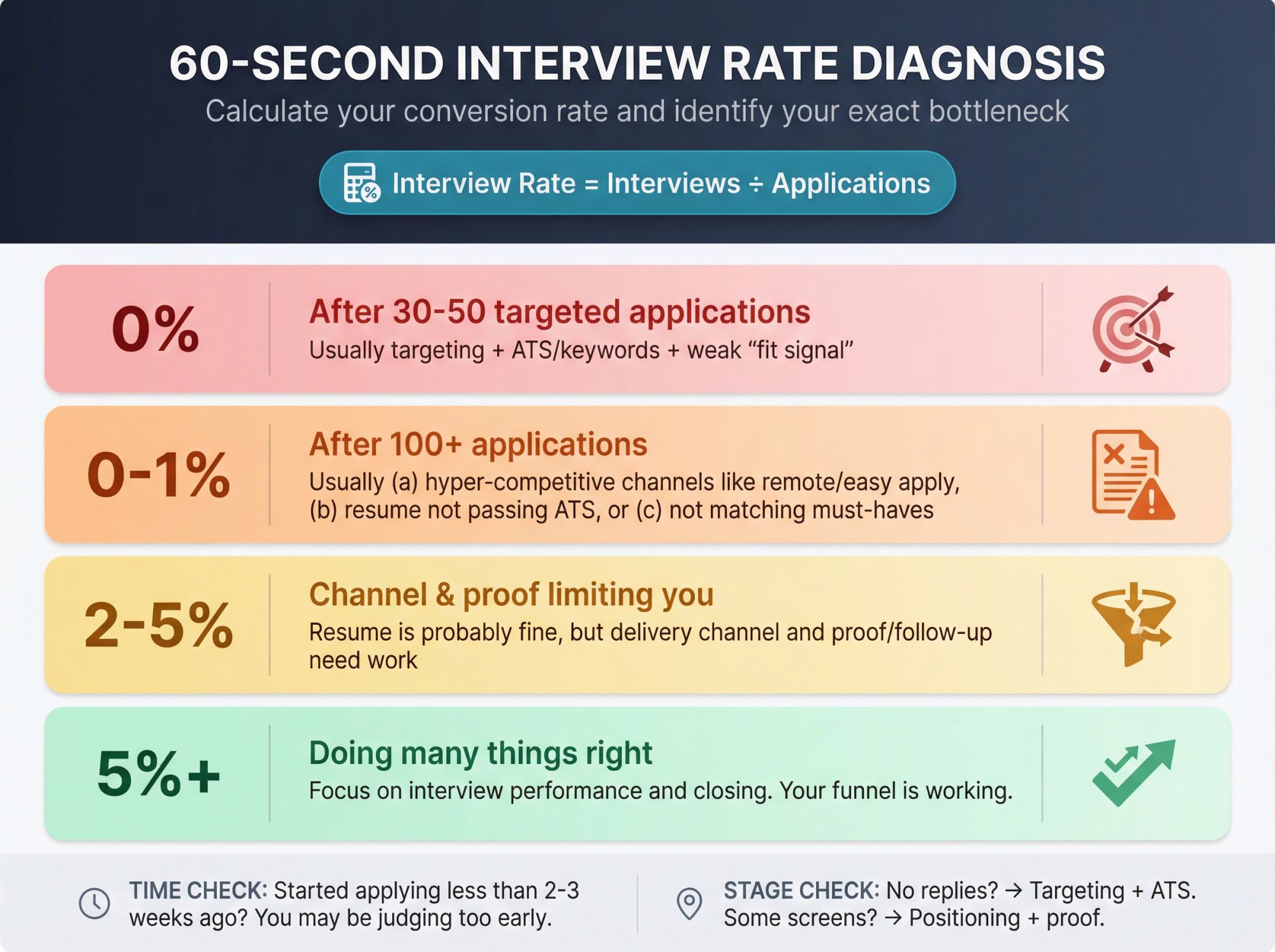
Calculate your interview rate
Use this formula:
Interview rate = interviews ÷ applications submitted
Now interpret it:
0% after 30-50 targeted applications
Usually targeting + ATS/keywords + weak "fit signal"
0-1% after 100+ applications
Usually (a) you're applying in hyper-competitive channels like remote/easy apply, (b) your resume isn't passing ATS parsing, or (c) you're not matching "must-haves"
2-5%
Your resume is probably fine, but your delivery channel and proof/follow-up are limiting you
5%+
You're doing many things right. Focus on interview performance and closing.
Why these ranges matter: employer-side recruiting benchmark data shows how steep the funnel is. Industry research reports a global median time to hire of 38 days. Even "healthy" funnels still take time.
Time reality check
If you started applying less than 2-3 weeks ago, you may be judging too early (especially for professional roles where time-to-hire can be a month or more). Global recruiting benchmarks show hiring processes have gotten longer and heavier with more interviews.
Identify your stage
Where are you failing?
No replies at all
Targeting + ATS + positioning
Occasional recruiter screens but no next steps
Positioning + proof + role alignment
Interviews but no offers
Interview performance + story + salary/level mismatch
This article focuses on the first two (getting interviews).
Why Job Applications Get No Response in 2026
You can do everything "right" and still see fewer interviews than a few years ago. Because the hiring market has changed.
Hiring is slower and more selective
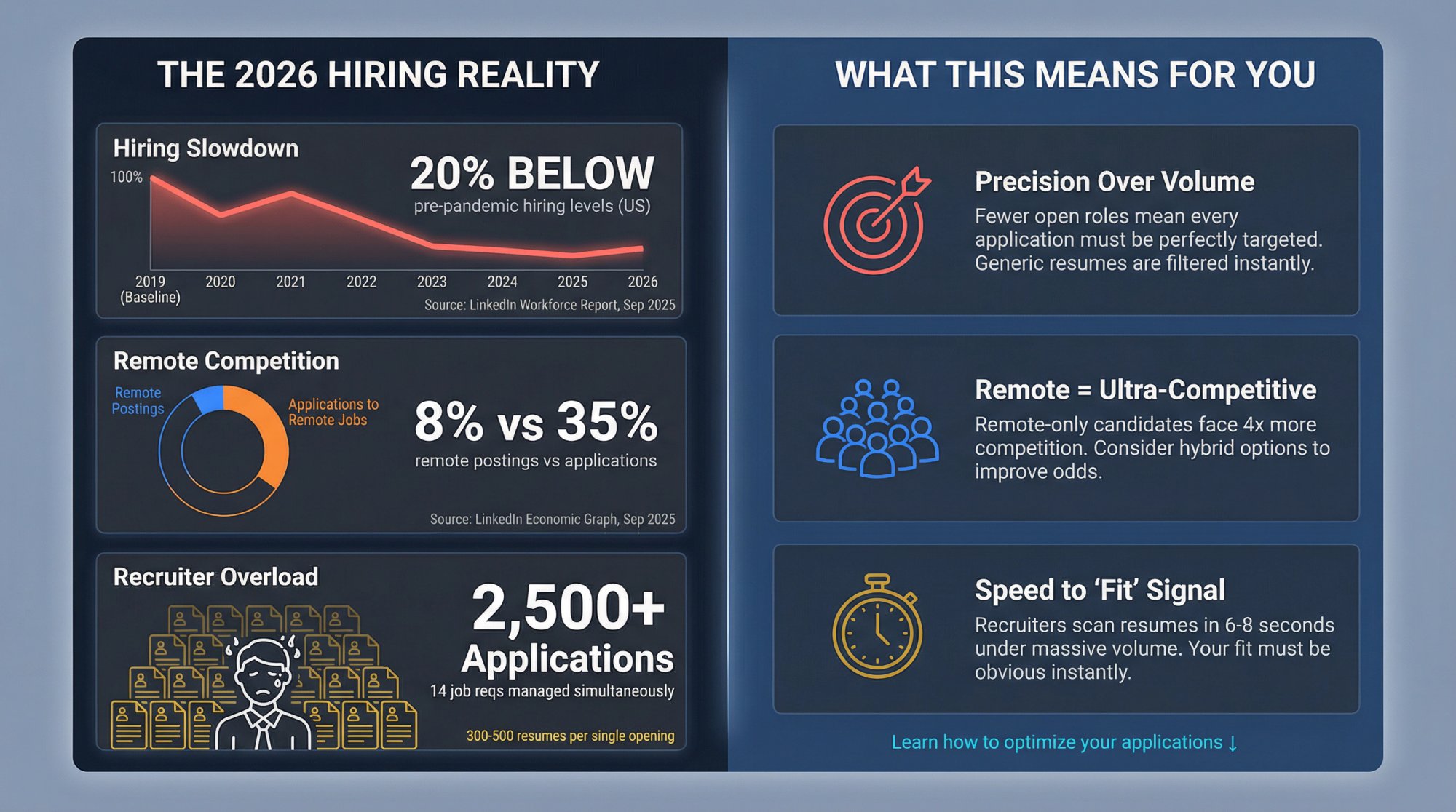
LinkedIn's U.S. Workforce Report (published Sep 2025) described hiring as "sluggish," noting it remained more than 20% below pre-pandemic levels (August 2019).
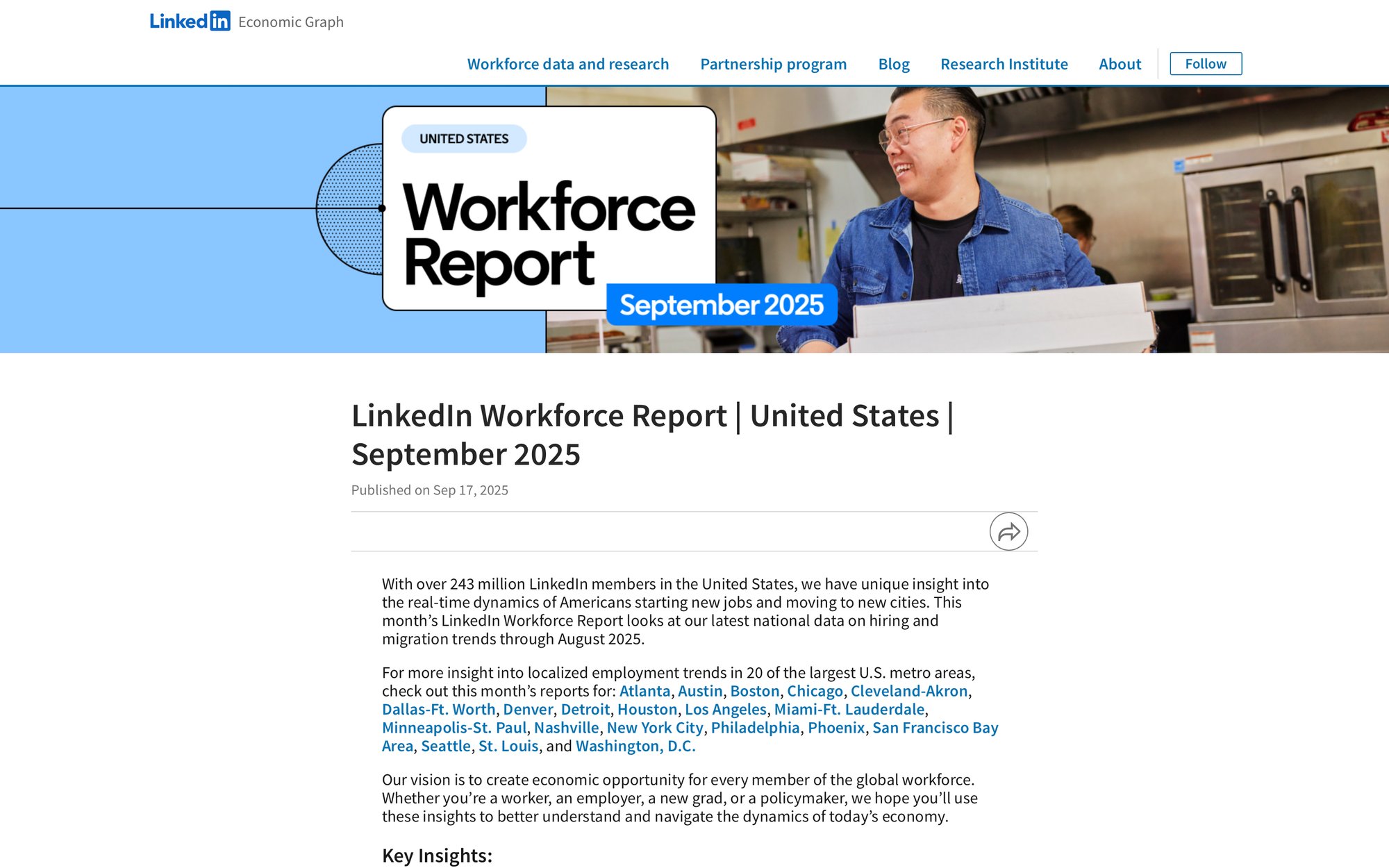
The data from LinkedIn's Economic Graph team validates what many job seekers are experiencing: hiring has genuinely slowed, and competition for available roles has intensified.
In the UK, vacancies have fallen year-over-year
The UK Office for National Statistics reported 729,000 vacancies (Sep-Nov 2025), down 77,000 (9.6%) from a year earlier, and the unemployed-per-vacancy ratio rising to 2.5.
Remote jobs: demand is huge, supply is smaller
LinkedIn's Economic Graph research found that in the U.S. in late 2024, only 9% of newly listed jobs were remote, while remote roles made up a higher share of "still-active" postings that kept attracting applicants (16%).
LinkedIn also reported that the share of jobs applied to that offered remote flexibility fell from 27% at peak (early 2022) to 16% by late 2024.
And by September 2025, LinkedIn data reported in the press showed a striking imbalance: ~8% of paid job postings were remote, but they drew ~35% of applications.
Translation: if you're "remote-only," you're fighting in the most crowded arena.
Recruiters are overloaded
In recruiting benchmarks, the average recruiter was managing 2,500+ applications and 14 job reqs at once (a major jump from a few years prior).
Career center data notes it's not unusual for recruiters to receive 300-500+ resumes per job.
Translation: your resume has to scream "fit" fast, and your channel matters more than ever.
12 Reasons You're Not Getting Interviews (And How to Fix Them)
Below are the most common root causes, ranked by how often they're responsible for "no interviews" outcomes.
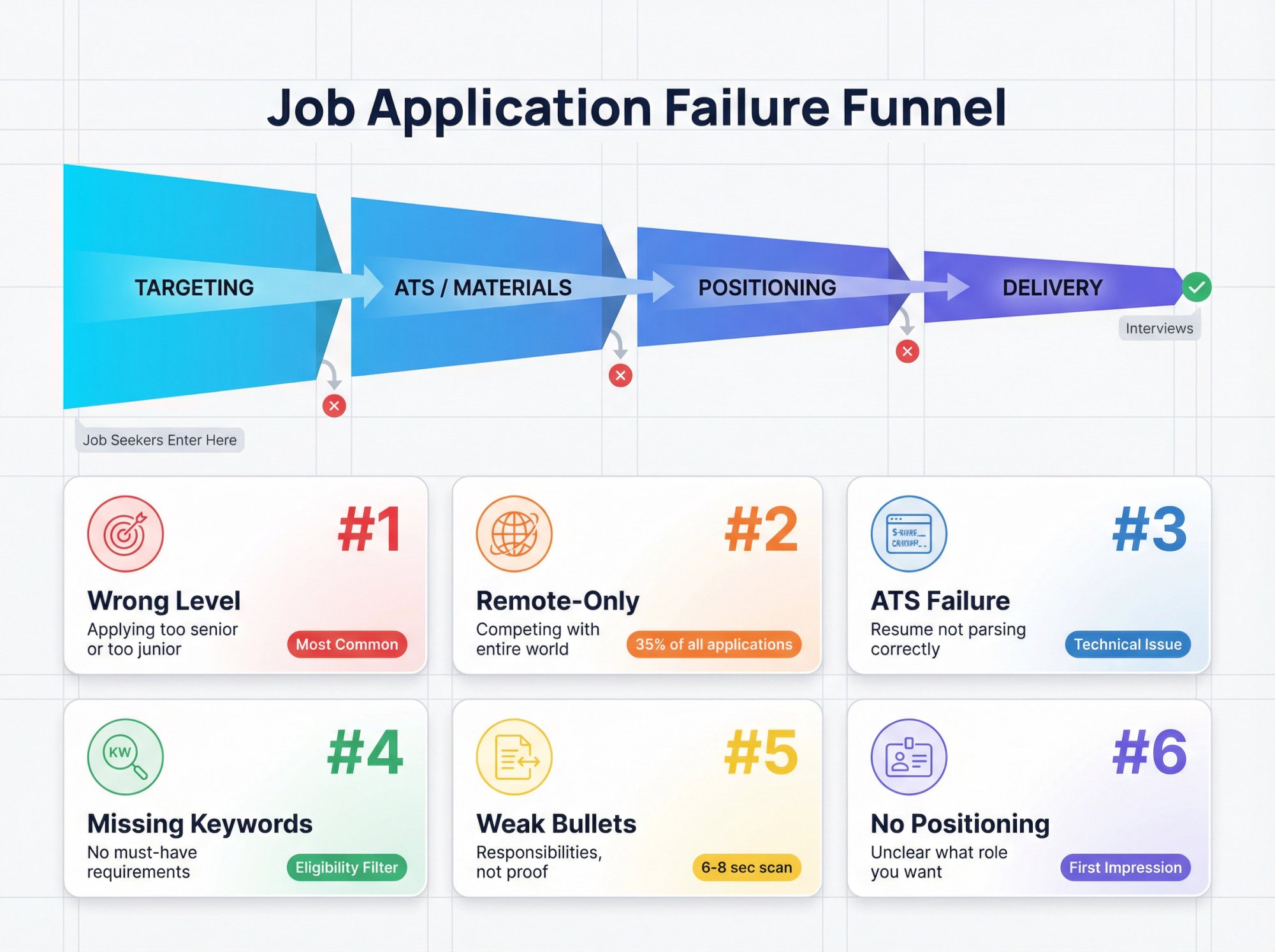
Reason 1: You're applying to roles that aren't actually at your level
Symptoms
Requirements consistently ask for more years/scope than you have. You're applying "up" to senior roles because pay looks better. Or you're applying "down," and you look overqualified.
Fix
Pick one level and win it.
Build a "level-matching resume" where your bullet points match the job's scope (team size, budget, systems, complexity), not just keywords.
High-value test: For your target role, write a 1-sentence "I am a fit because..." statement. If you can't do it without vague words ("hardworking," "fast learner"), your targeting is off.
Reason 2: You're applying remote-only (and accidentally competing with the entire world)
Symptoms
You apply to remote roles. The job is still "active" weeks later. You never hear back.
You see "1,000+ applicants" style indicators on platforms.
Fix options
Why this matters: remote demand has stayed high while supply declined, per LinkedIn Economic Graph research.
Reason 3: Your resume is not passing ATS parsing (yes, this still happens)
Symptoms
You upload your resume and the application preview looks "scrambled." Your skills disappear or your job titles are misread. You used columns, text boxes, icons, or fancy design.
Fix
Use a single-column format. Standard headings: Summary, Experience, Skills, Education. No tables, no graphics, no icons, no headers/footers for critical info. Save to the file type the employer asks for.
Helpful nuance on PDF vs DOCX: Testing indicates many ATS parse PDF resumes accurately and recommend PDF unless a posting requests .docx. But always follow portal instructions.
If you're uncertain whether your resume is ATS-friendly, AIApply's Resume Scanner checks ATS compatibility, keyword gaps, and formatting issues automatically. You can also use the Free Resume ATS Checker for a quick scan.
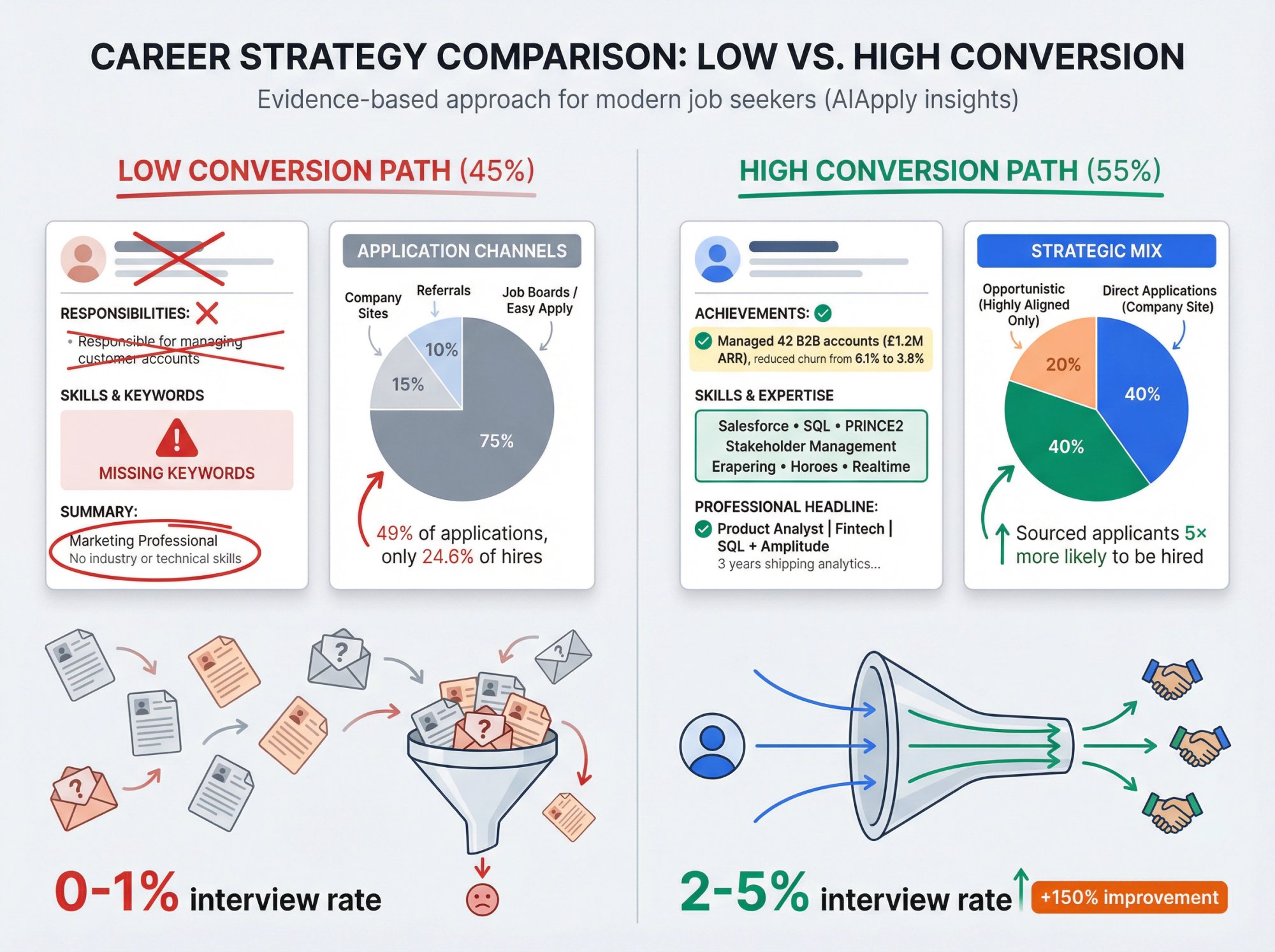
Reason 4: You're missing "must-have" keywords and requirements
This is different from "stuffing keywords." It's about eligibility.
Common must-haves recruiters filter on:
→ Tools/platforms (Salesforce, SQL, SAP, Workday, Excel, Jira, etc.)
→ Certifications (CISSP, ACCA, PRINCE2, CompTIA, etc.)
→ Clearance, license, or degree requirements
→ Work authorization / visa status
→ Industry experience (healthcare, banking, public sector)
Fix
In your skills section, create a "Requirements Match" micro-list of the exact must-haves you truly have.
Mirror the employer's phrasing (e.g., "stakeholder management" vs "stakeholder comms").
Reason 5: Your resume bullets are "responsibilities," not proof
Recruiters skim fast. Initial scans can be 6-8 seconds, and recruiters often read the first words of each bullet.
Bad bullet:
• "Responsible for managing customer accounts."
Better bullet:
• "Managed 42 B2B accounts (£1.2M ARR), reduced churn from 6.1% to 3.8% by redesigning onboarding and QBR cadence."
Fix formula (copy/paste):
Action + Scope + Tool + Result + Why it mattered
"Built X for Y using Z, resulting in A, which improved B."
If you don't have metrics, use credible proxies: volume, time saved, error reduction, cycle time, conversion rate, SLA compliance, cost, customer satisfaction, risk reduction.
Need help crafting stronger bullets? Use AIApply's Resume Builder to generate achievement-focused content quickly.
Reason 6: Your resume has no clear "positioning headline"
If your top third doesn't instantly answer "what role is this person?" recruiters move on.
Fix
At the very top, add:
① Target title (exact wording from job posting)
② 1-line niche (industry + scope)
③ 2-3 proof points (metrics, systems, strengths)
Example:
Product Analyst | Fintech | SQL + Amplitude
3 years shipping analytics for subscription products • Built churn model improving retention by 9% • Stakeholder-ready dashboards for exec teams
Reason 7: You're applying through the noisiest channels (and not using higher-signal paths)
Recruiting data shows job boards and social sites account for ~49% of applications but only ~24.6% of hires.
It also reports that sourced (outbound) applicants are 5× more likely to be hired than inbound applicants.
Translation: "apply and pray" is a low-conversion channel now.
Fix
For every 10 applications:

• 4 should be direct applications (company site)
• 4 should be "warm" (employee referral, hiring manager outreach, recruiter intro)
• 2 should be opportunistic (easy apply, but only if your profile is extremely aligned)
If you need to scale up your applications strategically, AIApply's Auto Apply can help you apply to multiple tailored positions efficiently once your targeting and resume are optimized.
Reason 8: You're getting trapped by ghost postings and stale roles
The U.S. Congressional Research Service defines "ghost" job postings as listings for roles that don't exist or aren't being filled immediately, and notes reasons like resume collection, signaling growth, or third-party reposting.
CRS also notes there are no official statistics on their magnitude.
Fix: the "freshness + verification" rule
Before you invest time:
① Prefer postings < 7-10 days old
② Verify the role exists on the company's careers page
③ Check the recruiter/hiring manager activity on LinkedIn (recent posts, role shares)
④ If a role has been reposted repeatedly for months, treat it as low-ROI unless you have an internal connection
Reason 9: You're applying too broadly (multiple different roles with one resume)
One resume trying to fit Marketing analyst and Product manager and Customer success and Operations usually fits none.
Fix
Create two lanes max:
Lane A: your primary target
Lane B: a closely adjacent role you can credibly justify
Each lane gets:
→ A tailored resume version
→ A tailored LinkedIn headline
→ A tailored proof pack (portfolio/work sample)
Reason 10: Your LinkedIn profile doesn't match your resume (or looks empty)
Many recruiters cross-check LinkedIn even when you apply through an ATS. If your LinkedIn is outdated, vague, or inconsistent, you lose trust.
Fix:
You can also build your resume directly from your LinkedIn profile to ensure consistency.
Reason 11: Your work authorization / location is unclear (so you get filtered out)
This is a silent killer.
Fix
Put a line near the top:
"London, UK • Eligible to work in the UK (no sponsorship required)"
or
"Manchester • Require Skilled Worker sponsorship"
or
"EU citizen • Open to relocation to X by March 2026"
Clarity beats hope.
Reason 12: You're accidentally signaling risk (without realizing it)
Examples:
• Unexplained gaps with no context
• Very frequent short tenures with no explanation
• A resume that looks AI-generated (generic, zero specifics)
Industry research shows hiring managers have expressed skepticism about generic AI-generated content, so your resume must feel specific and human.
Fix
Add short, honest context:
"2023: Caregiving leave (family)"
"2024: Career break completed X certification + built Y project"
For frequent moves: "Contract roles" or "startup acquisition" if true
What Is ATS and How Does It Work? (2026 Technical Guide)
ATS reality in 2025-2026
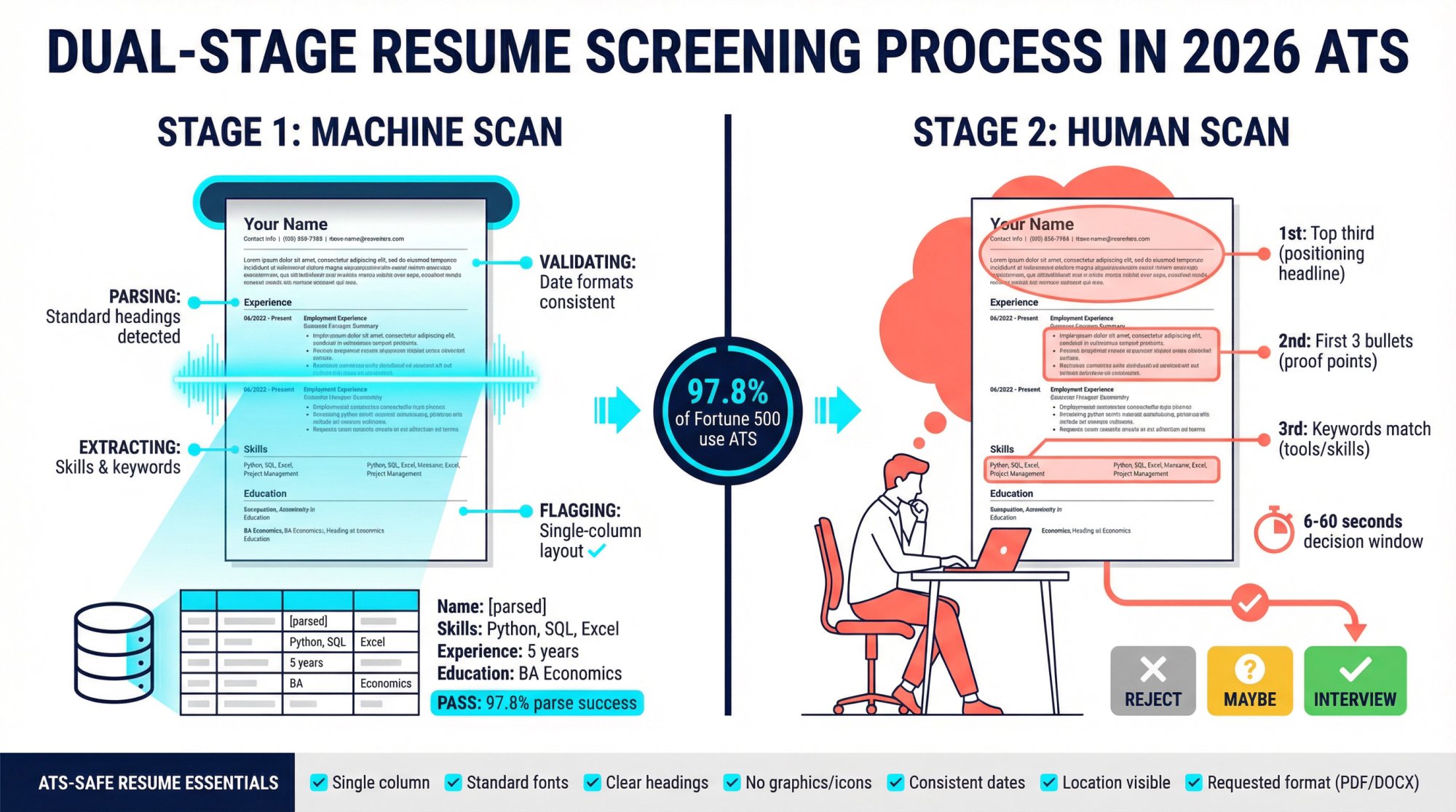
Industry estimates indicate 97.8% of Fortune 500 companies use a detectable ATS in 2025.
That means your resume must succeed in two scans:
① Machine scan (parsing + filtering)
② Human scan (6-60 seconds to decide if you're "worth a call")
The ATS-safe layout checklist
Use this as your "don't lose interviews to formatting" list:
✓ Single column
✓ Standard fonts (no script/novelty fonts)
✓ Standard headings (Summary, Experience, Skills, Education)
✓ No text boxes, icons, graphics, charts
✓ Dates in a consistent format (e.g., "Jan 2022 – Mar 2025")
✓ Location and work authorization visible
✓ Save in the requested format (PDF or DOCX depending on portal)
Use AIApply's ATS Resume Checker to validate your formatting before submitting.
AIApply's Resume Scanner checks your resume against ATS parsing requirements, identifies keyword gaps, and flags formatting issues automatically so you can fix problems before applying.
How to Create a Proof Pack That Gets Interviews
If you do one advanced thing from this guide, do this.
A Proof Pack is a 1-3 page "evidence bundle" you can send after applying (or attach when possible). It turns you from an "applicant" into a "candidate."
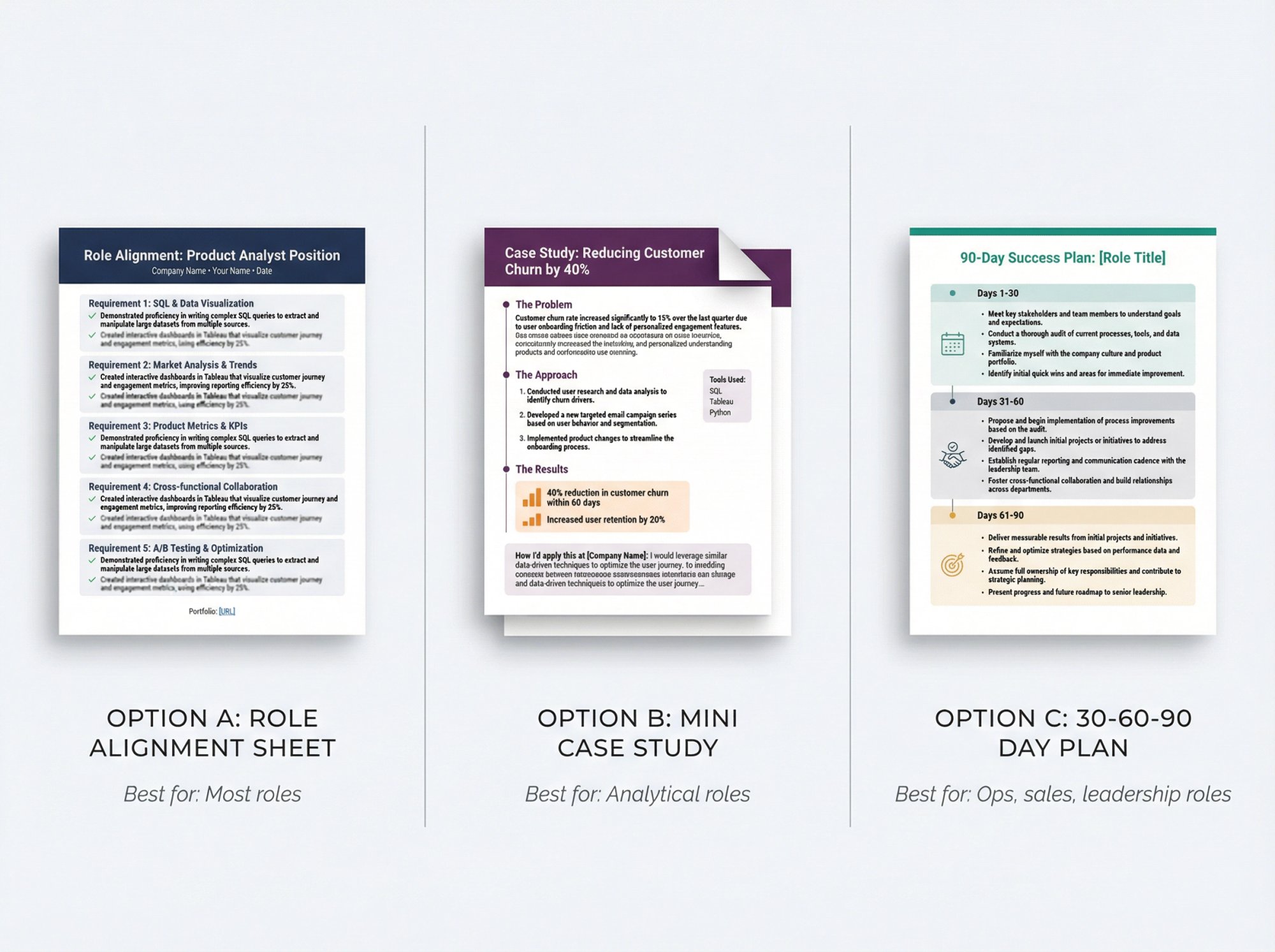
What goes inside
Pick one of these formats:
How to use it (high leverage)
Apply. Within 24-48 hours, message the recruiter or hiring manager:
"I applied for X. Here's a 1-page alignment sheet showing how I match the top requirements."
This approach pairs perfectly with the reality that inbound applicants are less likely to be hired than sourced candidates, per recruiting benchmark data.
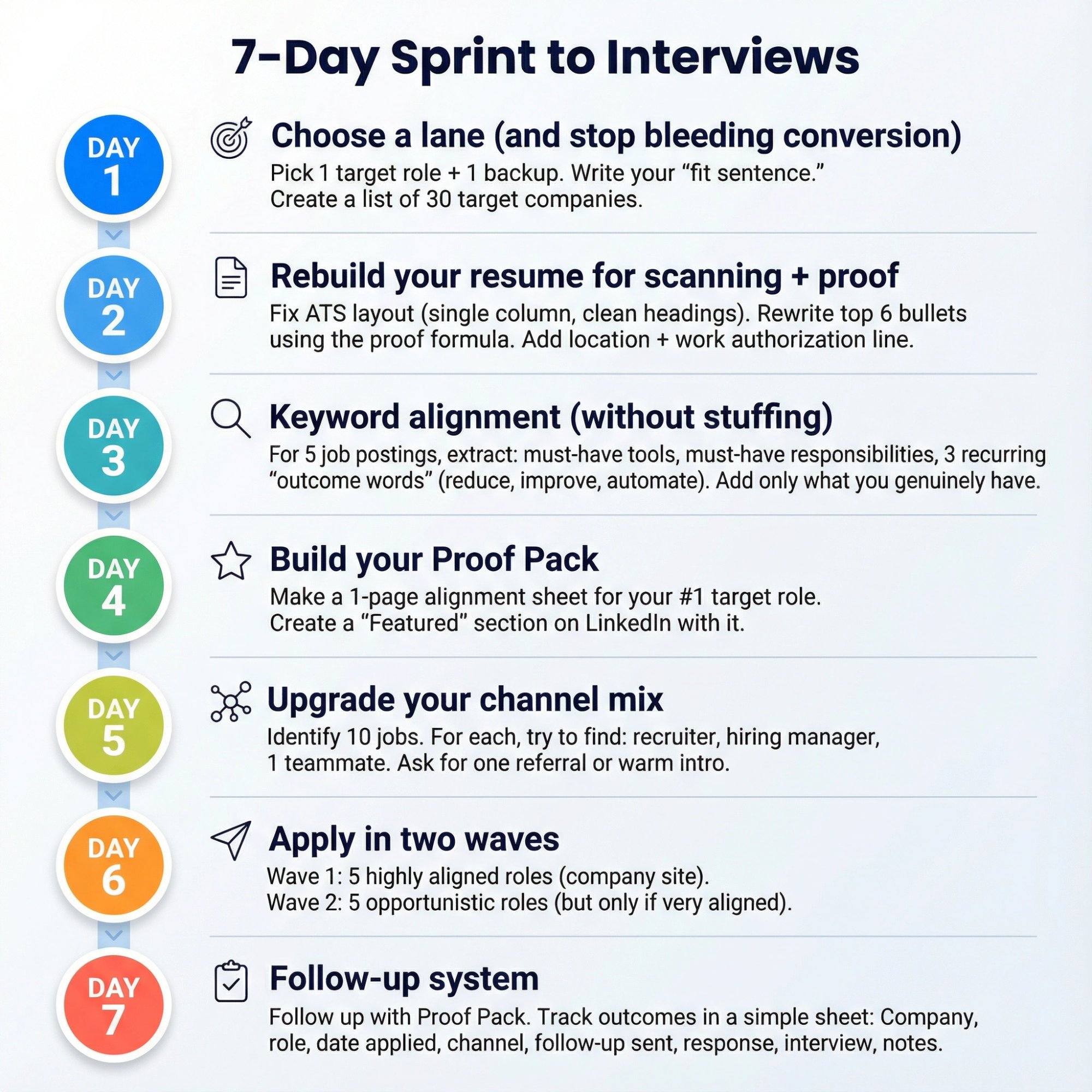
How to Get Interviews Fast (7-Day Sprint Plan)
If you've been stuck, do this exactly for one week. It's designed to change outcomes fast.
Use AIApply's Resume Builder to quickly create lane-specific versions for different roles.
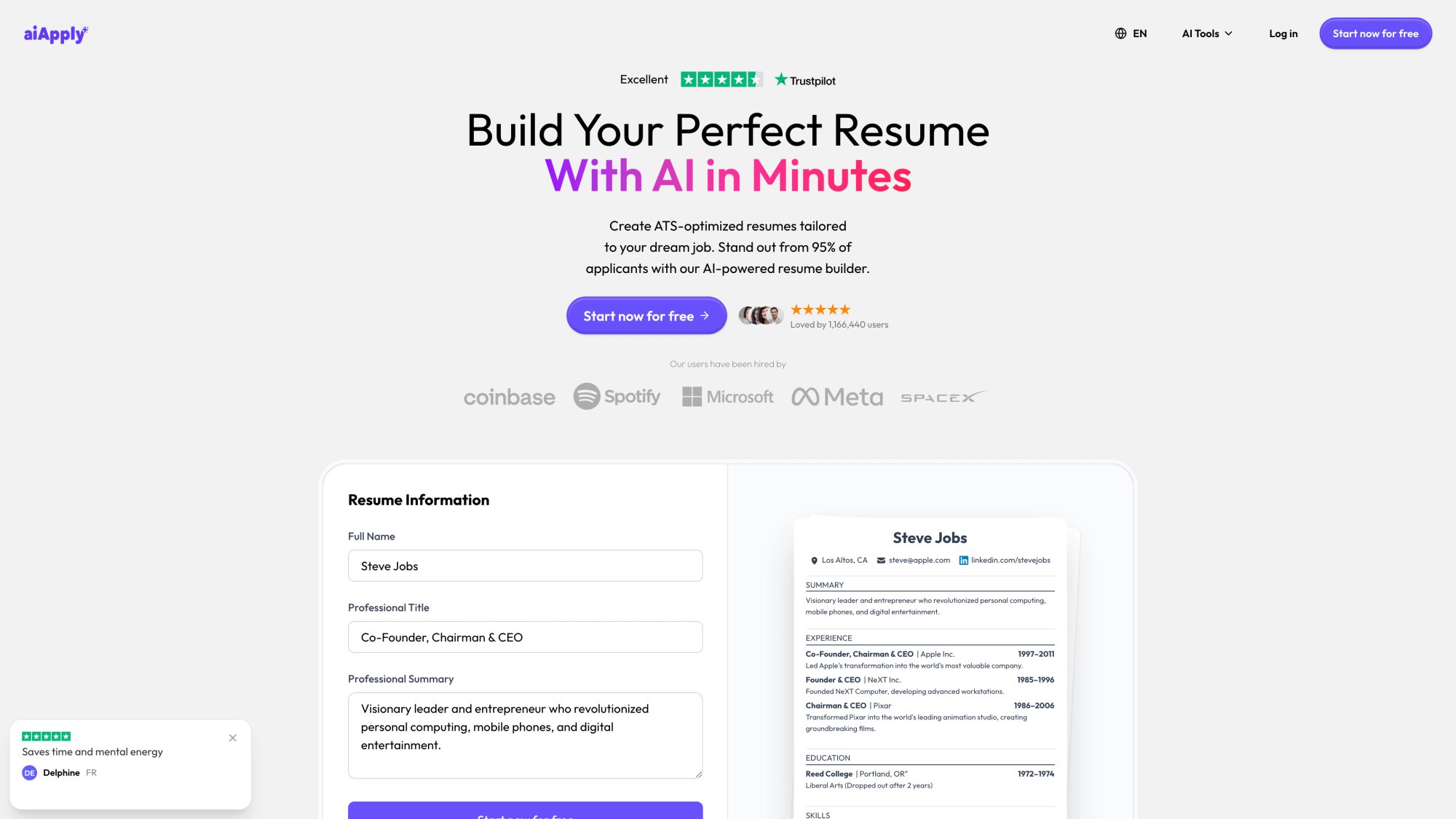
The Resume Builder helps you create job-specific resumes quickly, with Harvard-inspired templates that pass ATS parsing and professional formatting that recruiters trust.
Where AIApply fits (without turning your search into spam)
AI tools can help you a lot (but only if you use them to increase signal, not just volume).
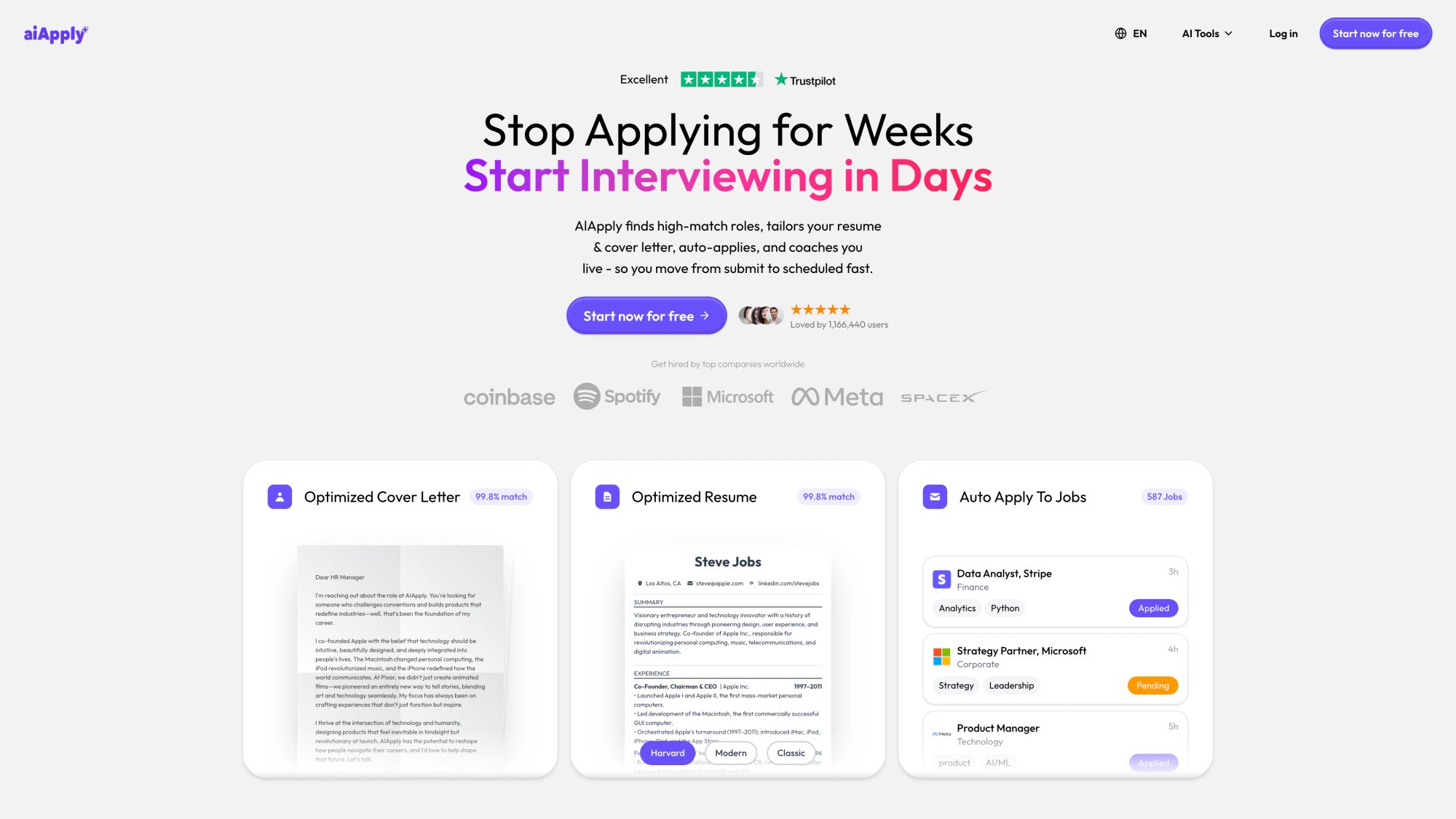
AIApply's platform combines all the tools you need for a modern job search: resume optimization, application automation, and interview preparation in one cohesive workflow.
Here are the AIApply features that map to the bottlenecks above:
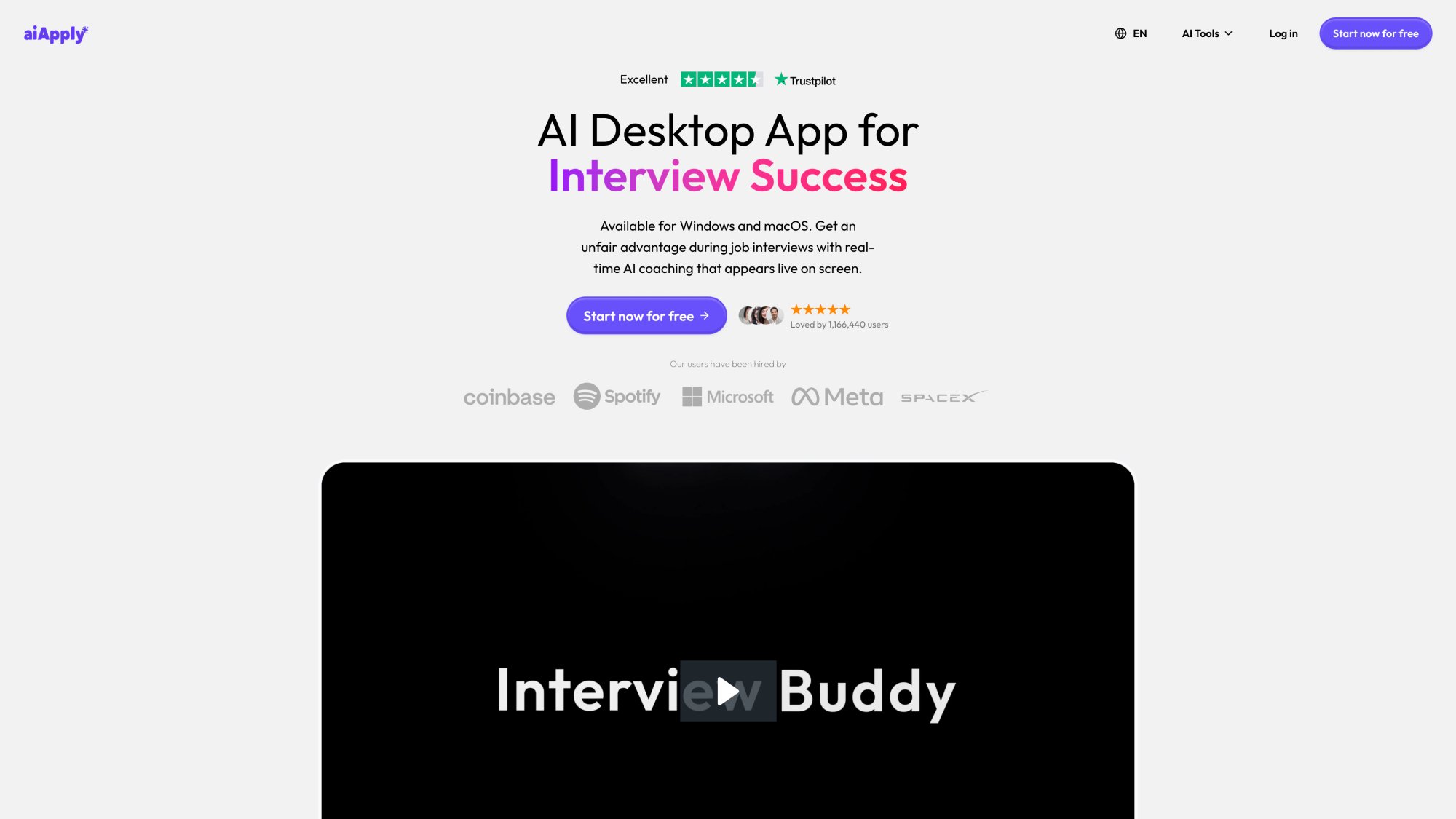
Interview Buddy works as a Chrome extension that listens to your live interviews (Zoom, Meet, Teams) and provides real-time answer suggestions, helping you respond confidently to unexpected questions.
AIApply also publishes tactical job-search guidance for online application strategy and ATS considerations.
FAQ
"How many applications should I send before expecting interviews?"
It depends on role, seniority, location, and channel (but in today's market, cold applications alone can be a low-conversion path).
Employer-side benchmarks show job boards drive a huge share of applications but a smaller share of hires, while outbound sourcing is far more efficient.
A better question is: Are you using a channel mix that includes warm paths (referrals/outreach)?
"Is the market just bad right now?"
In many places, it's harder than peak years.
UK vacancies were down year-over-year in late 2025, and U.S. hiring was described as sluggish by LinkedIn's Workforce Report.
That said, people are still getting hired (by aligning the funnel and using higher-signal channels).
"Are ghost jobs real?"
Yes, but they're hard to measure.
The Congressional Research Service defines ghost job postings and explains why they appear, while noting no official statistics exist on their prevalence.
"How do I avoid job scams while applying?"
Job scams have surged.
The FTC reported job scam losses tripled from 2020 to 2023 and exceeded 220M in the first half of 2024.
FTC consumer guidance also notes reports tripled from 2020 to 2024 and reported losses increased substantially over that period.
Rule of thumb: never pay to get paid, be wary of unsolicited WhatsApp/text offers, and verify employers on official channels.
"My resume looks good, why no interviews?"
"Looks good" to humans can still fail ATS parsing or fail to communicate fit in the first skim.
Recruiters may scan quickly (career center data cites 6-8 seconds initially) and handle huge volumes.
You need both: machine readability + proof-based bullets + strong positioning headline.
Run your resume through AIApply's Resume Scanner to identify hidden issues.
"Should I use AI resume builders?"
AI resume builders like AIApply's Resume Builder can save massive time when used correctly.
The key is to edit for specificity. Never submit a generic AI output. Add your real metrics, real projects, real tools. Make it sound like you, not like a template.
Tools work best for:
→ Creating multiple lane-specific versions quickly
→ Getting past writer's block
→ Ensuring ATS compatibility
But you still need to own the final content.
"What's the #1 thing I should fix first?"
If you're at 0% interviews after 30+ applications:
Fix your targeting. You're probably applying to the wrong level or the wrong roles.
If you're at 1-3% interviews:
Fix your channel mix. Stop relying on job boards alone. Add warm paths (referrals, direct outreach).
If you're at 5%+ interviews but no offers:
Fix your interview performance. The resume is working. Practice storytelling, prepare better answers, and use tools like AIApply's Interview Buddy to rehearse.
If you want the fastest path to interviews from here
Treat this like a funnel optimization project:
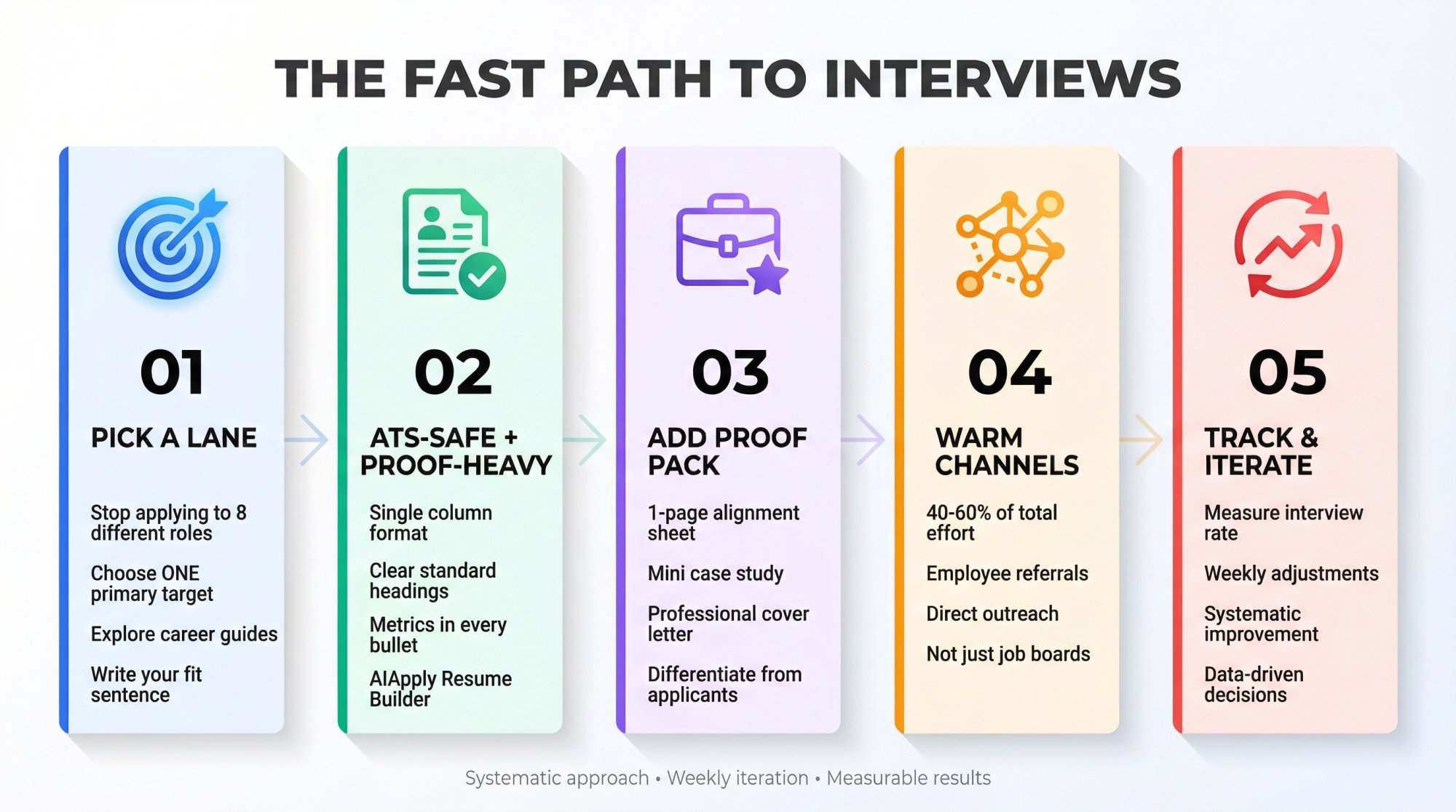
1. Pick a lane
Stop applying to 8 different role types. Choose one primary target. Explore career-specific guides to understand your target role better.
2. Make your resume ATS-safe + proof-heavy
Single column. Clear headings. Proof-based bullets with metrics. Use AIApply's Resume Builder to ensure proper formatting.
3. Add a Proof Pack
Build a 1-page alignment sheet or mini case study. Need a professional cover letter? AIApply can help.
4. Shift 40-60% of effort toward warm channels
Referrals and direct outreach. Not just job boards.
5. Track conversion and iterate weekly
Measure your interview rate. Adjust your approach every 7 days.
That's how you turn "I'm not getting interviews" into a measurable system that improves every week.
You've sent 50 applications. Maybe 100. Maybe 200.
And you're hearing... nothing. No interview invites, no recruiter calls, not even rejections.
It's not bad luck. Your job search is stuck somewhere in a predictable funnel:
Targeting → Application materials → Delivery channel → Proof & follow-up
This guide helps you find the exact bottleneck, fix it fast, and build a system that actually produces interviews (even when the market is brutal).
How to Calculate Your Interview Rate (60-Second Diagnosis)
Before you rewrite your resume for the 14th time, diagnose this like a strategist.
Calculate your interview rate
Use this formula:
Interview rate = interviews ÷ applications submitted
Now interpret it:
0% after 30-50 targeted applications
Usually targeting + ATS/keywords + weak "fit signal"
0-1% after 100+ applications
Usually (a) you're applying in hyper-competitive channels like remote/easy apply, (b) your resume isn't passing ATS parsing, or (c) you're not matching "must-haves"
2-5%
Your resume is probably fine, but your delivery channel and proof/follow-up are limiting you
5%+
You're doing many things right. Focus on interview performance and closing.
Why these ranges matter: employer-side recruiting benchmark data shows how steep the funnel is. Industry research reports a global median time to hire of 38 days. Even "healthy" funnels still take time.
Time reality check
If you started applying less than 2-3 weeks ago, you may be judging too early (especially for professional roles where time-to-hire can be a month or more). Global recruiting benchmarks show hiring processes have gotten longer and heavier with more interviews.
Identify your stage
Where are you failing?
No replies at all
Targeting + ATS + positioning
Occasional recruiter screens but no next steps
Positioning + proof + role alignment
Interviews but no offers
Interview performance + story + salary/level mismatch
This article focuses on the first two (getting interviews).
Why Job Applications Get No Response in 2026
You can do everything "right" and still see fewer interviews than a few years ago. Because the hiring market has changed.
Hiring is slower and more selective
LinkedIn's U.S. Workforce Report (published Sep 2025) described hiring as "sluggish," noting it remained more than 20% below pre-pandemic levels (August 2019).
The data from LinkedIn's Economic Graph team validates what many job seekers are experiencing: hiring has genuinely slowed, and competition for available roles has intensified.
In the UK, vacancies have fallen year-over-year
The UK Office for National Statistics reported 729,000 vacancies (Sep-Nov 2025), down 77,000 (9.6%) from a year earlier, and the unemployed-per-vacancy ratio rising to 2.5.
Remote jobs: demand is huge, supply is smaller
LinkedIn's Economic Graph research found that in the U.S. in late 2024, only 9% of newly listed jobs were remote, while remote roles made up a higher share of "still-active" postings that kept attracting applicants (16%).
LinkedIn also reported that the share of jobs applied to that offered remote flexibility fell from 27% at peak (early 2022) to 16% by late 2024.
And by September 2025, LinkedIn data reported in the press showed a striking imbalance: ~8% of paid job postings were remote, but they drew ~35% of applications.
Translation: if you're "remote-only," you're fighting in the most crowded arena.
Recruiters are overloaded
In recruiting benchmarks, the average recruiter was managing 2,500+ applications and 14 job reqs at once (a major jump from a few years prior).
Career center data notes it's not unusual for recruiters to receive 300-500+ resumes per job.
Translation: your resume has to scream "fit" fast, and your channel matters more than ever.
12 Reasons You're Not Getting Interviews (And How to Fix Them)
Below are the most common root causes, ranked by how often they're responsible for "no interviews" outcomes.
Reason 1: You're applying to roles that aren't actually at your level
Symptoms
Requirements consistently ask for more years/scope than you have. You're applying "up" to senior roles because pay looks better. Or you're applying "down," and you look overqualified.
Fix
Pick one level and win it.
Build a "level-matching resume" where your bullet points match the job's scope (team size, budget, systems, complexity), not just keywords.
High-value test: For your target role, write a 1-sentence "I am a fit because..." statement. If you can't do it without vague words ("hardworking," "fast learner"), your targeting is off.
Reason 2: You're applying remote-only (and accidentally competing with the entire world)
Symptoms
You apply to remote roles. The job is still "active" weeks later. You never hear back.
You see "1,000+ applicants" style indicators on platforms.
Fix options
Why this matters: remote demand has stayed high while supply declined, per LinkedIn Economic Graph research.
Reason 3: Your resume is not passing ATS parsing (yes, this still happens)
Symptoms
You upload your resume and the application preview looks "scrambled." Your skills disappear or your job titles are misread. You used columns, text boxes, icons, or fancy design.
Fix
Use a single-column format. Standard headings: Summary, Experience, Skills, Education. No tables, no graphics, no icons, no headers/footers for critical info. Save to the file type the employer asks for.
Helpful nuance on PDF vs DOCX: Testing indicates many ATS parse PDF resumes accurately and recommend PDF unless a posting requests .docx. But always follow portal instructions.
If you're uncertain whether your resume is ATS-friendly, AIApply's Resume Scanner checks ATS compatibility, keyword gaps, and formatting issues automatically. You can also use the Free Resume ATS Checker for a quick scan.
Reason 4: You're missing "must-have" keywords and requirements
This is different from "stuffing keywords." It's about eligibility.
Common must-haves recruiters filter on:
→ Tools/platforms (Salesforce, SQL, SAP, Workday, Excel, Jira, etc.)
→ Certifications (CISSP, ACCA, PRINCE2, CompTIA, etc.)
→ Clearance, license, or degree requirements
→ Work authorization / visa status
→ Industry experience (healthcare, banking, public sector)
Fix
In your skills section, create a "Requirements Match" micro-list of the exact must-haves you truly have.
Mirror the employer's phrasing (e.g., "stakeholder management" vs "stakeholder comms").
Reason 5: Your resume bullets are "responsibilities," not proof
Recruiters skim fast. Initial scans can be 6-8 seconds, and recruiters often read the first words of each bullet.
Bad bullet:
• "Responsible for managing customer accounts."
Better bullet:
• "Managed 42 B2B accounts (£1.2M ARR), reduced churn from 6.1% to 3.8% by redesigning onboarding and QBR cadence."
Fix formula (copy/paste):
Action + Scope + Tool + Result + Why it mattered
"Built X for Y using Z, resulting in A, which improved B."
If you don't have metrics, use credible proxies: volume, time saved, error reduction, cycle time, conversion rate, SLA compliance, cost, customer satisfaction, risk reduction.
Need help crafting stronger bullets? Use AIApply's Resume Builder to generate achievement-focused content quickly.
Reason 6: Your resume has no clear "positioning headline"
If your top third doesn't instantly answer "what role is this person?" recruiters move on.
Fix
At the very top, add:
① Target title (exact wording from job posting)
② 1-line niche (industry + scope)
③ 2-3 proof points (metrics, systems, strengths)
Example:
Product Analyst | Fintech | SQL + Amplitude
3 years shipping analytics for subscription products • Built churn model improving retention by 9% • Stakeholder-ready dashboards for exec teams
Reason 7: You're applying through the noisiest channels (and not using higher-signal paths)
Recruiting data shows job boards and social sites account for ~49% of applications but only ~24.6% of hires.
It also reports that sourced (outbound) applicants are 5× more likely to be hired than inbound applicants.
Translation: "apply and pray" is a low-conversion channel now.
Fix
For every 10 applications:
• 4 should be direct applications (company site)
• 4 should be "warm" (employee referral, hiring manager outreach, recruiter intro)
• 2 should be opportunistic (easy apply, but only if your profile is extremely aligned)
If you need to scale up your applications strategically, AIApply's Auto Apply can help you apply to multiple tailored positions efficiently once your targeting and resume are optimized.
Reason 8: You're getting trapped by ghost postings and stale roles
The U.S. Congressional Research Service defines "ghost" job postings as listings for roles that don't exist or aren't being filled immediately, and notes reasons like resume collection, signaling growth, or third-party reposting.
CRS also notes there are no official statistics on their magnitude.
Fix: the "freshness + verification" rule
Before you invest time:
① Prefer postings < 7-10 days old
② Verify the role exists on the company's careers page
③ Check the recruiter/hiring manager activity on LinkedIn (recent posts, role shares)
④ If a role has been reposted repeatedly for months, treat it as low-ROI unless you have an internal connection
Reason 9: You're applying too broadly (multiple different roles with one resume)
One resume trying to fit Marketing analyst and Product manager and Customer success and Operations usually fits none.
Fix
Create two lanes max:
Lane A: your primary target
Lane B: a closely adjacent role you can credibly justify
Each lane gets:
→ A tailored resume version
→ A tailored LinkedIn headline
→ A tailored proof pack (portfolio/work sample)
Reason 10: Your LinkedIn profile doesn't match your resume (or looks empty)
Many recruiters cross-check LinkedIn even when you apply through an ATS. If your LinkedIn is outdated, vague, or inconsistent, you lose trust.
Fix:
You can also build your resume directly from your LinkedIn profile to ensure consistency.
Reason 11: Your work authorization / location is unclear (so you get filtered out)
This is a silent killer.
Fix
Put a line near the top:
"London, UK • Eligible to work in the UK (no sponsorship required)"
or
"Manchester • Require Skilled Worker sponsorship"
or
"EU citizen • Open to relocation to X by March 2026"
Clarity beats hope.
Reason 12: You're accidentally signaling risk (without realizing it)
Examples:
• Unexplained gaps with no context
• Very frequent short tenures with no explanation
• A resume that looks AI-generated (generic, zero specifics)
Industry research shows hiring managers have expressed skepticism about generic AI-generated content, so your resume must feel specific and human.
Fix
Add short, honest context:
"2023: Caregiving leave (family)"
"2024: Career break completed X certification + built Y project"
For frequent moves: "Contract roles" or "startup acquisition" if true
What Is ATS and How Does It Work? (2026 Technical Guide)
ATS reality in 2025-2026
Industry estimates indicate 97.8% of Fortune 500 companies use a detectable ATS in 2025.
That means your resume must succeed in two scans:
① Machine scan (parsing + filtering)
② Human scan (6-60 seconds to decide if you're "worth a call")
The ATS-safe layout checklist
Use this as your "don't lose interviews to formatting" list:
✓ Single column
✓ Standard fonts (no script/novelty fonts)
✓ Standard headings (Summary, Experience, Skills, Education)
✓ No text boxes, icons, graphics, charts
✓ Dates in a consistent format (e.g., "Jan 2022 – Mar 2025")
✓ Location and work authorization visible
✓ Save in the requested format (PDF or DOCX depending on portal)
Use AIApply's ATS Resume Checker to validate your formatting before submitting.
AIApply's Resume Scanner checks your resume against ATS parsing requirements, identifies keyword gaps, and flags formatting issues automatically so you can fix problems before applying.
How to Create a Proof Pack That Gets Interviews
If you do one advanced thing from this guide, do this.
A Proof Pack is a 1-3 page "evidence bundle" you can send after applying (or attach when possible). It turns you from an "applicant" into a "candidate."
What goes inside
Pick one of these formats:
How to use it (high leverage)
Apply. Within 24-48 hours, message the recruiter or hiring manager:
"I applied for X. Here's a 1-page alignment sheet showing how I match the top requirements."
This approach pairs perfectly with the reality that inbound applicants are less likely to be hired than sourced candidates, per recruiting benchmark data.
How to Get Interviews Fast (7-Day Sprint Plan)
If you've been stuck, do this exactly for one week. It's designed to change outcomes fast.
Use AIApply's Resume Builder to quickly create lane-specific versions for different roles.
The Resume Builder helps you create job-specific resumes quickly, with Harvard-inspired templates that pass ATS parsing and professional formatting that recruiters trust.
Where AIApply fits (without turning your search into spam)
AI tools can help you a lot (but only if you use them to increase signal, not just volume).
AIApply's platform combines all the tools you need for a modern job search: resume optimization, application automation, and interview preparation in one cohesive workflow.
Here are the AIApply features that map to the bottlenecks above:
Interview Buddy works as a Chrome extension that listens to your live interviews (Zoom, Meet, Teams) and provides real-time answer suggestions, helping you respond confidently to unexpected questions.
AIApply also publishes tactical job-search guidance for online application strategy and ATS considerations.
FAQ
"How many applications should I send before expecting interviews?"
It depends on role, seniority, location, and channel (but in today's market, cold applications alone can be a low-conversion path).
Employer-side benchmarks show job boards drive a huge share of applications but a smaller share of hires, while outbound sourcing is far more efficient.
A better question is: Are you using a channel mix that includes warm paths (referrals/outreach)?
"Is the market just bad right now?"
In many places, it's harder than peak years.
UK vacancies were down year-over-year in late 2025, and U.S. hiring was described as sluggish by LinkedIn's Workforce Report.
That said, people are still getting hired (by aligning the funnel and using higher-signal channels).
"Are ghost jobs real?"
Yes, but they're hard to measure.
The Congressional Research Service defines ghost job postings and explains why they appear, while noting no official statistics exist on their prevalence.
"How do I avoid job scams while applying?"
Job scams have surged.
The FTC reported job scam losses tripled from 2020 to 2023 and exceeded 220M in the first half of 2024.
FTC consumer guidance also notes reports tripled from 2020 to 2024 and reported losses increased substantially over that period.
Rule of thumb: never pay to get paid, be wary of unsolicited WhatsApp/text offers, and verify employers on official channels.
"My resume looks good, why no interviews?"
"Looks good" to humans can still fail ATS parsing or fail to communicate fit in the first skim.
Recruiters may scan quickly (career center data cites 6-8 seconds initially) and handle huge volumes.
You need both: machine readability + proof-based bullets + strong positioning headline.
Run your resume through AIApply's Resume Scanner to identify hidden issues.
"Should I use AI resume builders?"
AI resume builders like AIApply's Resume Builder can save massive time when used correctly.
The key is to edit for specificity. Never submit a generic AI output. Add your real metrics, real projects, real tools. Make it sound like you, not like a template.
Tools work best for:
→ Creating multiple lane-specific versions quickly
→ Getting past writer's block
→ Ensuring ATS compatibility
But you still need to own the final content.
"What's the #1 thing I should fix first?"
If you're at 0% interviews after 30+ applications:
Fix your targeting. You're probably applying to the wrong level or the wrong roles.
If you're at 1-3% interviews:
Fix your channel mix. Stop relying on job boards alone. Add warm paths (referrals, direct outreach).
If you're at 5%+ interviews but no offers:
Fix your interview performance. The resume is working. Practice storytelling, prepare better answers, and use tools like AIApply's Interview Buddy to rehearse.
If you want the fastest path to interviews from here
Treat this like a funnel optimization project:
1. Pick a lane
Stop applying to 8 different role types. Choose one primary target. Explore career-specific guides to understand your target role better.
2. Make your resume ATS-safe + proof-heavy
Single column. Clear headings. Proof-based bullets with metrics. Use AIApply's Resume Builder to ensure proper formatting.
3. Add a Proof Pack
Build a 1-page alignment sheet or mini case study. Need a professional cover letter? AIApply can help.
4. Shift 40-60% of effort toward warm channels
Referrals and direct outreach. Not just job boards.
5. Track conversion and iterate weekly
Measure your interview rate. Adjust your approach every 7 days.
That's how you turn "I'm not getting interviews" into a measurable system that improves every week.
.webp)
%20(1).webp)
.webp)
Don't miss out on
your next opportunity.
Create and send applications in seconds, not hours.


