
How Many References Do You Need for a Job? (2026 Guide)

.webp)
If you're googling this, you're probably in one of these situations:
An application form is asking for "references" and you don't want to screw it up. Or you're not sure whether references belong on your resume. Maybe a recruiter just asked for a "reference list ASAP" and you're scrambling. Or you're applying to grad school and confused about whether "references" means the same thing as "letters of recommendation."
This guide gives you the exact numbers to use, why those numbers work, and copy-paste templates (reference sheet + ask scripts) so you can move fast without looking messy.
How Many References Do You Need? (Quick Answer)
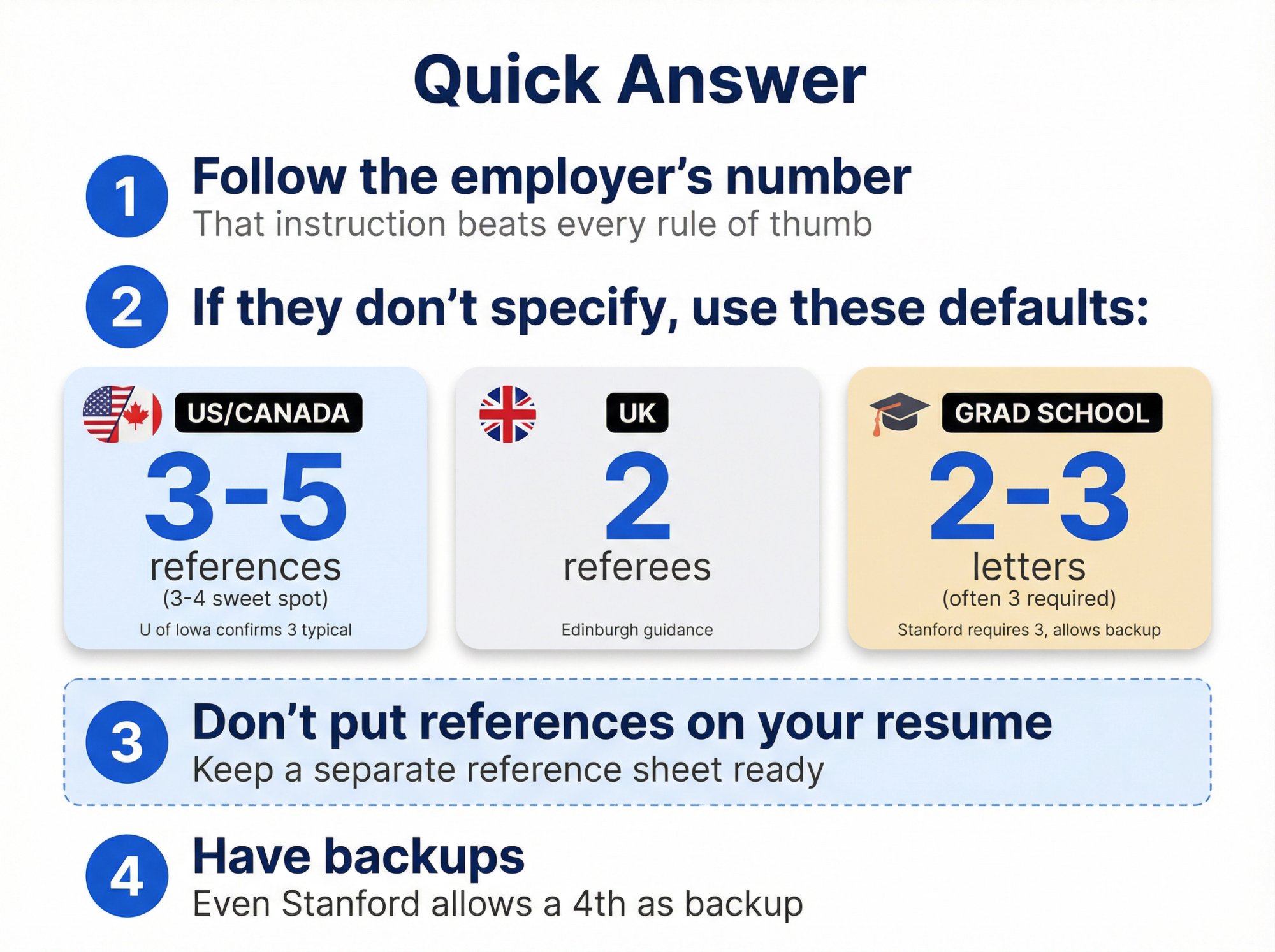
1. If the employer or application says a number, follow it.
That instruction beats every rule of thumb.
2. If they don't specify, use these defaults:
→ Most US/Canada roles: submit 3 to 5 references (sweet spot is 3 to 4). University of Iowa career guidance confirms three is typically expected.
→ Most UK roles: 2 referees is the normal expectation (often one academic plus one employer, depending on your situation). University of Edinburgh career guidance notes two references will normally be enough.
→ Grad school: often 2 to 3, but many programs require 3 letters (and sometimes allow a backup). Stanford Graduate Admissions explicitly requires three letters and allows listing a fourth recommender as backup.
3. Don't put references on your resume or CV unless you're explicitly told to.
Keep a separate reference sheet ready.
4. Have backups.
Even Stanford explicitly allows a fourth recommender as backup for a required set of three. Same logic applies to job references.
What Are Job References? (And Why They're Different from Letters of Recommendation)
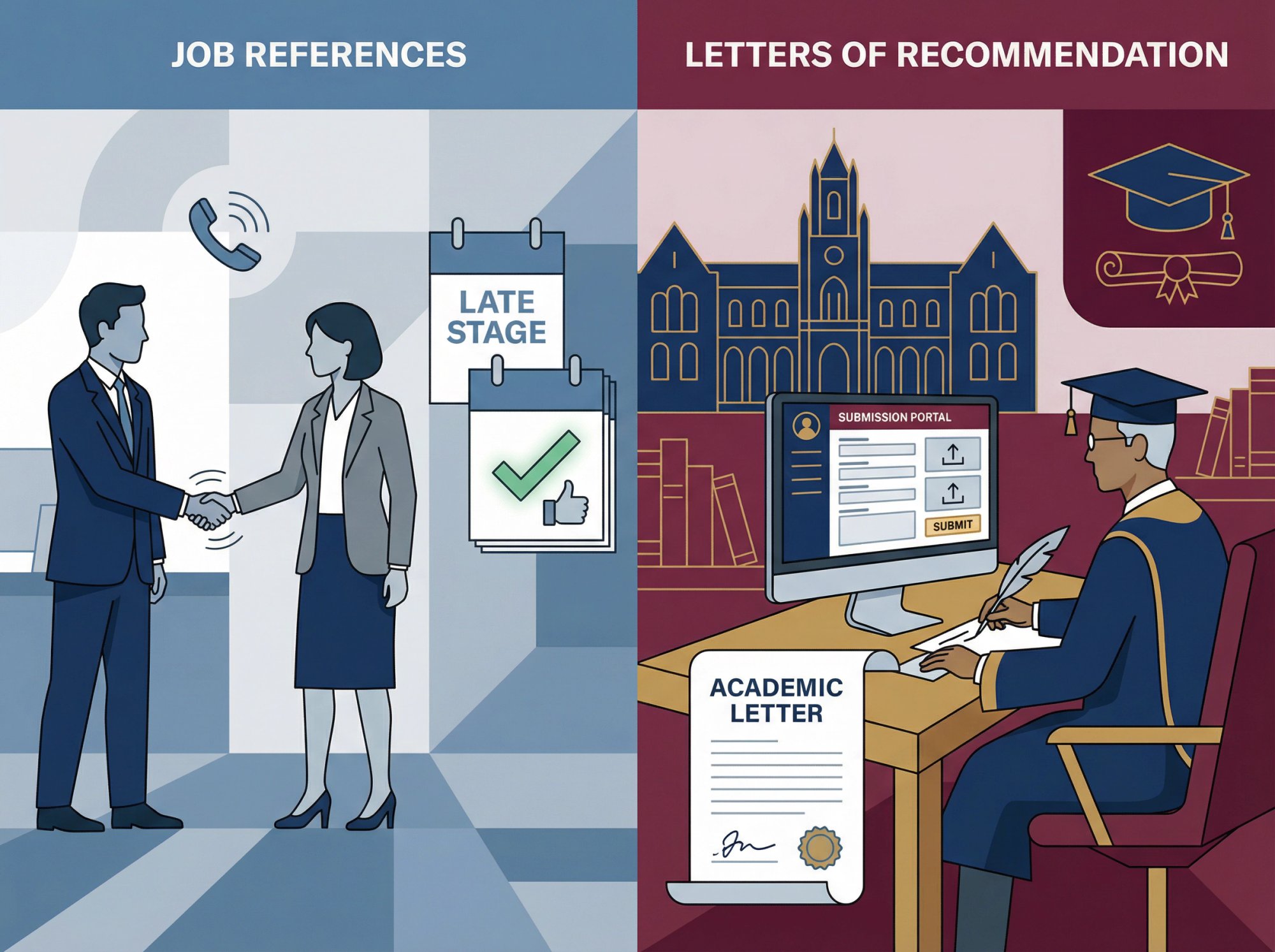
In hiring, "references" means people who can vouch for your work (or your character, if asked), and employers might contact them near the end of the process. University of Edinburgh explains that references are typically people who know you and your work, and employers usually take up references after a final interview or provisional offer.
In grad admissions, references are usually letters of recommendation submitted through a portal, often confidential, with strict rules on authorship. Stanford's system requires three letters via their online platform.
These are different processes, so if you're juggling both, keep two separate systems.
Why Does the Number of References Matter?
A reference check is basically a risk filter. The employer is asking:
→ "Is this person real?" (dates, title, responsibilities)
→ "Is the story consistent?"
→ "Will they be a problem hire?"
The number of references is a tradeoff:
Too few looks like you can't find credible people, or you're hiding something.
Too many creates work for the employer and dilutes signal. Plus you risk accidentally including a weak reference who gives lukewarm feedback.
That's why most modern guidance converges on a tight band: 2 in many UK contexts, 3 to 5 in many US/Canada contexts. It's enough to validate your story without overwhelming anyone.
When Do Employers Check References? (And Why You Shouldn't Panic Early)
For most candidates, references are checked late:
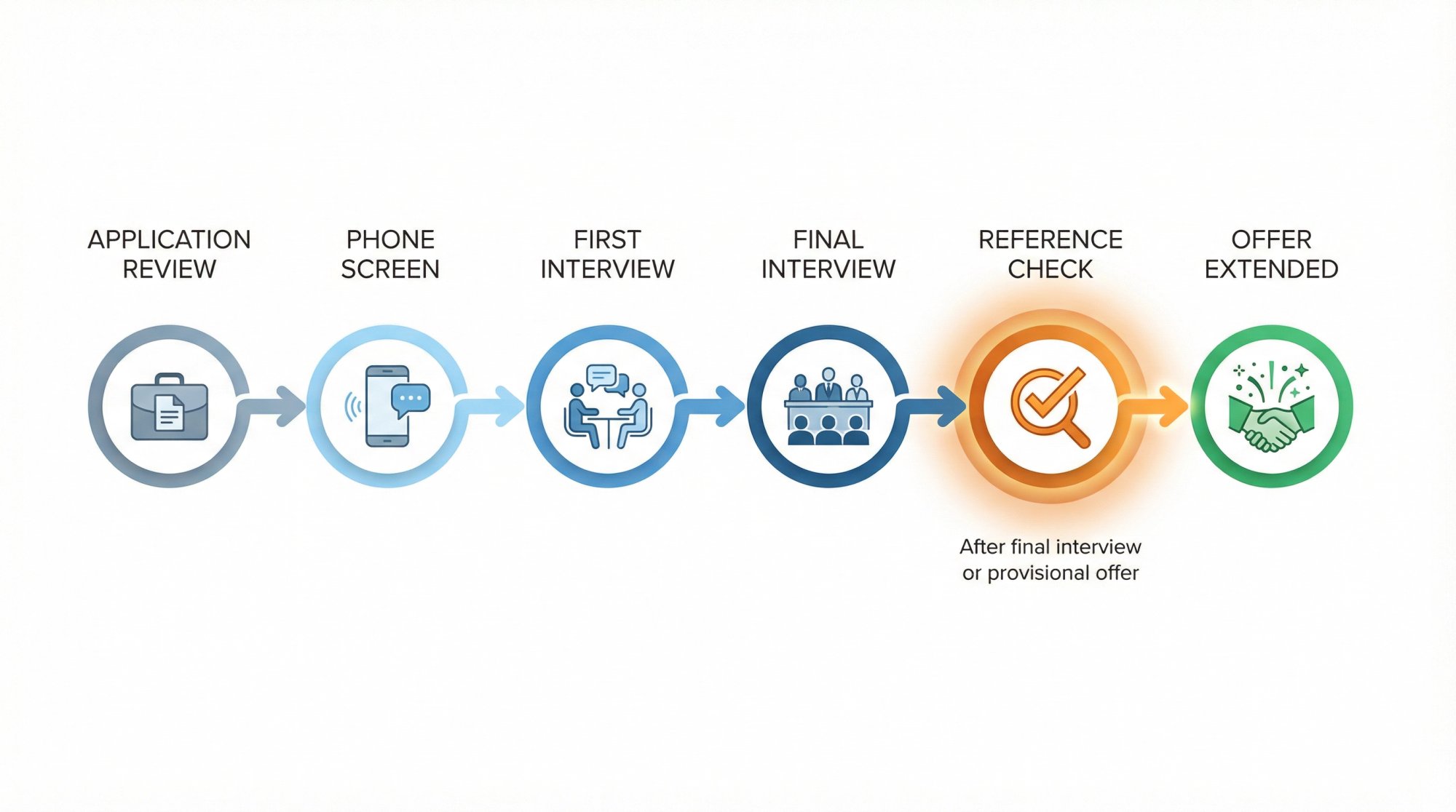
The University of Edinburgh notes it's most common for employers to take up references after a final interview or once a provisional offer is made.
UC Davis career center similarly frames references as something employers often request after interviews and "just before" making an offer, and recommends preparing a list ahead of time.
The NHS employment history and reference checks standard ties checks to the stage after interview and a provisional offer, reflecting higher-risk hiring environments.
So if you're not being asked yet: don't invent work. Just build your list and move on.
How Many References Should You List? (By Job Type)
Here's a practical, hiring-reality mapping. These are defaults, not commandments.
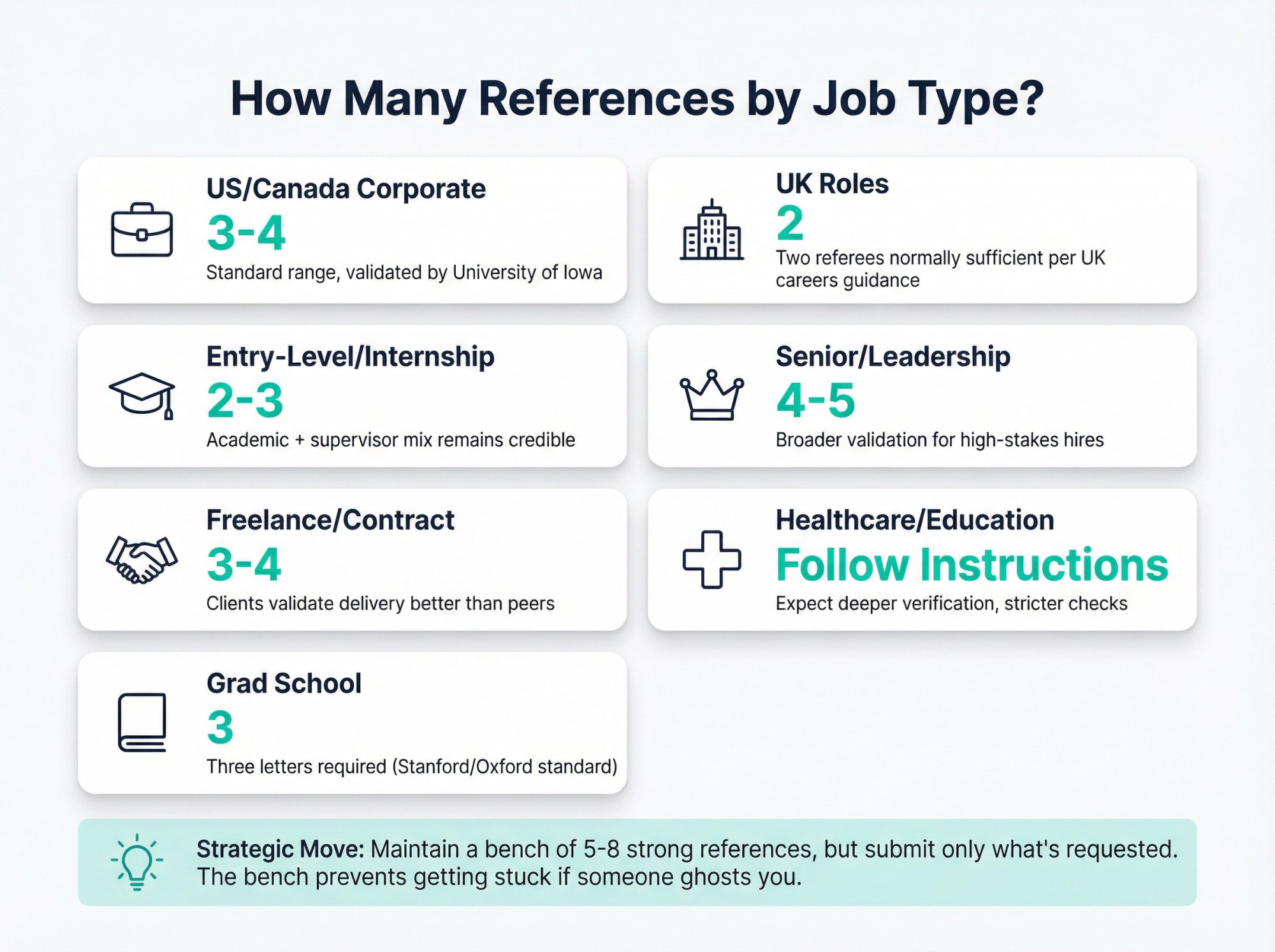
Strategic move: Keep a bench of 5-8 strong people, but submit only what's requested (or the defaults above). The bench prevents you getting stuck if someone ghosts you.
Who Should You Use as a Reference? (The 3-Part Quality Score)
AIApply's own reference guide uses a simple framework that's actually how hiring managers think:
→ Relevance: Can they speak to skills that matter for this job?
→ Recency: Did they work with you recently enough to be believable?
→ Relationship: Is their connection to you professional and credible?
Use this as a scoring rubric. Pick the highest-scoring mix.
Best Reference Mix for Most Jobs
Aim for a blend like:
• 1 to 2 former managers or supervisors (strongest signal)
• 1 cross-functional partner or senior peer (confirms collaboration and execution)
• Optional: 1 client or stakeholder (especially for sales, consulting, freelance)
What Type of Reference Is Best for Each Role?
Who NOT to Use as a Reference (Unless Asked for Character References)
Multiple career centers explicitly discourage personal references like family or friends for professional roles.
The only exception is if the employer specifically asks for a character reference. Otherwise, stick to people who've seen your work directly.
Should You Put References on Your Resume?
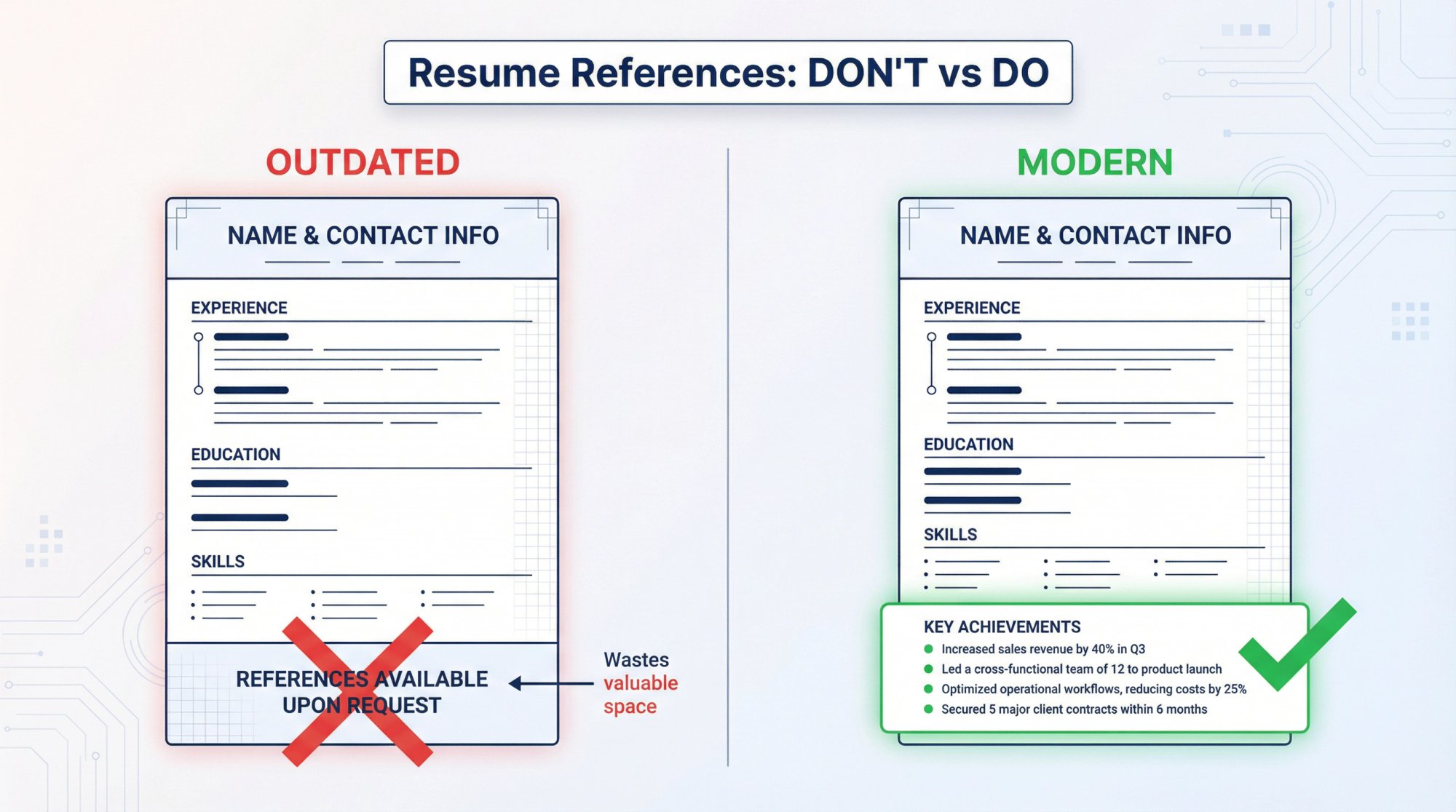
Short version: No.
University of Minnesota: References should be on a separate page from your resume.
Oregon State University career development: Create a separate reference list and bring it when requested. They specifically say you don't need "references available upon request."
UK guidance: You usually only supply references when asked. You may be asked to enter referees on an application form, but not typically in the CV itself.
Should You Write "References Available Upon Request"?
It wastes space and signals outdated norms.
Research shows employers assume you can provide references, so including the phrase is unnecessary.
Career experts call it outdated and a waste of valuable resume space.
A Monster 2026 resume survey found 49% of job seekers still include "references available upon request." That's a nice reminder that "common" doesn't mean "good."
AIApply's own resume guidance also flags listing references (or that phrase) as a mistake.
The reality is simple: employers expect you can provide references. You don't need to state the obvious.
How to Format a Job Reference Sheet (Copy-Paste Template)
Most career centers agree on the structure: same header as your resume, then list references with contact details and your relationship.
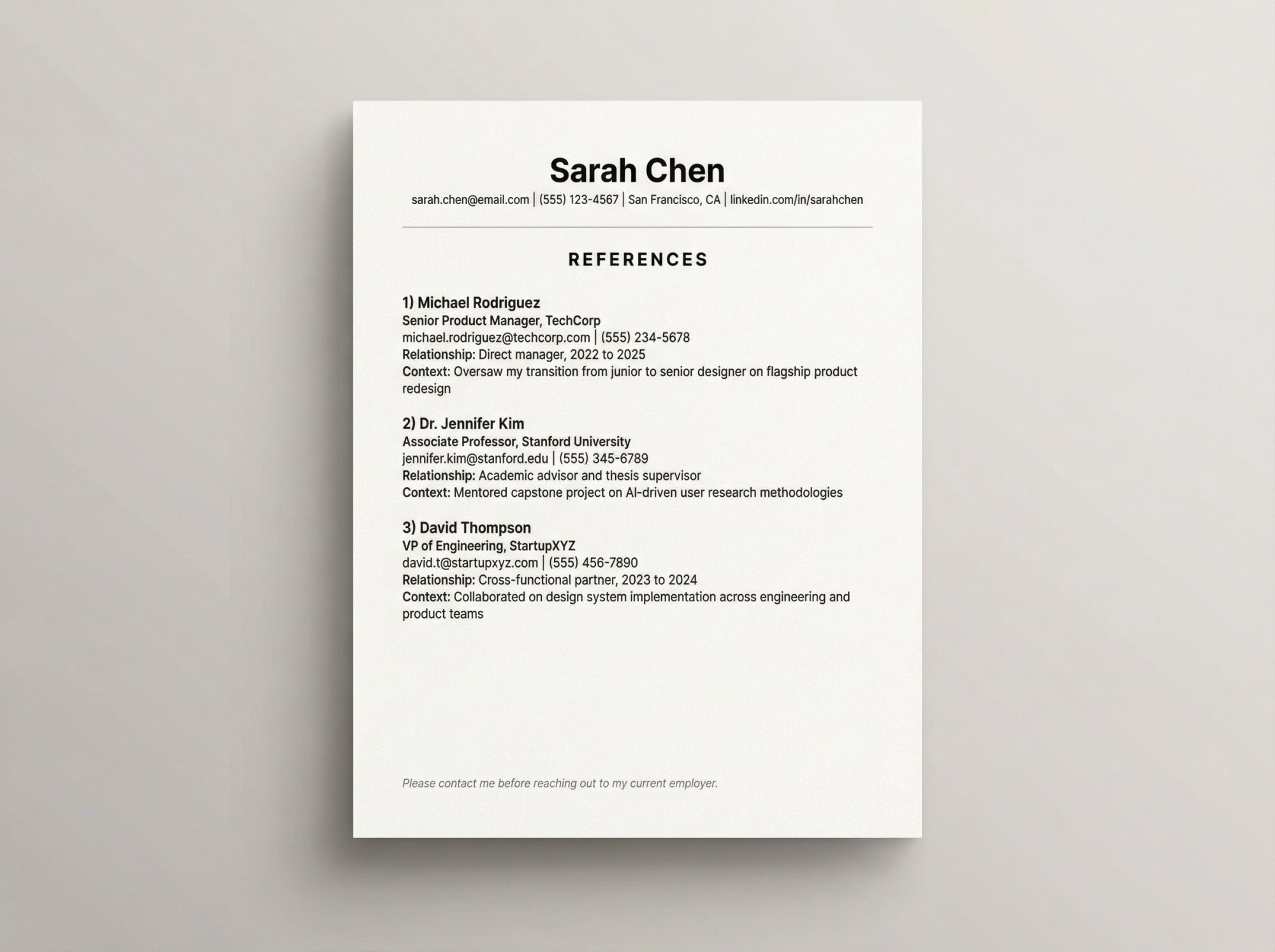
Reference Sheet Template (Copy/Paste)
Your Nameemail | phone | city, country | LinkedIn (optional)REFERENCES1) Full NameTitle, CompanyEmail | PhoneRelationship: (e.g., former manager, 2023 to 2025)Context: (1 short line on what they saw you do)2) Full NameTitle, CompanyEmail | PhoneRelationship: …3) Full NameTitle, CompanyEmail | PhoneRelationship: …Optional note (only if needed): "Please contact me before reaching out to my current employer."What to include (based on university guidance): name, title, organization, email, phone, and relationship. Keep formatting consistent with your resume and cover letter.
How to Ask Someone to Be a Reference (Without Making It Awkward)
Two rules that make everything easier:
1. Ask early (before you're desperate)
2. Make it easy to say yes (give them the exact context and materials)
AIApply's guide recommends sending a "support packet" that includes your updated resume, the job description, and instructions.
University career centers echo the same principle: give your references your resume and cover letter, plus a heads-up when you apply or interview.
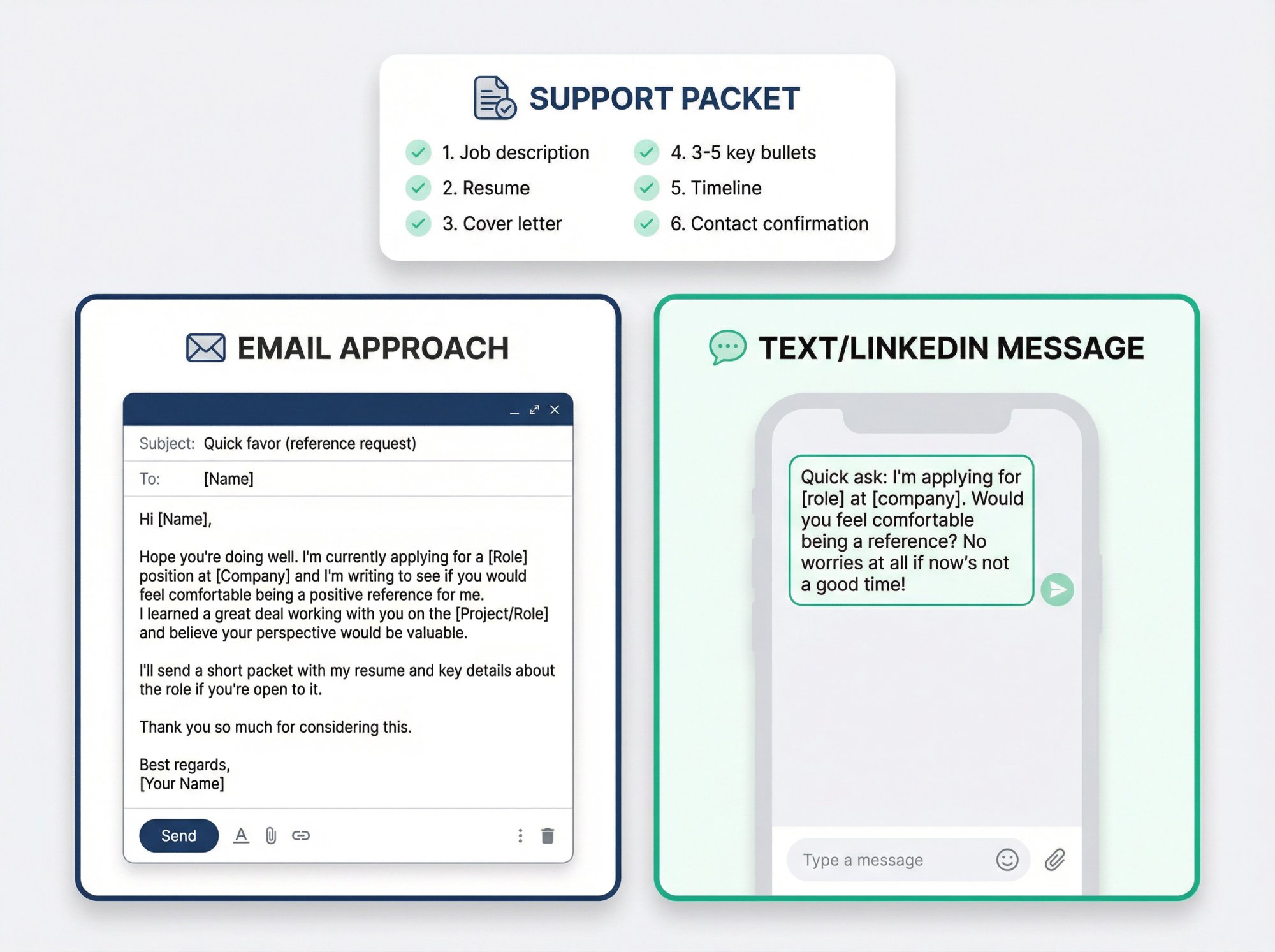
What to Send When Asking for a Reference (Support Packet)
The job description (or link)
Your latest resume
Your cover letter (optional but helpful)
3 to 5 bullets: "things I'd love you to highlight" (specific projects plus outcomes)
Timeline: "they may contact you between ___ and ___"
Confirmation of their preferred contact info
This turns your reference from "uh I remember them" into "clear, confident endorsement."
Email Script: Asking Someone to Be Your Reference
Subject: Quick favor (reference request)Hi [Name],I'm applying for [role] at [company]. Would you feel comfortable being a positive reference for me?You worked with me on [project/team] and I think you could speak to [2 to 3 relevant strengths]. If you're open to it, I'll send a short packet (job post + my resume + a few bullets) so it's easy.Totally okay if your schedule is tight or you'd rather not. I appreciate you either way.Thanks,[Your name]Text/LinkedIn Message: Asking for a Reference (Short Version)
Hey [Name]. Quick ask: I'm applying for [role] and was wondering if you'd be comfortable as a reference. I can send the job post + my resume + a few bullets to make it easy. No worries at all if now's not a good time.What If Employers Want References Before Interviews?

Sometimes online forms ask for references too early. Do this:
• Provide the minimum required number (don't leave it blank if the form blocks you)
• Add a note if possible: "Please contact me before reaching out"
• Prioritize references who won't create risk (e.g., not your current manager if that could expose your search)
For federal hiring, the OPM reference guidance discusses consent and notes situations where contacting a current supervisor may be delayed until later stages. This OPM guide is older, but still useful as an official baseline.
What If You Have No Work References? (Special Situations)
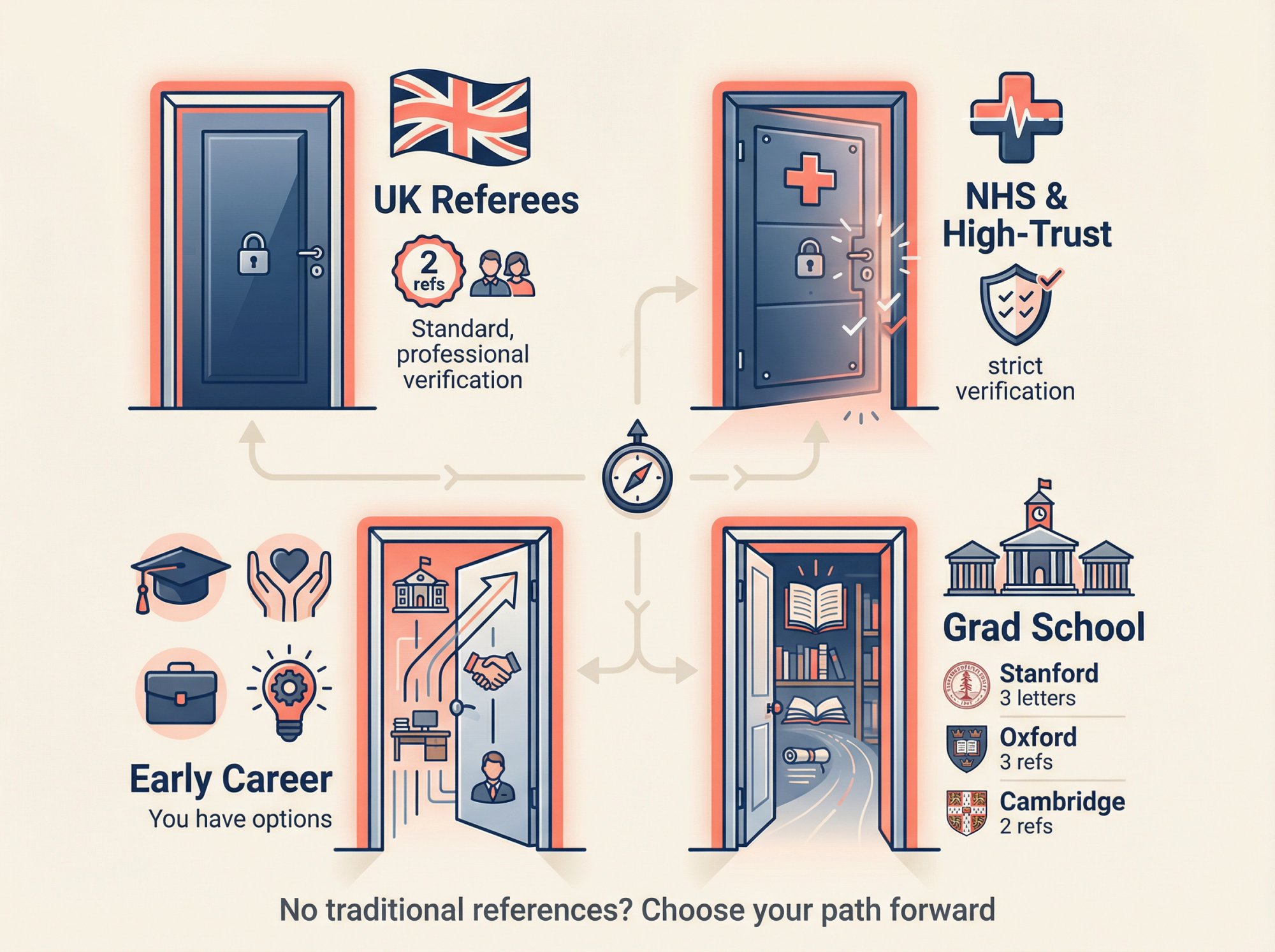
1) You're in the UK and Don't Know What a "Referee" Is
In many UK processes, you list referees (people who will provide a reference), and employers often take them up late in the process. Two references is typically enough.
2) You're Applying to the NHS or High-Trust Roles
Expect stricter checks. The NHS employment standard emphasizes validating employment history across a period (e.g., consecutive years) and taking references after interview or provisional offer.
Translation: follow instructions exactly and expect more verification.
3) You Have "No References" Because You're Early Career
You almost always have something:
• Professors or instructors
• Volunteer coordinators
• Internship or part-time supervisors
• Mentors or advisors
The University of Iowa explicitly lists these types and explicitly says not to use parents or friends for professional references.
4) You're Applying to Grad School
Requirements can be strict and program-specific:
Stanford graduate admissions: three letters of recommendation required, and you can list up to four recommenders as backup.
Oxford graduate admissions: You must register three referees, but only two references need to be submitted by the deadline for assessment readiness.
Cambridge postgraduate: You normally nominate 2 referees (and a third for certain funding, like Gates Cambridge).
If you're mixing job hunting plus grad applications, keep two separate systems: job reference sheet vs academic recommenders list with deadlines.
FAQ
Is 2 References Enough?
Often yes in the UK (two references normally enough).
Often no in the US/Canada unless the employer asked for 2. Many career centers recommend 3 to 5.
Is 5 References Too Many?
Not automatically, but it's usually the upper end of what's recommended for a standard reference list. Multiple career centers describe 3 to 5 as the typical range.
Should I Include References on My Resume?
Generally: no. Keep a separate sheet and provide it when requested.
What Information Should Be on a Reference Sheet?
Name, title, organization, email, phone, and your relationship to them. Keep formatting consistent with your other documents. (University of Iowa guidance)
Can I Use a Friend as a Reference?
Only if the employer explicitly asks for a character or personal reference. Otherwise, career centers commonly advise avoiding family and friends for professional reference lists.
What If I Don't Have Any References?
If you're early in your career, you likely have professors, volunteer coordinators, internship supervisors, or mentors who can vouch for you. These are all valid professional references when work experience is limited.
Do References Need to Be from My Current Job?
No. Many people use references from previous jobs, especially if they're currently employed and don't want their search exposed. Just make sure the references are recent enough to be credible.
How Long Before References Expire?
There's no hard rule, but references from 2 to 3 years ago are usually fine. Beyond 5 years, employers might question whether that person remembers your work clearly. Recency matters.
What If a Reference Says No?
Respect it. They might be too busy, uncomfortable, or simply not confident they can give a strong recommendation. It's better to find out now than have them give a lukewarm reference later. Thank them and find someone else.
How AIApply Can Help (Without Making This Weird)
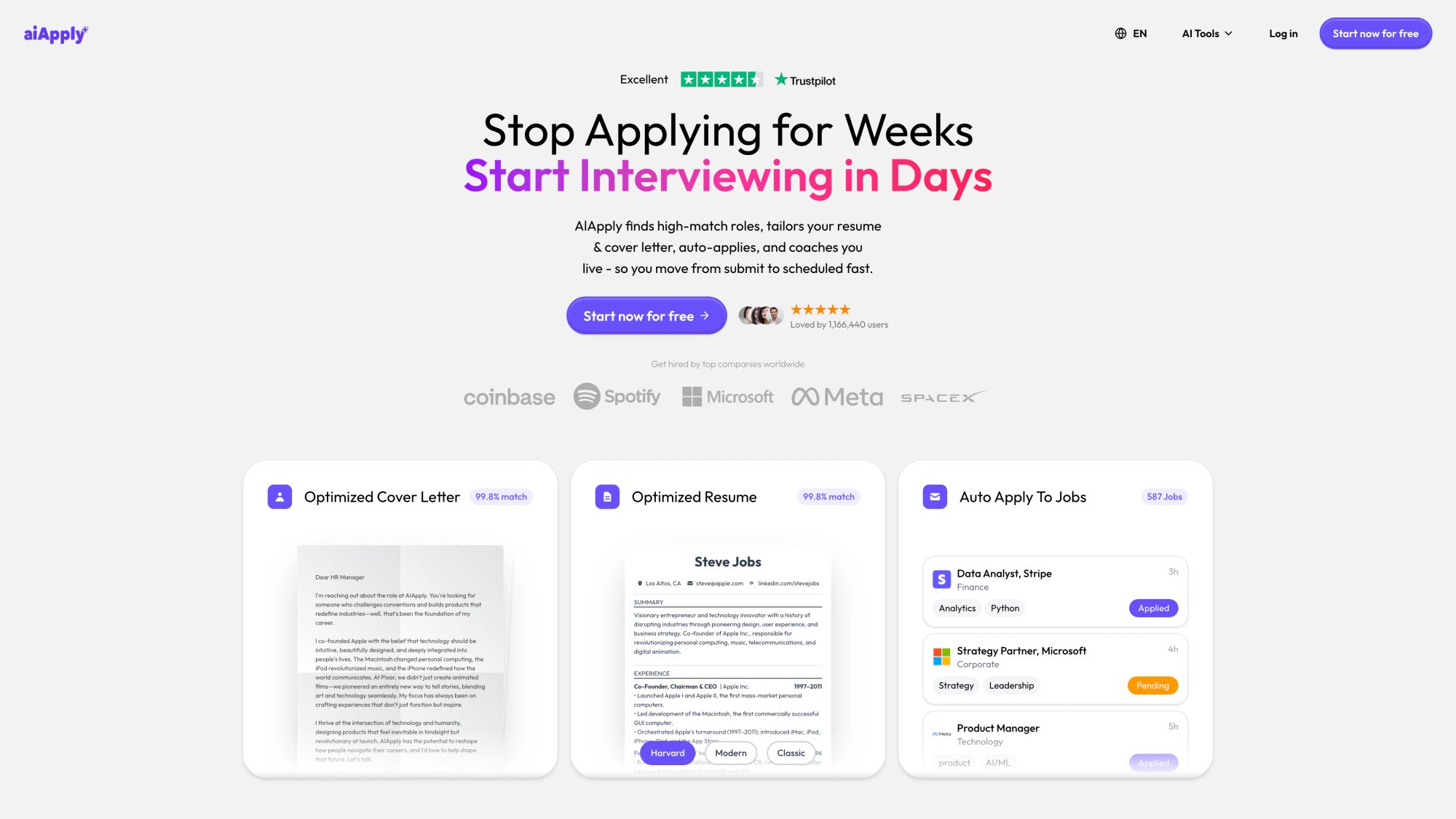
References don't exist in a vacuum. They're strongest when your story is consistent across:
• Resume
• What your references say about you
AIApply tools that map directly to that:
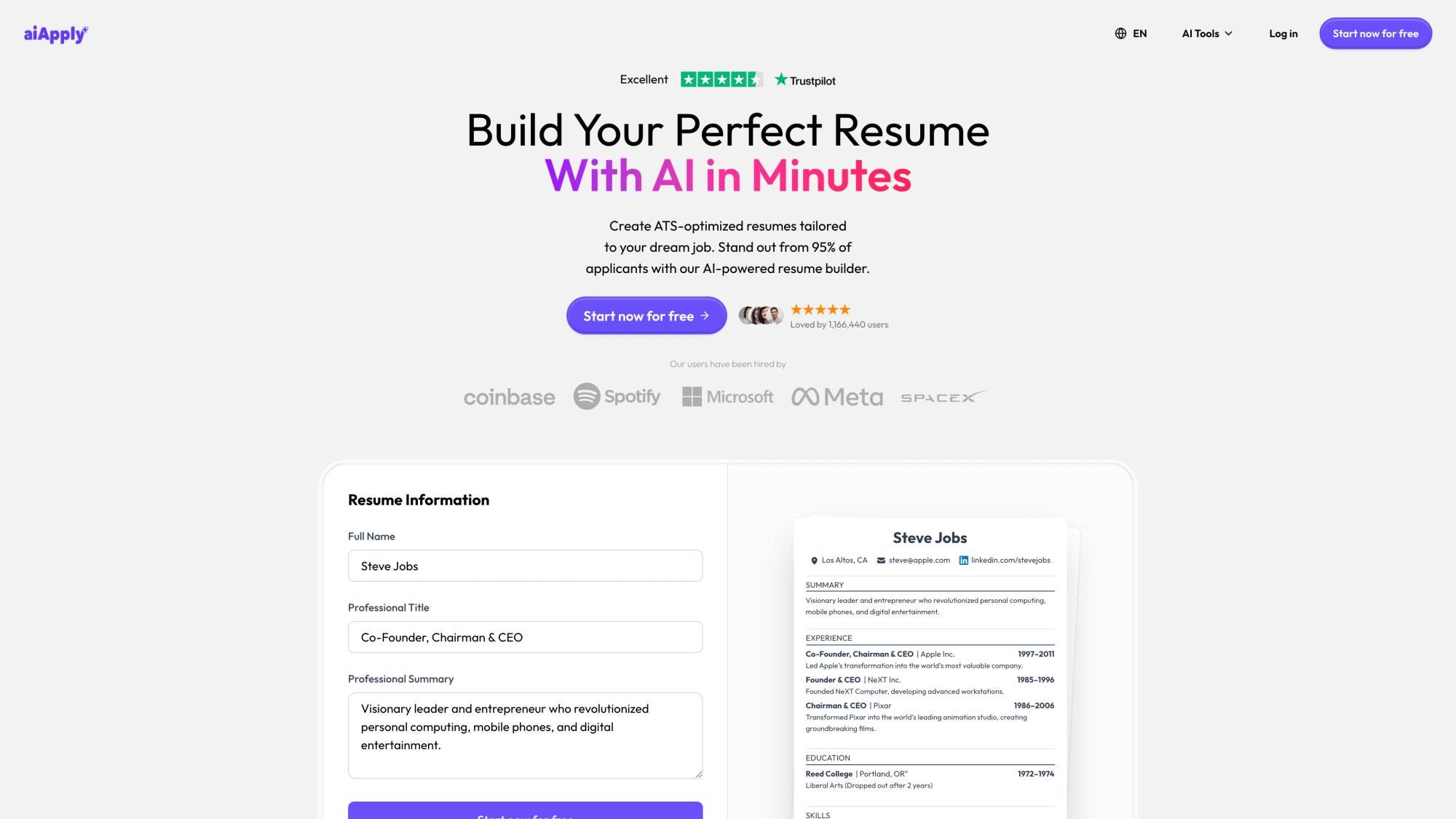
AI Resume Builder to generate a tailored resume fast (then you keep the same header for your reference sheet).
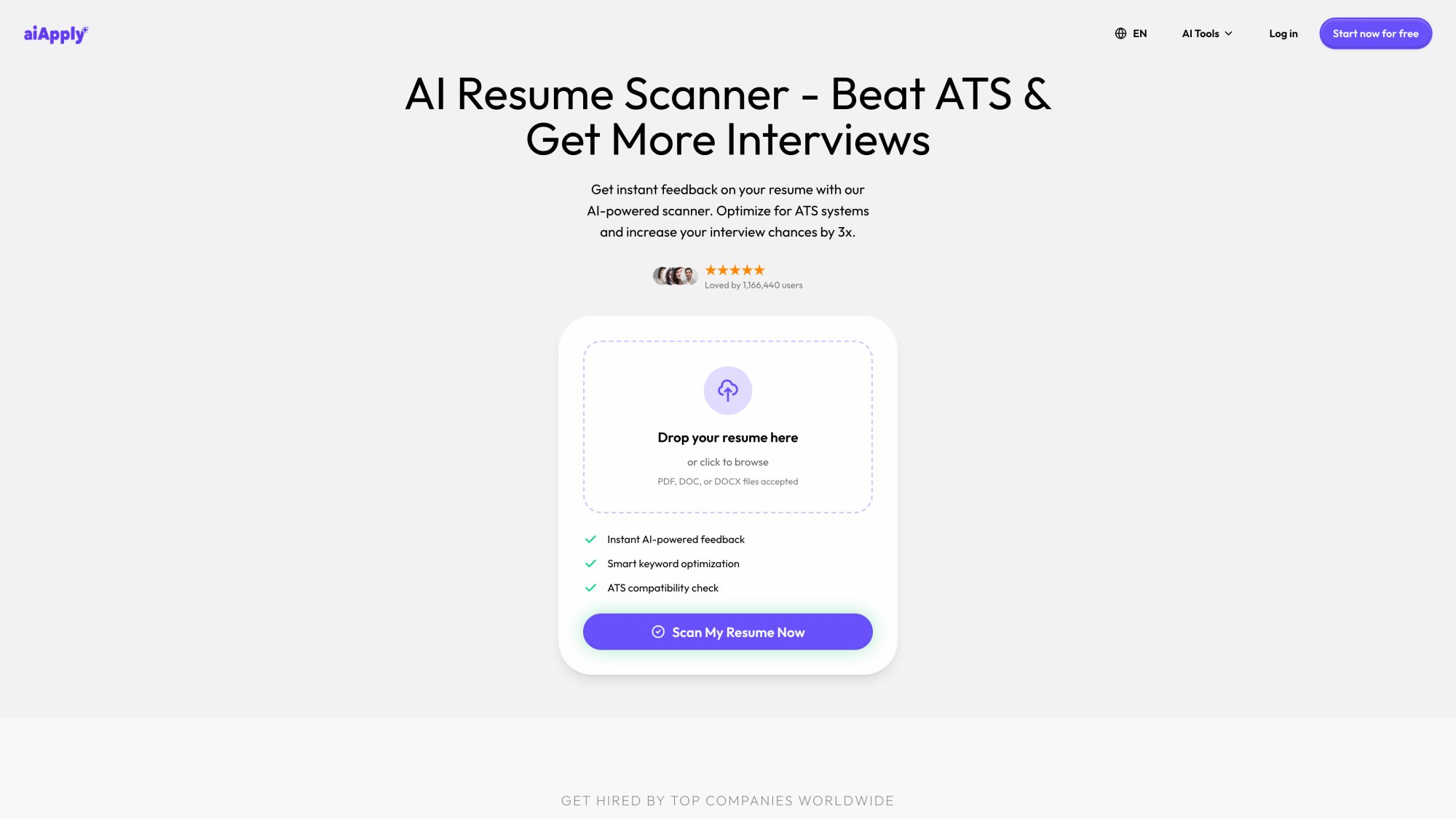
AI Resume Scanner to catch ATS, keyword, and formatting issues before you start asking people to vouch for you.
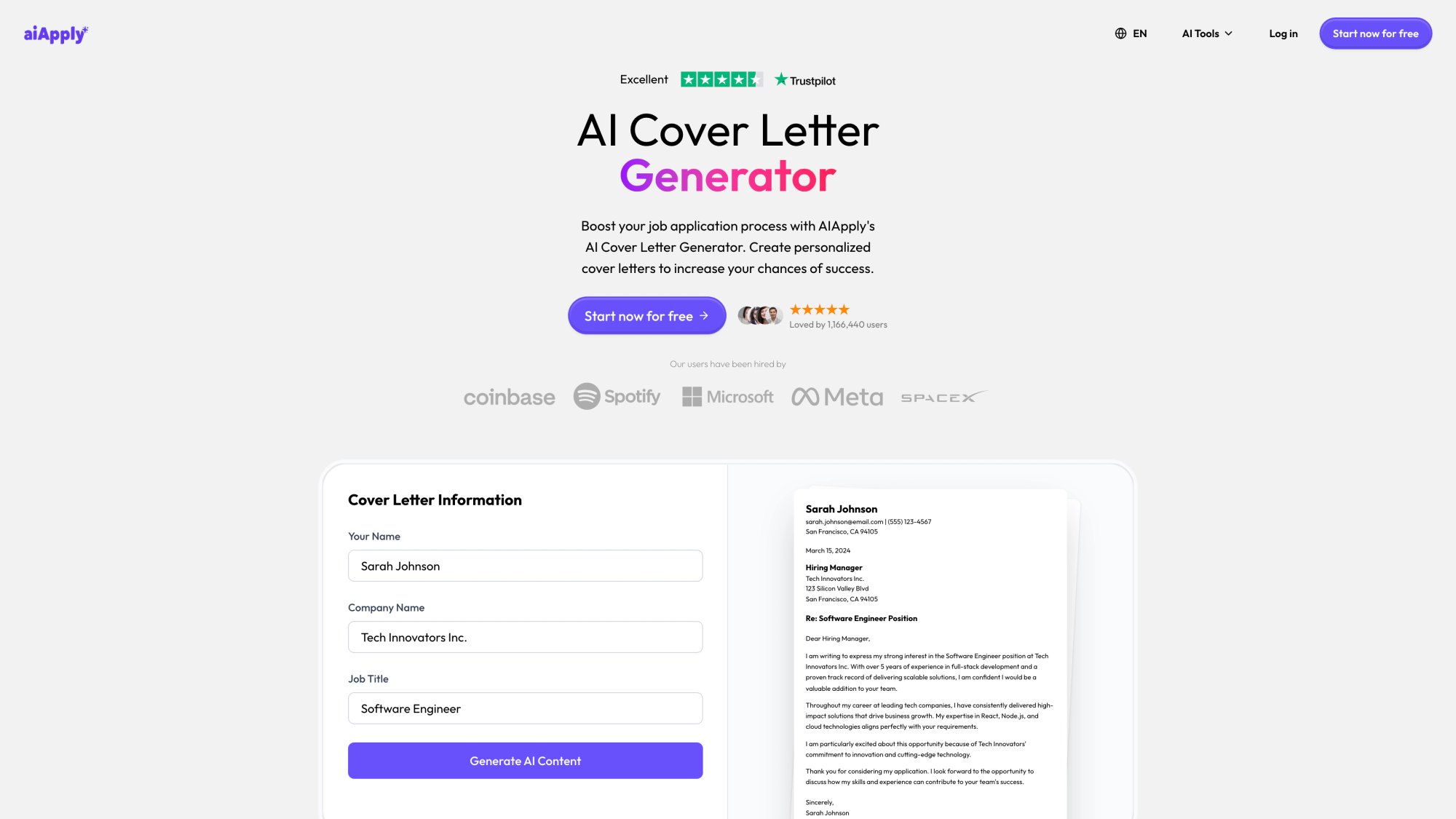
AI Cover Letter Generator so your references see the same narrative you're selling.
Interview Answer Buddy so your live interview answers match the strengths your references will confirm.
And if you want the reference-asking playbook: AIApply's guide on how to ask someone to be a reference includes a support-packet checklist and the relevance/recency/relationship framework.
Final Thoughts
Your references are only as good as the foundation you've built. Do great work, maintain relationships, and leave positive impressions everywhere. That's how you earn glowing references.
Getting your references sorted might feel like a minor checkbox, but it's the final filter between you and an offer. Employers contact references when they're ready to say yes but want one last confirmation.
Have at least 3 strong references ready. Pick people who actually know your work and will speak enthusiastically. Format your reference sheet cleanly. Ask people early and give them what they need to help you.
And remember: your references are only as good as the foundation you've built. Do great work, maintain relationships, and leave positive impressions everywhere. That's how you earn glowing references.
With a strong resume, compelling cover letter, and well-curated reference list, you're giving employers a consistent story about who you are. Manage each piece well, and you'll move through the hiring process faster and with more confidence.
If you're googling this, you're probably in one of these situations:
An application form is asking for "references" and you don't want to screw it up. Or you're not sure whether references belong on your resume. Maybe a recruiter just asked for a "reference list ASAP" and you're scrambling. Or you're applying to grad school and confused about whether "references" means the same thing as "letters of recommendation."
This guide gives you the exact numbers to use, why those numbers work, and copy-paste templates (reference sheet + ask scripts) so you can move fast without looking messy.
How Many References Do You Need? (Quick Answer)
1. If the employer or application says a number, follow it.
That instruction beats every rule of thumb.
2. If they don't specify, use these defaults:
→ Most US/Canada roles: submit 3 to 5 references (sweet spot is 3 to 4). University of Iowa career guidance confirms three is typically expected.
→ Most UK roles: 2 referees is the normal expectation (often one academic plus one employer, depending on your situation). University of Edinburgh career guidance notes two references will normally be enough.
→ Grad school: often 2 to 3, but many programs require 3 letters (and sometimes allow a backup). Stanford Graduate Admissions explicitly requires three letters and allows listing a fourth recommender as backup.
3. Don't put references on your resume or CV unless you're explicitly told to.
Keep a separate reference sheet ready.
4. Have backups.
Even Stanford explicitly allows a fourth recommender as backup for a required set of three. Same logic applies to job references.
What Are Job References? (And Why They're Different from Letters of Recommendation)
In hiring, "references" means people who can vouch for your work (or your character, if asked), and employers might contact them near the end of the process. University of Edinburgh explains that references are typically people who know you and your work, and employers usually take up references after a final interview or provisional offer.
In grad admissions, references are usually letters of recommendation submitted through a portal, often confidential, with strict rules on authorship. Stanford's system requires three letters via their online platform.
These are different processes, so if you're juggling both, keep two separate systems.
Why Does the Number of References Matter?
A reference check is basically a risk filter. The employer is asking:
→ "Is this person real?" (dates, title, responsibilities)
→ "Is the story consistent?"
→ "Will they be a problem hire?"
The number of references is a tradeoff:
Too few looks like you can't find credible people, or you're hiding something.
Too many creates work for the employer and dilutes signal. Plus you risk accidentally including a weak reference who gives lukewarm feedback.
That's why most modern guidance converges on a tight band: 2 in many UK contexts, 3 to 5 in many US/Canada contexts. It's enough to validate your story without overwhelming anyone.
When Do Employers Check References? (And Why You Shouldn't Panic Early)
For most candidates, references are checked late:
The University of Edinburgh notes it's most common for employers to take up references after a final interview or once a provisional offer is made.
UC Davis career center similarly frames references as something employers often request after interviews and "just before" making an offer, and recommends preparing a list ahead of time.
The NHS employment history and reference checks standard ties checks to the stage after interview and a provisional offer, reflecting higher-risk hiring environments.
So if you're not being asked yet: don't invent work. Just build your list and move on.
How Many References Should You List? (By Job Type)
Here's a practical, hiring-reality mapping. These are defaults, not commandments.
Strategic move: Keep a bench of 5-8 strong people, but submit only what's requested (or the defaults above). The bench prevents you getting stuck if someone ghosts you.
Who Should You Use as a Reference? (The 3-Part Quality Score)
AIApply's own reference guide uses a simple framework that's actually how hiring managers think:
→ Relevance: Can they speak to skills that matter for this job?
→ Recency: Did they work with you recently enough to be believable?
→ Relationship: Is their connection to you professional and credible?
Use this as a scoring rubric. Pick the highest-scoring mix.
Best Reference Mix for Most Jobs
Aim for a blend like:
• 1 to 2 former managers or supervisors (strongest signal)
• 1 cross-functional partner or senior peer (confirms collaboration and execution)
• Optional: 1 client or stakeholder (especially for sales, consulting, freelance)
What Type of Reference Is Best for Each Role?
Who NOT to Use as a Reference (Unless Asked for Character References)
Multiple career centers explicitly discourage personal references like family or friends for professional roles.
The only exception is if the employer specifically asks for a character reference. Otherwise, stick to people who've seen your work directly.
Should You Put References on Your Resume?
Short version: No.
University of Minnesota: References should be on a separate page from your resume.
Oregon State University career development: Create a separate reference list and bring it when requested. They specifically say you don't need "references available upon request."
UK guidance: You usually only supply references when asked. You may be asked to enter referees on an application form, but not typically in the CV itself.
Should You Write "References Available Upon Request"?
It wastes space and signals outdated norms.
Research shows employers assume you can provide references, so including the phrase is unnecessary.
Career experts call it outdated and a waste of valuable resume space.
A Monster 2026 resume survey found 49% of job seekers still include "references available upon request." That's a nice reminder that "common" doesn't mean "good."
AIApply's own resume guidance also flags listing references (or that phrase) as a mistake.
The reality is simple: employers expect you can provide references. You don't need to state the obvious.
How to Format a Job Reference Sheet (Copy-Paste Template)
Most career centers agree on the structure: same header as your resume, then list references with contact details and your relationship.
Reference Sheet Template (Copy/Paste)
Your Nameemail | phone | city, country | LinkedIn (optional)REFERENCES1) Full NameTitle, CompanyEmail | PhoneRelationship: (e.g., former manager, 2023 to 2025)Context: (1 short line on what they saw you do)2) Full NameTitle, CompanyEmail | PhoneRelationship: …3) Full NameTitle, CompanyEmail | PhoneRelationship: …Optional note (only if needed): "Please contact me before reaching out to my current employer."What to include (based on university guidance): name, title, organization, email, phone, and relationship. Keep formatting consistent with your resume and cover letter.
How to Ask Someone to Be a Reference (Without Making It Awkward)
Two rules that make everything easier:
1. Ask early (before you're desperate)
2. Make it easy to say yes (give them the exact context and materials)
AIApply's guide recommends sending a "support packet" that includes your updated resume, the job description, and instructions.
University career centers echo the same principle: give your references your resume and cover letter, plus a heads-up when you apply or interview.
What to Send When Asking for a Reference (Support Packet)
The job description (or link)
Your latest resume
Your cover letter (optional but helpful)
3 to 5 bullets: "things I'd love you to highlight" (specific projects plus outcomes)
Timeline: "they may contact you between ___ and ___"
Confirmation of their preferred contact info
This turns your reference from "uh I remember them" into "clear, confident endorsement."
Email Script: Asking Someone to Be Your Reference
Subject: Quick favor (reference request)Hi [Name],I'm applying for [role] at [company]. Would you feel comfortable being a positive reference for me?You worked with me on [project/team] and I think you could speak to [2 to 3 relevant strengths]. If you're open to it, I'll send a short packet (job post + my resume + a few bullets) so it's easy.Totally okay if your schedule is tight or you'd rather not. I appreciate you either way.Thanks,[Your name]Text/LinkedIn Message: Asking for a Reference (Short Version)
Hey [Name]. Quick ask: I'm applying for [role] and was wondering if you'd be comfortable as a reference. I can send the job post + my resume + a few bullets to make it easy. No worries at all if now's not a good time.What If Employers Want References Before Interviews?
Sometimes online forms ask for references too early. Do this:
• Provide the minimum required number (don't leave it blank if the form blocks you)
• Add a note if possible: "Please contact me before reaching out"
• Prioritize references who won't create risk (e.g., not your current manager if that could expose your search)
For federal hiring, the OPM reference guidance discusses consent and notes situations where contacting a current supervisor may be delayed until later stages. This OPM guide is older, but still useful as an official baseline.
What If You Have No Work References? (Special Situations)
1) You're in the UK and Don't Know What a "Referee" Is
In many UK processes, you list referees (people who will provide a reference), and employers often take them up late in the process. Two references is typically enough.
2) You're Applying to the NHS or High-Trust Roles
Expect stricter checks. The NHS employment standard emphasizes validating employment history across a period (e.g., consecutive years) and taking references after interview or provisional offer.
Translation: follow instructions exactly and expect more verification.
3) You Have "No References" Because You're Early Career
You almost always have something:
• Professors or instructors
• Volunteer coordinators
• Internship or part-time supervisors
• Mentors or advisors
The University of Iowa explicitly lists these types and explicitly says not to use parents or friends for professional references.
4) You're Applying to Grad School
Requirements can be strict and program-specific:
Stanford graduate admissions: three letters of recommendation required, and you can list up to four recommenders as backup.
Oxford graduate admissions: You must register three referees, but only two references need to be submitted by the deadline for assessment readiness.
Cambridge postgraduate: You normally nominate 2 referees (and a third for certain funding, like Gates Cambridge).
If you're mixing job hunting plus grad applications, keep two separate systems: job reference sheet vs academic recommenders list with deadlines.
FAQ
Is 2 References Enough?
Often yes in the UK (two references normally enough).
Often no in the US/Canada unless the employer asked for 2. Many career centers recommend 3 to 5.
Is 5 References Too Many?
Not automatically, but it's usually the upper end of what's recommended for a standard reference list. Multiple career centers describe 3 to 5 as the typical range.
Should I Include References on My Resume?
Generally: no. Keep a separate sheet and provide it when requested.
What Information Should Be on a Reference Sheet?
Name, title, organization, email, phone, and your relationship to them. Keep formatting consistent with your other documents. (University of Iowa guidance)
Can I Use a Friend as a Reference?
Only if the employer explicitly asks for a character or personal reference. Otherwise, career centers commonly advise avoiding family and friends for professional reference lists.
What If I Don't Have Any References?
If you're early in your career, you likely have professors, volunteer coordinators, internship supervisors, or mentors who can vouch for you. These are all valid professional references when work experience is limited.
Do References Need to Be from My Current Job?
No. Many people use references from previous jobs, especially if they're currently employed and don't want their search exposed. Just make sure the references are recent enough to be credible.
How Long Before References Expire?
There's no hard rule, but references from 2 to 3 years ago are usually fine. Beyond 5 years, employers might question whether that person remembers your work clearly. Recency matters.
What If a Reference Says No?
Respect it. They might be too busy, uncomfortable, or simply not confident they can give a strong recommendation. It's better to find out now than have them give a lukewarm reference later. Thank them and find someone else.
How AIApply Can Help (Without Making This Weird)
References don't exist in a vacuum. They're strongest when your story is consistent across:
• Resume
• What your references say about you
AIApply tools that map directly to that:
AI Resume Builder to generate a tailored resume fast (then you keep the same header for your reference sheet).
AI Resume Scanner to catch ATS, keyword, and formatting issues before you start asking people to vouch for you.
AI Cover Letter Generator so your references see the same narrative you're selling.
Interview Answer Buddy so your live interview answers match the strengths your references will confirm.
And if you want the reference-asking playbook: AIApply's guide on how to ask someone to be a reference includes a support-packet checklist and the relevance/recency/relationship framework.
Final Thoughts
Your references are only as good as the foundation you've built. Do great work, maintain relationships, and leave positive impressions everywhere. That's how you earn glowing references.
Getting your references sorted might feel like a minor checkbox, but it's the final filter between you and an offer. Employers contact references when they're ready to say yes but want one last confirmation.
Have at least 3 strong references ready. Pick people who actually know your work and will speak enthusiastically. Format your reference sheet cleanly. Ask people early and give them what they need to help you.
And remember: your references are only as good as the foundation you've built. Do great work, maintain relationships, and leave positive impressions everywhere. That's how you earn glowing references.
With a strong resume, compelling cover letter, and well-curated reference list, you're giving employers a consistent story about who you are. Manage each piece well, and you'll move through the hiring process faster and with more confidence.
.webp)
.webp)
.webp)
Don't miss out on
your next opportunity.
Create and send applications in seconds, not hours.


